
11 Years to Grow. One Night to Lose. Your Lemon Tree Doesn't Get a Second Chance.
The heater was on. You checked before bed. And some mornings the leaves are still dark and limp. These 7 reasons are why gardeners with a plant they can't replace stopped leaving the coldest night of the year to luck.


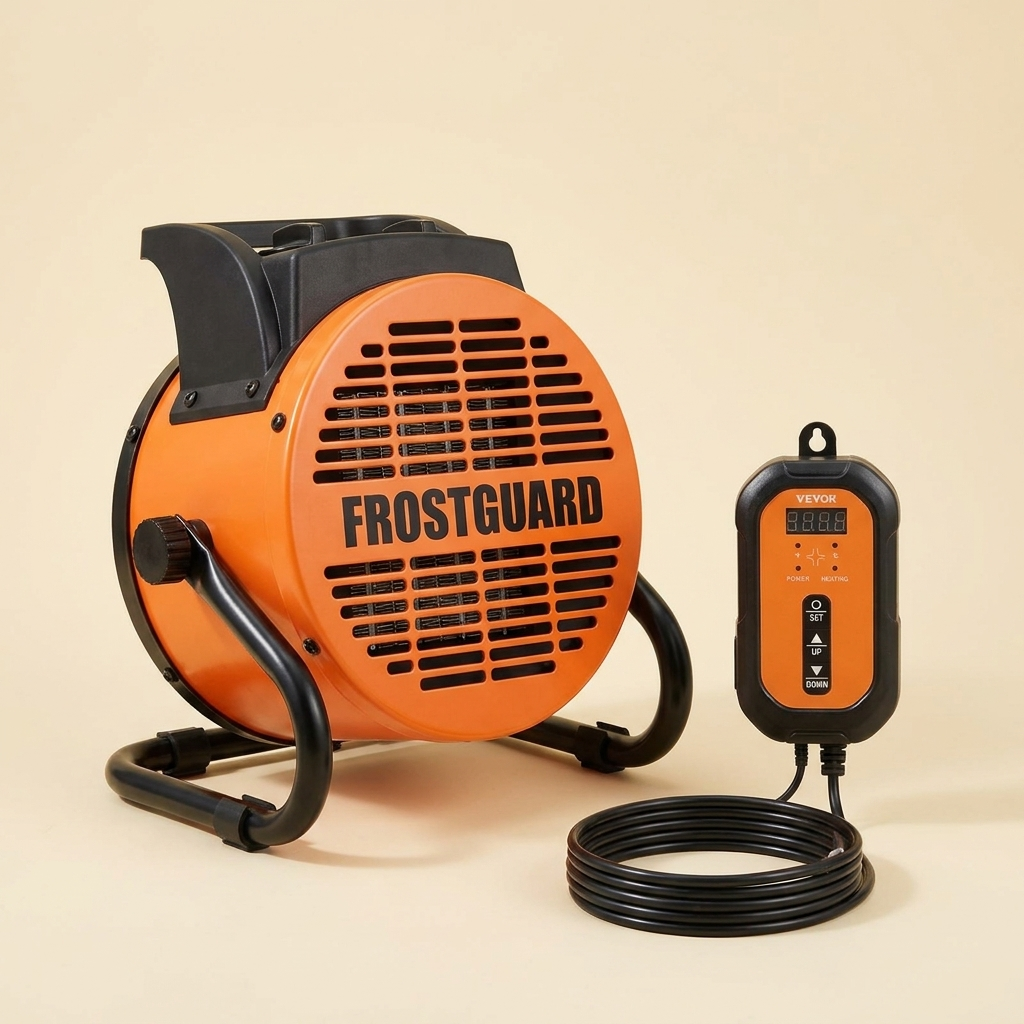

The Plants They Lost Weren't Their Fault. The Heater Was Guessing.
You did everything right. You carried the heater out. You turned it on. You checked it before bed.
And in the morning the leaves were dark and limp anyway, and the heater was still sitting there, still running.
Most growers who've lost a plant this way blame themselves. I should have checked again. I should have bought a better heater. But here's what actually happened: a household space heater only knows how warm the air right next to it is. That's the warmest spot in the greenhouse. The pot by the glass, three feet away, can be several degrees colder, and the heater never finds out.
It wasn't careless. It was blind. A dial that says “low” or “high” can't tell you, or the heater, how cold it is where your plants are sitting.
You're Right That Insulation Comes First. This Is the Other Half.
If you've taped bubble wrap to the north wall, you already know the truth most heater ads skip: a greenhouse leaks heat, and no heater can win against a structure that won't hold it.
You've probably tried the rest too. Candles under clay pots. Water jugs painted black. A remote thermometer that told you it was 31° out there and couldn't do a thing about it.
Each one helped a little. None of them could add heat at the moment the temperature dropped, and stop when it was enough. That's the half these growers were missing, and it's the half FrostGuard was built for.
Wrap the walls to keep the heat in. Let the heater put back exactly what leaks out.
The Thermostat Comes Free. The Probe Goes in the Pot You Love Most.
Every FrostGuard ships with a free digital thermostat and a temperature probe on a cable. This is what makes it different from the heater in your garage.
Push the probe into the soil beside the plant you'd never forgive yourself for losing. The lemon tree. The old geranium. Then set a number, like 45°F.
Now the heater takes its orders from that pot, not from its own warm air. When the soil beside your lemon tree drops below 45, it turns on. When it's back to 45, it turns off. All night, as many times as it takes.
It's three buttons: SET, UP, DOWN. If you can set an oven, you can set this.
The Forecast Says 28°. They Go to Bed Anyway.
You know the routine. The forecast drops. You check it again after dinner. At 9:40 you're on the couch, phone in hand, and you've already been out once with a flashlight.
Here's that same night with the probe in the pot and the number set:
| Time | In the greenhouse | You |
|---|---|---|
| 9:40 pm | Probe reads 50. Heater waiting. | Finishing your show. |
| 2 am | Drops below 45. Heater turns on. | Asleep. |
| 2:20 am | Back to 45. Shuts off. | Asleep. |
| 5 am | Coldest hour. Turns on again. | Asleep. |
| 7 am | Sun's up. Heater rests. | Coffee by the lemon tree. |
In the morning, the display shows the live reading at the roots. One look from the door and you know.
No Red-Hot Coil Next to Dry Leaves. No Heater Running Flat-Out All Night.
Part of every flashlight walk isn't about the plants. It's about the old heater from the garage, glowing orange, a few feet from dry leaves and plastic pots.
FrostGuard is built differently:
A ceramic element, no glowing coil. It heats behind a steel grille, and the ceramic limits its own temperature as it warms.
An automatic overheat shutoff. If something ever blocks the air, it switches itself off.
It rests more than it runs. The thermostat cuts the power every time your number is reached.
ETL listed, tested to North American electrical safety standards.
When greenhouse heaters cause trouble, it usually starts with the cord, not the heater: a long, thin indoor extension cord, a power strip, or an outlet shared with something else.
Any 1500W heater pulls about 12.5 amps. That's close to the limit of a regular household circuit, so the cord matters.
- Plug straight into the wall, or use a 14-gauge or heavier outdoor cord rated 15A. Our 12 AWG HeavyCord is made for exactly this.
- Nothing else plugged into that circuit. No power strips.
- Set it on a dry bench or paver with a foot of space in front. Keep it away from sprayers and never cover it.
No More Hauling Pots Into the House. The Sunroom Becomes Usable Again.
Twice a year, the big pots go in and out on a hand truck. The living room fills with leaves. The tree drops half its blossoms from the move.
With a heater that holds a number, a lot of growers just leave the plants where they are, in the greenhouse or the sunroom, through the whole winter.
And the room comes back too. Buyers wrote about finally sitting in a sunroom in January they'd written off for years.
At about 4.5 lbs with a carry handle, it goes wherever the cold spot is.
Told Honestly What It Can Heat. Then 30 Frost Nights to Prove It.
After losing plants once, nobody wants to trust a promise that turns out too good to be true. So here's exactly what one heater handles, based on the standard greenhouse heat-loss formula from Purdue University:
| Your space | Moderate cold | Below about 20°F |
|---|---|---|
| Sunroom or glassed porch | 1 heater | 1 heater |
| Lean-to or 6x8 greenhouse | 1 heater | 1 heater (double-wall) |
| 8x10 to 8x12 | 1 heater | 2 heaters |
| 10x12 and up, or single-layer film | 2 heaters | 2 heaters |
It costs about 14¢ an hour on the 800W setting, and only while it's heating. And every order comes with the 30-Day Frost Guarantee: if it isn't holding your number, you get a full refund.
See the heater switch on, the thermostat take over, and the number hold. Then picture your lemon tree in February.
A small 1500W ceramic greenhouse heater that comes with a free digital thermostat and probe. You put the probe in the pot that matters most, set a number, and it holds that number all night. In summer, it's a fan.

Why the sale? It's our limited Fall Sale, for growers who want the probe in the pot and the number set before the first frost warning, not the morning after. Allow about a week for processing, or choose Expedited Shipping at checkout if a cold snap is coming.
Put the probe in its pot, set it to 45, and go to bed. $119.95 in the Fall Sale, or two for $169.95, with the free digital thermostat and probe, free shipping and the 30-Day Frost Guarantee.
Get FrostGuard + Free Thermostat