I Logged My Tent Temps for 30 Nights. Here's Where Every Cheap Heater Loses.
4×4 in an unheated garage, lights-off setpoint 65°F, a logger at canopy and one at the top of the tent. Three heaters over three winters. The data says the same thing every time: it was never a wattage problem. It was a control problem, and it was costing me more than the lights.
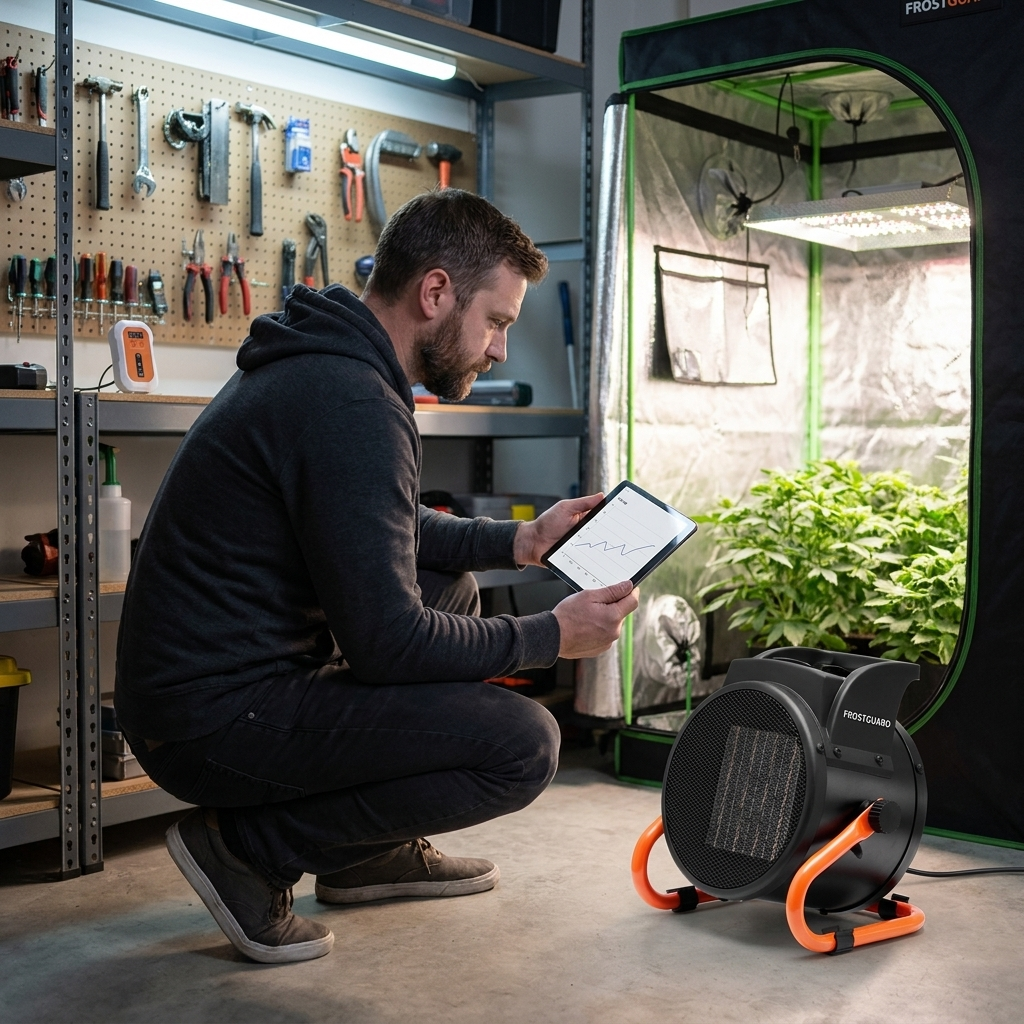
The Dip Isn't at Lights-Off. It's 2–5am.
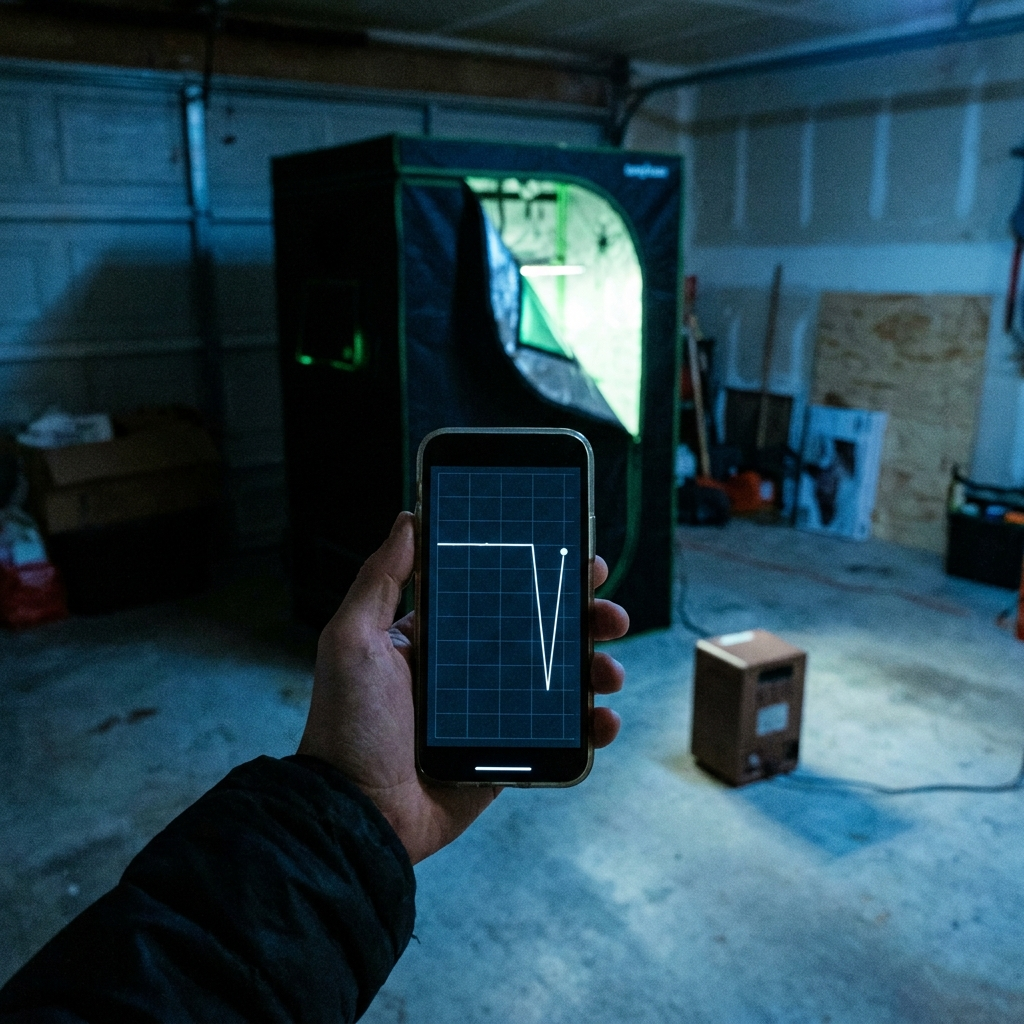
Everyone sets the heater up for lights-off. That's the wrong hour. Lights go off at 9pm and the tent coasts on stored heat from the fixture, the pots and the mylar for about three hours. It tracks the garage. The garage tracks outside. Outside bottoms out just before dawn.
Across 30 nights, the canopy low landed between 2:40 and 4:50am every single time. Median 4:10. On the worst night the canopy touched 41°F for twelve minutes while a 1500W fan heater on High had been running for seven hours straight. It wasn't off. It wasn't underpowered. It had tripped its own overheat cutout at 1am because it was cooking the air at the top of the tent while the canopy dropped, and it never reset.
That's the pattern for every dumb heater I've owned: it either runs flat-out and fights the exhaust, or it protects itself and quits. Neither one is watching the canopy at 4am. Something has to be.
Probe at Canopy. Not Top of Tent. Not the Outlet.
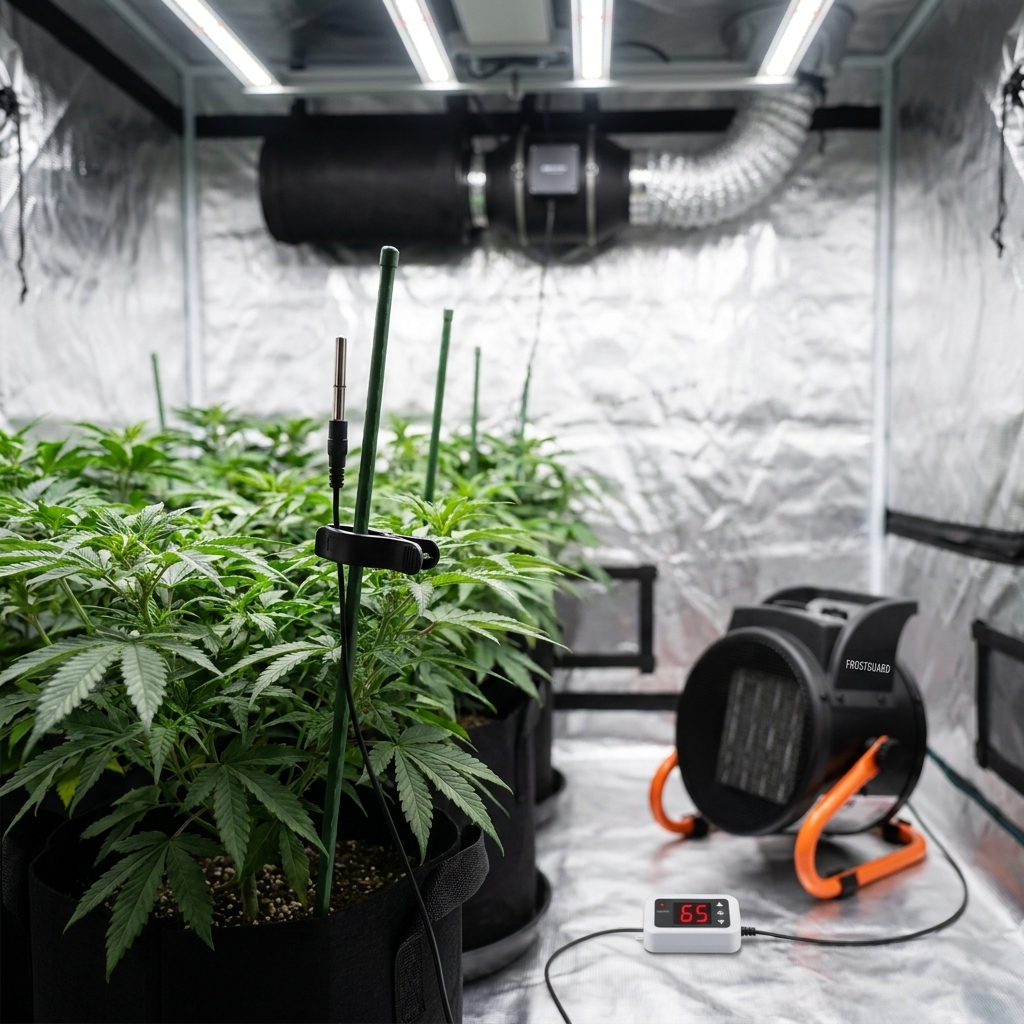
A sealed 4×4 with an inline exhaust pulling from the top stratifies hard. My two loggers ran 8–12°F apart most nights — top of tent warm, canopy cold — because the exhaust is scavenging exactly the air the heater just made. A thermostat that reads the top of the tent will think it's done while your plants sit in the cold layer.
The plug-in thermostat socket most of us buy is worse: it reads the room, outside the tent, at outlet height. It's controlling a climate the plants aren't in.
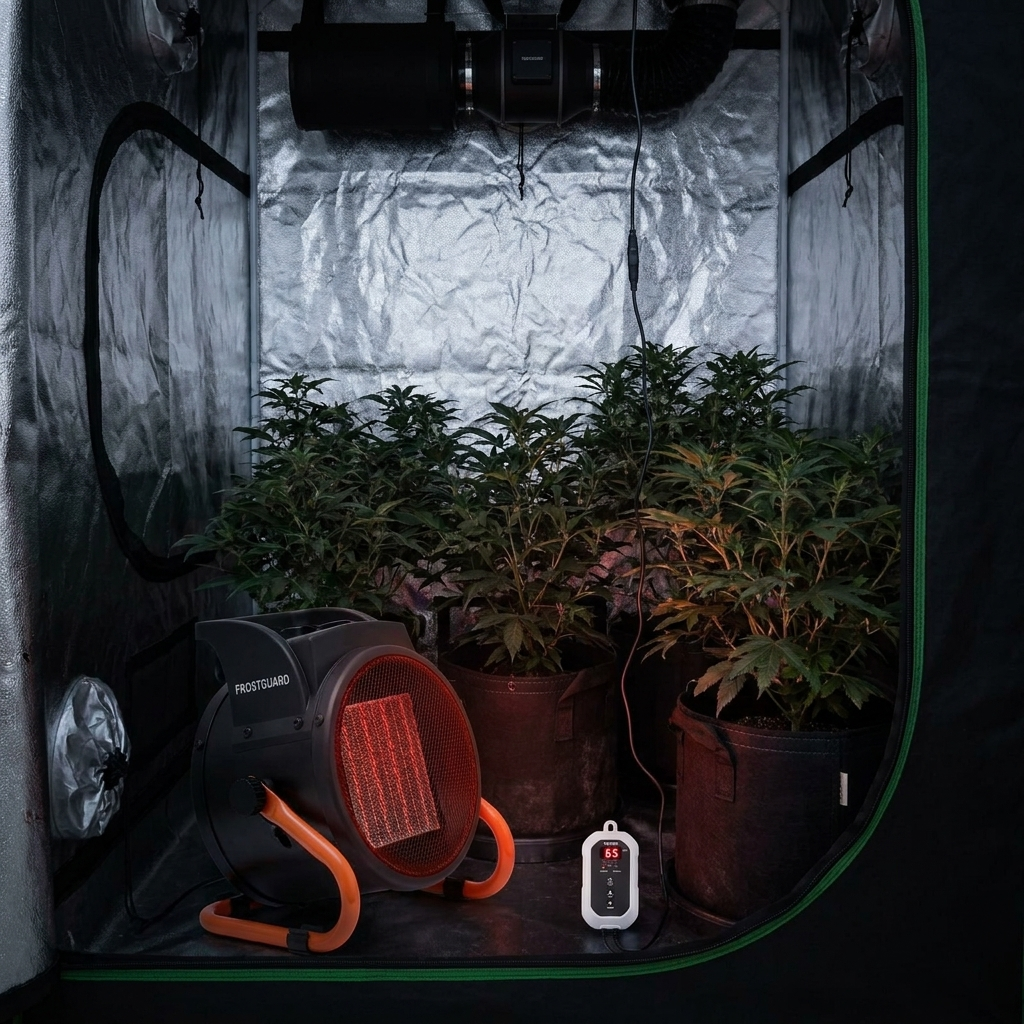
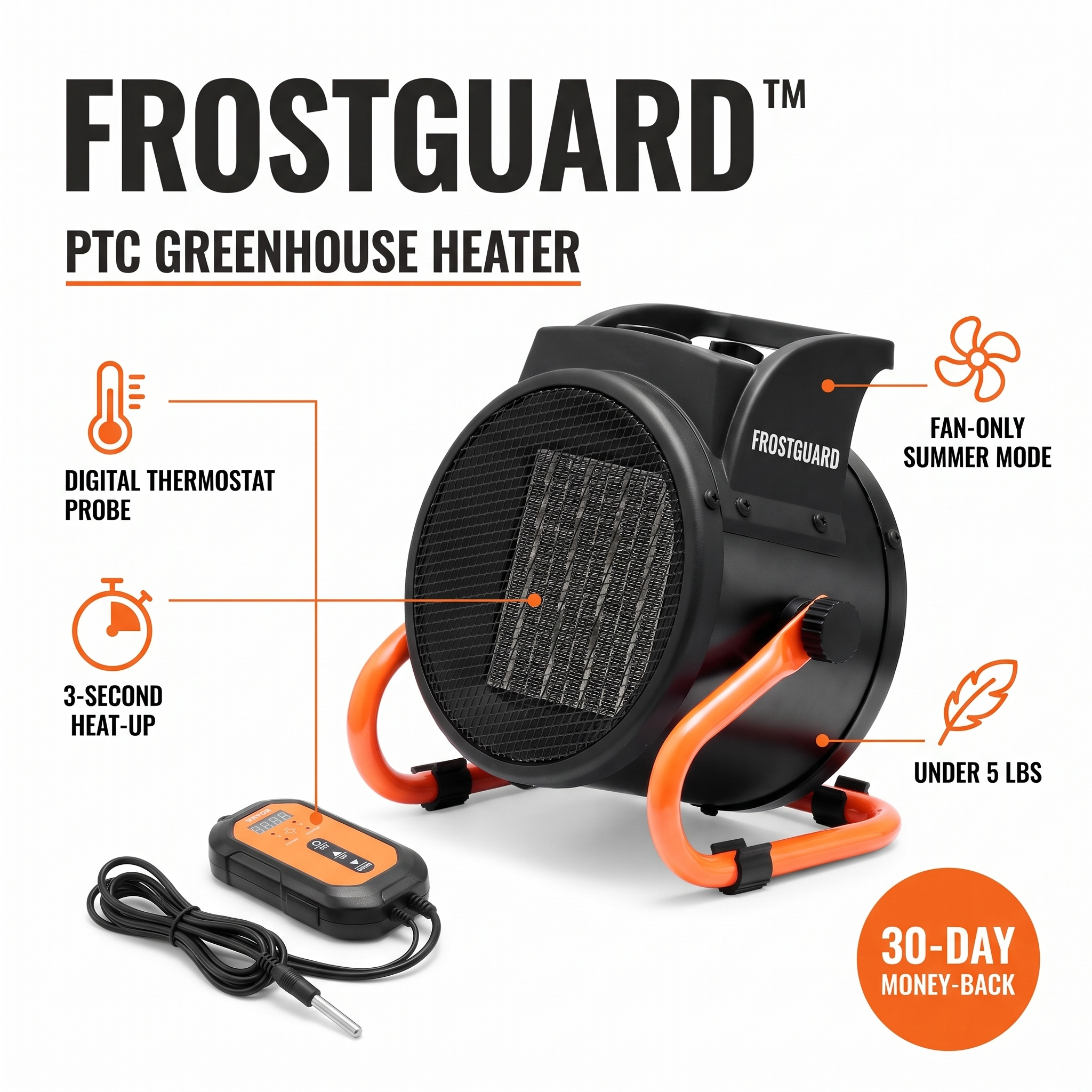
The only reading that matters is at the canopy, on the cold side, away from the heater's direct throw. That means a probe on a cable, clipped at leaf height. The controller that ships with the heater I run now is exactly that — probe on a 2m lead, live reading on the display, set range 40–108°F. I clip it to a stake at canopy on the far side from the heater. If that point is at 65, the tent is at 65.
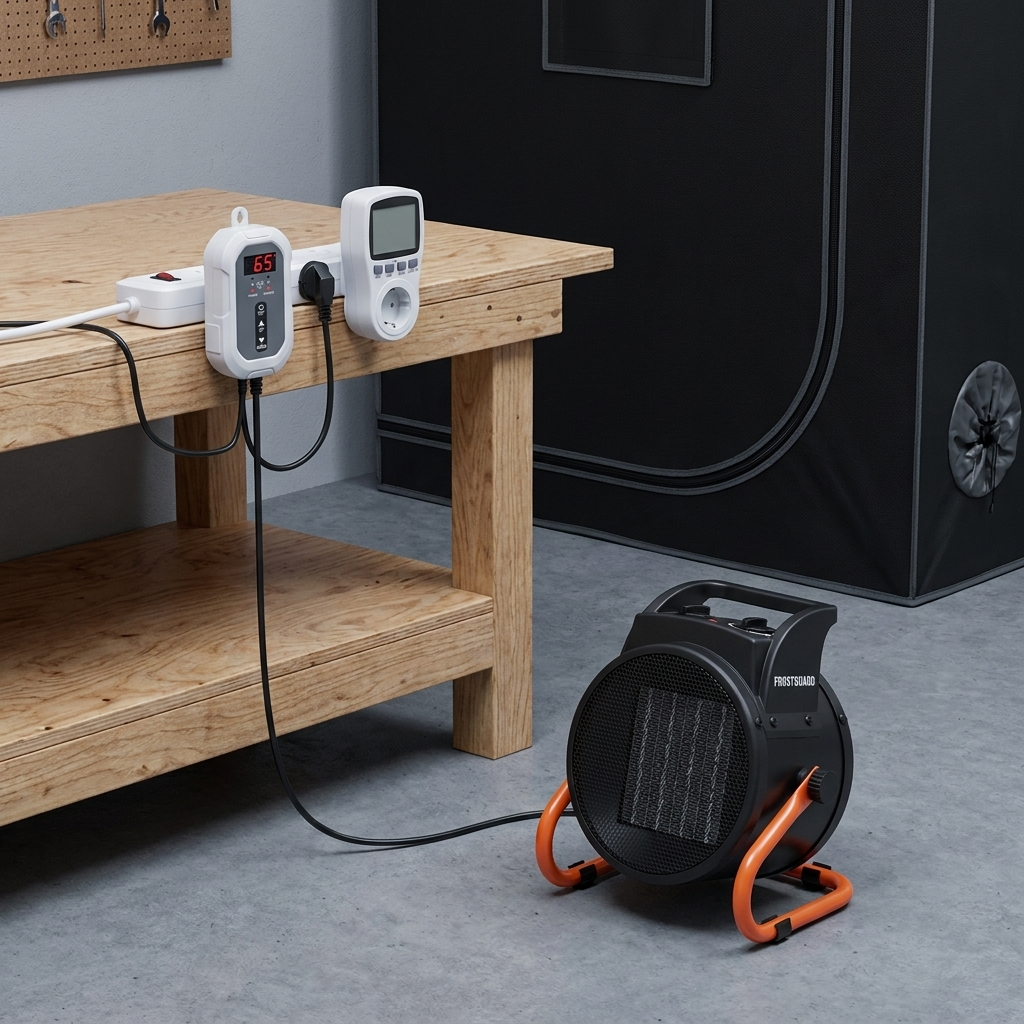
Duty Cycle Is the Bill. Not Wattage.
This is the one that was actually costing me money. A 1500W heater on High with no control runs 100% duty from lights-off to lights-on. Twelve hours. That's 18 kWh a night, on top of the lights. Same heater with a controller holding a setpoint at canopy runs when the canopy dips and stops when it's back — in a 4×4 in a garage, that came out to about 18–25% duty on the 800W setting across the 30 nights.
| Setup | kWh / night | $ / month @ 17¢ |
|---|---|---|
| 1500W, High, no control (12h, 100% duty) | 18.0 | $92 |
| 1500W + thermostat socket reading the room (~45% duty) | 8.1 | $41 |
| 800W + probe at canopy (~22% duty, measured) | 2.1 | $11 |
The heater didn't get cheaper. It got shorter. Wattage is how hard it hits; duty cycle is how long, and how long is the whole bill. One reviewer of a dumb heater put it at "$100 a month." That's the top row.
PTC vs Nichrome Is a Fire Story, Not a Spec Line.
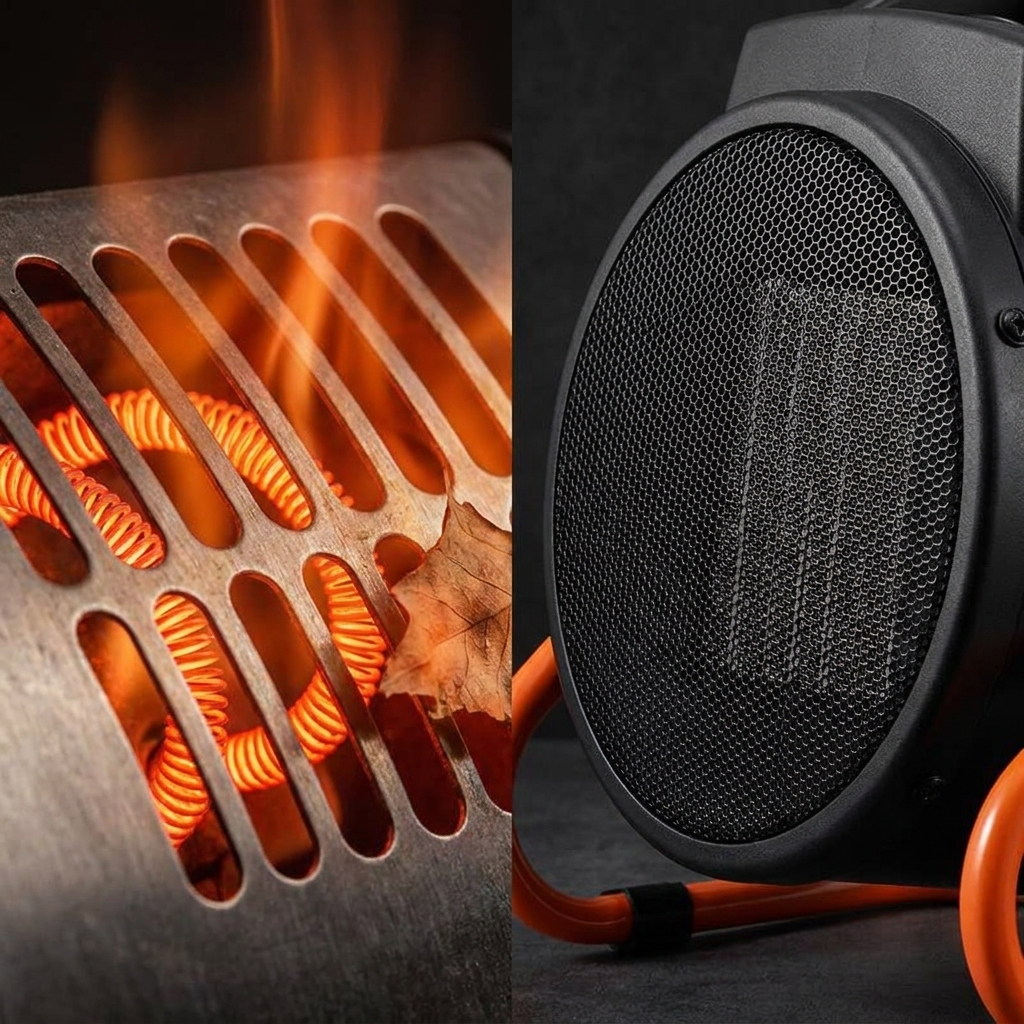
A tent is nylon and mylar, full of dry leaf litter and a carbon filter, in a garage with the gas cans. Now think about what's inside the $30 heater. A nichrome wire coil at a dull-red glow, behind a grille you can push a leaf through, with a thermal fuse as the only thing between "hot" and "on fire." Heater #2 was one of those. It ran until it smelled like burning wire, and then I threw it out.
PTC ceramic works the other way. As the element heats, its resistance climbs, so current falls, so it self-limits at a fixed temperature by physics, not by a fuse. There's no red glow because there's nothing running hot enough to glow. The FrostGuard puts that ceramic block behind a fine mesh you can't get a leaf into, in an alloy steel body, with overheat protection on top, ETL listed.
Add a controller that cuts the power the moment the setpoint is met and the thing is off more than it's on. Honest limit: it's IP20, dust-rated, not splash-rated. Keep it off the wet side of the tent and away from the humidifier's throw.
Two Appliances for One Climate Problem Was the Actual Mistake.
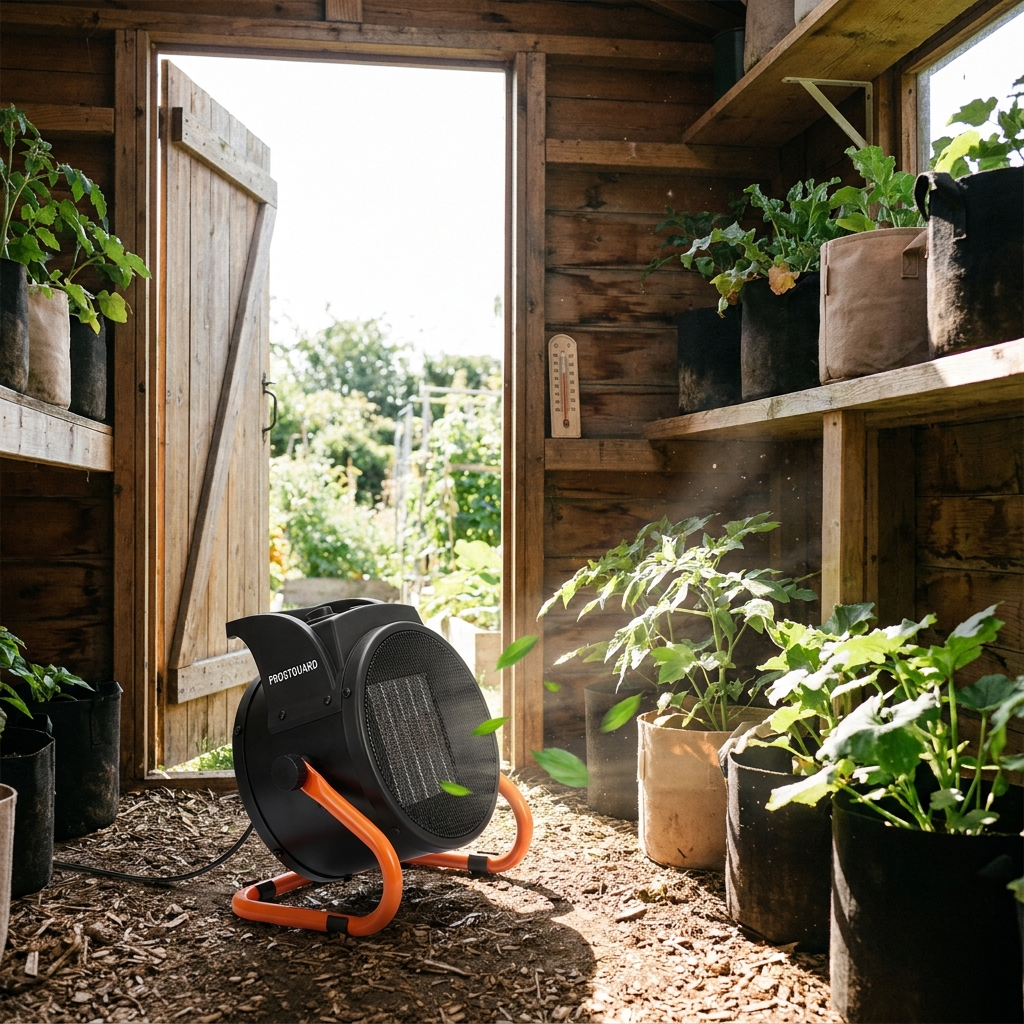
Winter nights drop the tent out of range. July afternoons in the shed cook it. I was running a heater from November to March and a clip fan from May to September, two power draws, two things to fail, two things on the shelf half the year.
Same knob, three positions: fan-only / 800W / 1500W. Fan-only is the 22W blower with no element — 198 m³/h of air moved across the canopy, which is exactly what a hot shed or a stagnant tent needs to knock the leaf-surface temp down and keep VPD in range. In winter it's on the 800W setting under the controller. In summer the controller isn't even plugged in; it's a floor fan with a tilt head. One appliance, twelve months, and the second one went back in the box.
BTU Shopping Doesn't Fix a Control Problem.
After heater #3 I did what the forums tell you: went looking for more BTU. A 4×4×7 is 112 cubic feet. A 1500W PTC unit is 5100 BTU. That is, by a wide margin, more than a sealed 4×4 can absorb — the 800W setting was already overshooting by a few degrees before I got the probe in the right spot. I didn't need a bigger heater. I needed the one I had to stop at the right moment and restart at the right place.
A heater without a probe at the canopy is an open loop. You are the feedback, at 4am, in the garage. A heater with a probe and a setpoint is a closed loop — it measures, it acts, it measures again. That's the entire difference, and it's why the same 1500 watts that failed me for three winters now holds 65°F to within a degree and a half all night while I'm asleep.
I don't want warmth. I want a number that holds. That's a controller problem, and the controller is in the box.
A closed-loop PTC ceramic heater: probe at canopy, setpoint on the controller, element that self-limits by physics, fan-only for summer. Set 65. It holds 65. No nichrome, no second appliance, no 4am.
Why 50% off in September? Because the people ordering a heater in September have a logger and a plan, not a dead tent. Early orders get the price. When the first cold snap hits and everyone buys at once, it goes back up.
Same loop every time. A probe where the plants are. A setpoint instead of High/Low. An element that can't glow. And a heater that's off more than it's on — which is the only thing that ever moved the bill.
$79.95 during the Fall Sale — half off, free shipping, 30 days to send it back. Probe at canopy, setpoint on the controller, PTC element that self-limits, fan-only for July. You don't want warmth. You want a number that holds.
Get FrostGuard — 50% Off →