I Bought Four Greenhouse Heaters in Six Years. Here's What I'd Tell Myself in 2019.
A tray lost in March doesn't cost you twelve dollars of seed. It costs you the year — there's no second sowing that catches up. It took me three heaters, a separate thermostat socket and two short seasons to work out that I was climbing the wrong ladder.
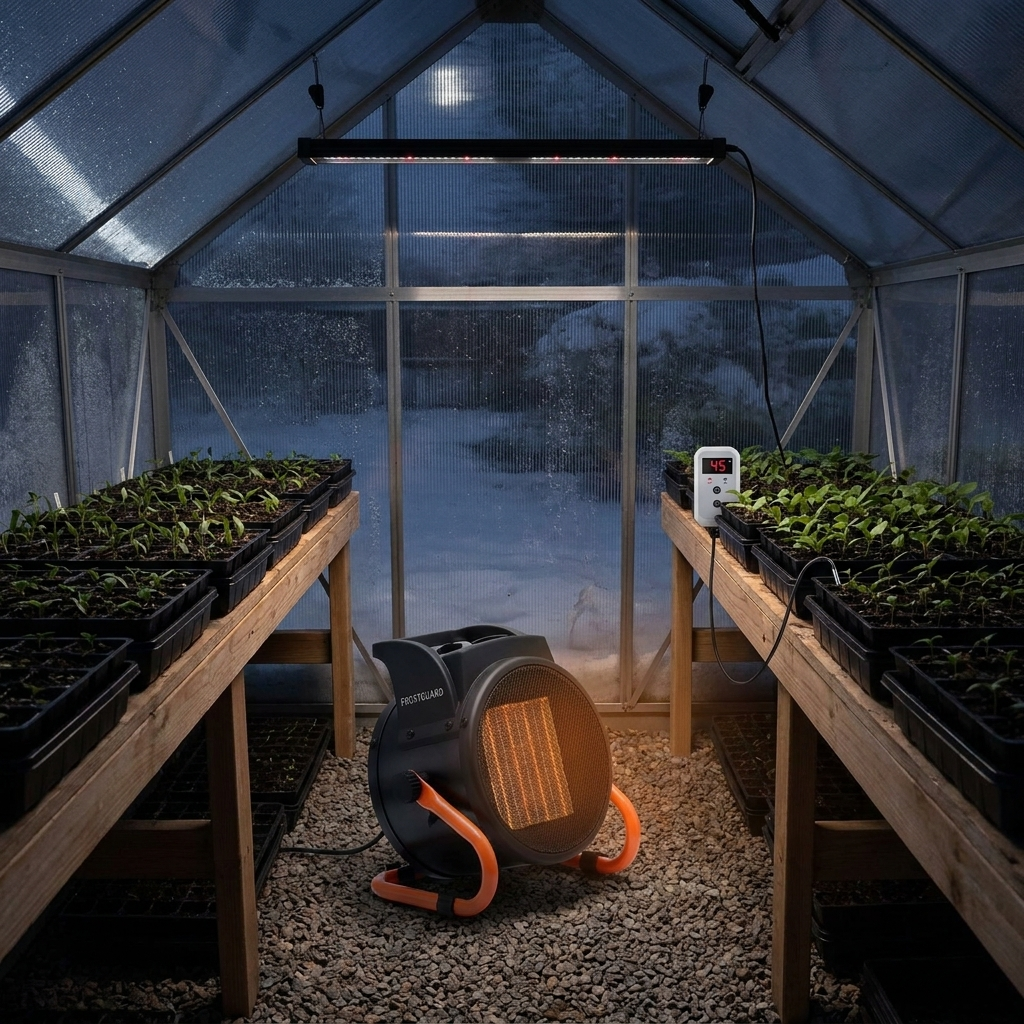
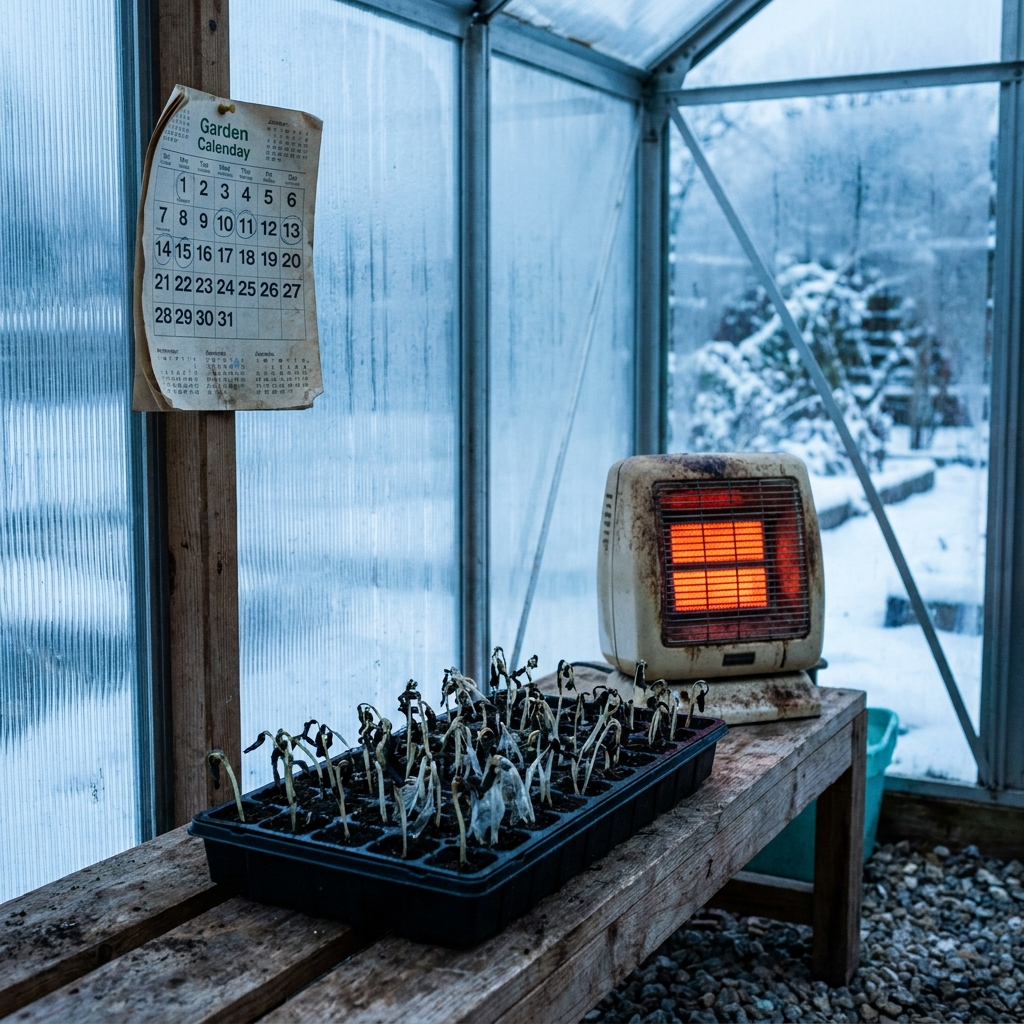
The Heater Ran All Night. The Tray Still Died. Watts Were Never the Problem.
2019: a 750W ceramic heater from the hardware store. Tripped the breaker twice, then quietly did nothing. 2020: an oil-filled radiator, because "steady heat." Steady, yes. Also about four hours to make any difference. 2022: a 1500W fan heater, High/Low, ran flat out from dusk till I came in with my coffee. On March 9th it had been running for eleven hours straight and I lost fourteen trays of brassicas anyway. So I started pricing a 5000W 240-volt unit. That's the ladder everyone climbs. It's the wrong one.
Here's what I understand now. Not one of those heaters knew what temperature the tray was. They knew what temperature the heater was. The 1500W one pushed hot air at the roof all night, the roof leaked it, and the bench eighteen inches off the gravel sat at 31°F while the thermometer by the door said 44. More watts heats the roof faster. It doesn't move the number at the tray.
What moved it was a heater that reads the tray and stops. Same 1500 watts I already had — but with a probe in the soil and a controller that switches it on under 45 and off over it. It runs for twenty minutes, rests for an hour, and the tray never dips. I'd have saved three seasons and about four hundred dollars if someone had told me that in 2019.
The Thermostat Socket I Bought Separately Was Reading the Wrong Air.
I'm not a beginner. After the 2022 heater I did the sensible thing and bought a plug-in thermostat socket — the little box you plug the heater into, set a temperature, walk away. Forty dollars. It worked, in the sense that the heater did switch off. The problem is where it lives: in the outlet, four feet up the post, in the warmest air in the building. It read 46 and switched off. The trays, at bench height, were at 34.
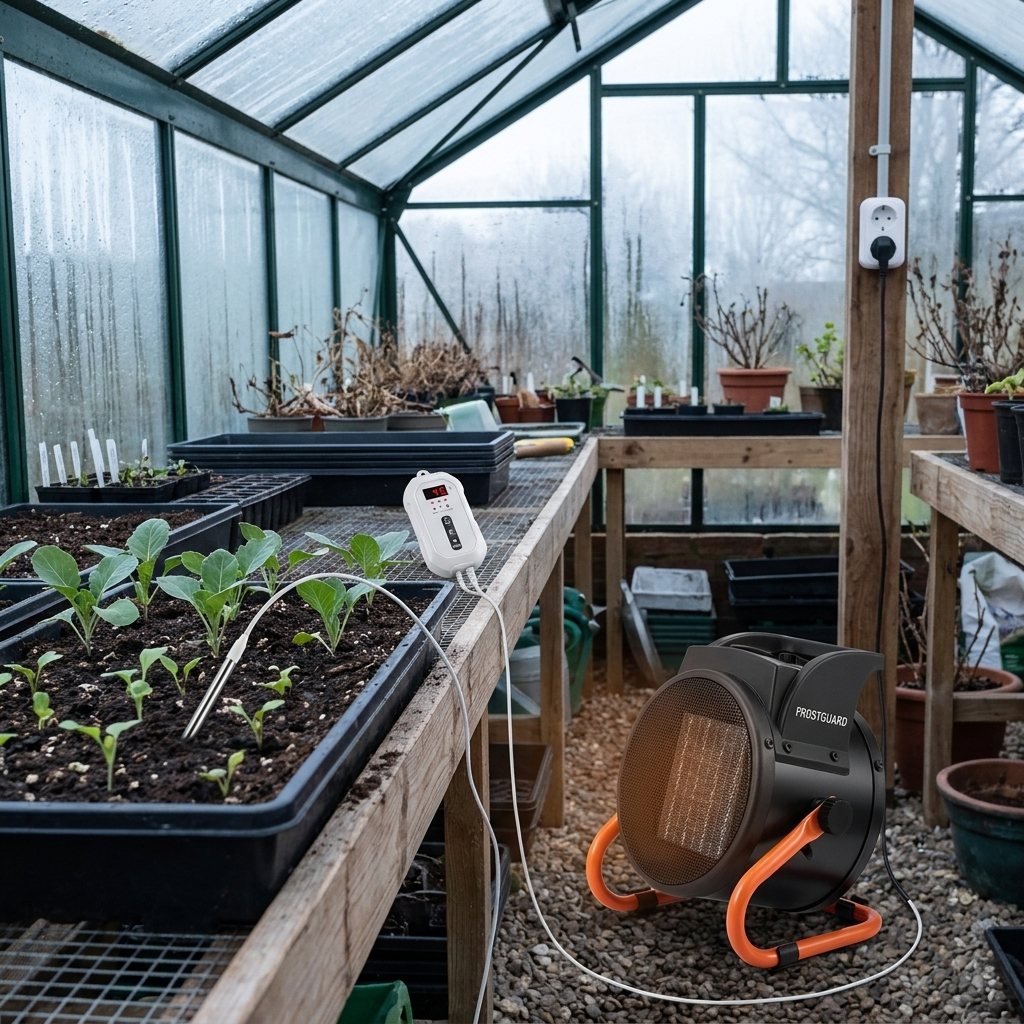
A thermostat in the outlet is measuring the outlet. The only reading that counts is the one at soil level, in the tray, at the coldest end of the bench. That means a probe on a cable, and it means the probe goes in the soil, not on the wall.
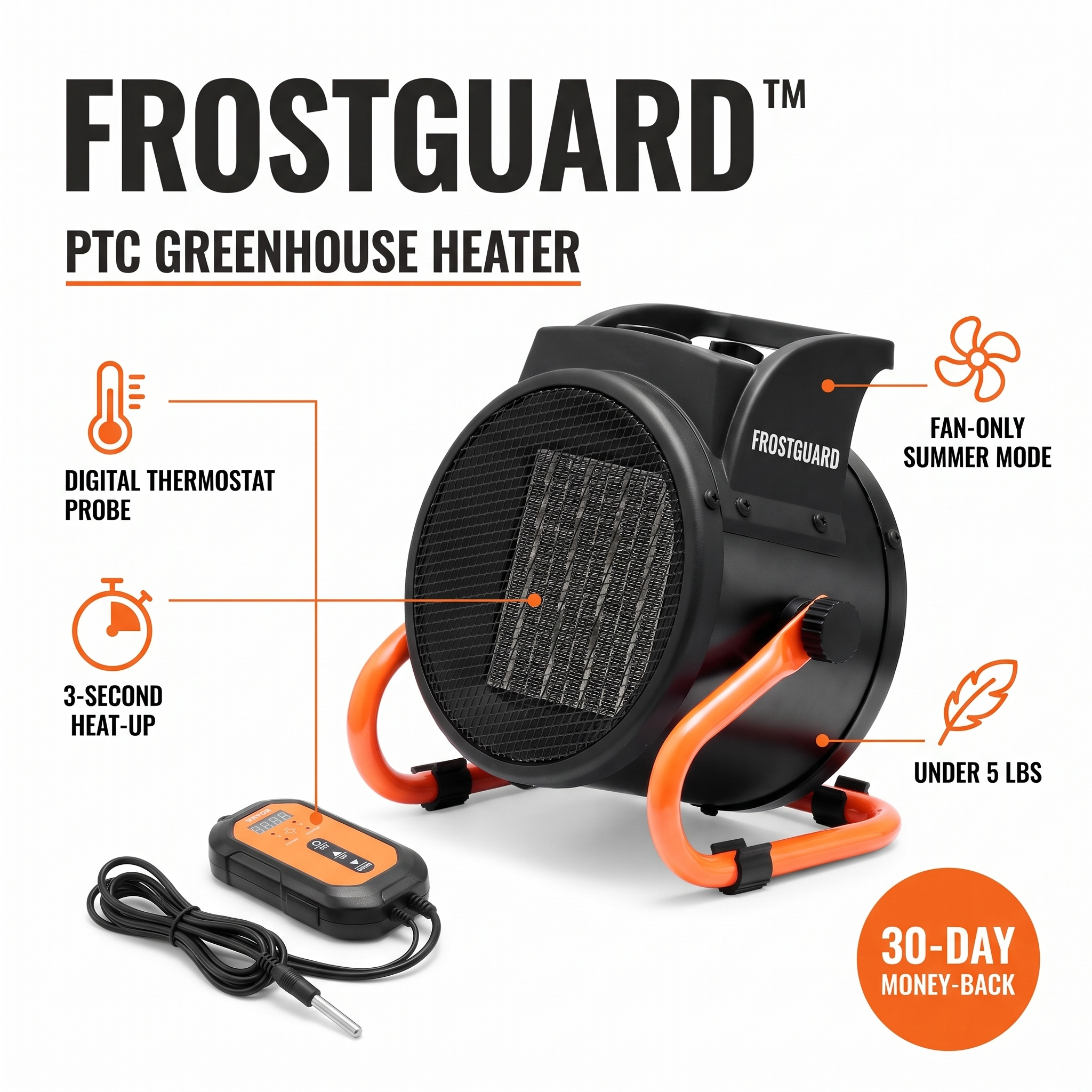
The controller that comes with the heater I use now is exactly that: a probe on a cable you push into the tray, and a display that tells you what the tray is at, live, in °F or °C. I put it in the tray nearest the door, because that's the one that dies first. If that tray is at 45, the whole bench is.
Damping Off Isn't Cold. It's Cold, Wet and Still.
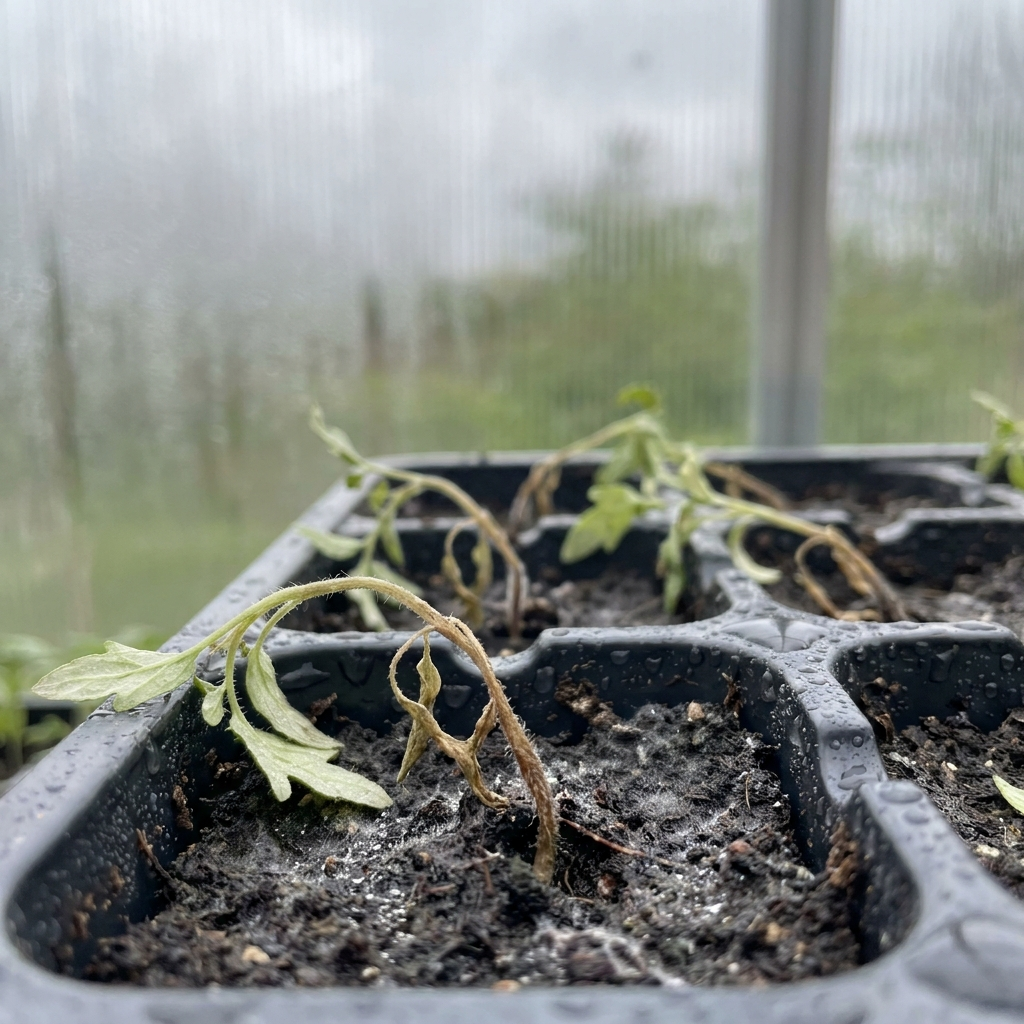
Every seed starter has had the tray where the seedlings just… fall over. Pinched brown at the soil line, fine the night before. That's damping off, and for years I blamed the cold, so I ran the heater warmer, which made the air wetter, which made it worse.
Damping off is a fungus, and it wants three things: a cold root zone, a wet surface, and air that doesn't move. Fix any one and it mostly stops. Fix all three and it's gone. Bottom-water and let the surface dry between. Water in the morning, never at dusk. And move the air.
The heater I have now has a fan-only setting on the same knob as the heat — 22 watts, no element, just air across the bench. On the damp grey days when it's too mild to heat and too wet to leave still, that's what runs. The condensation on the panels stopped. So did the falling over.
Leggy Seedlings Are a Light Problem. Running the Heater Warmer Makes It Worse.
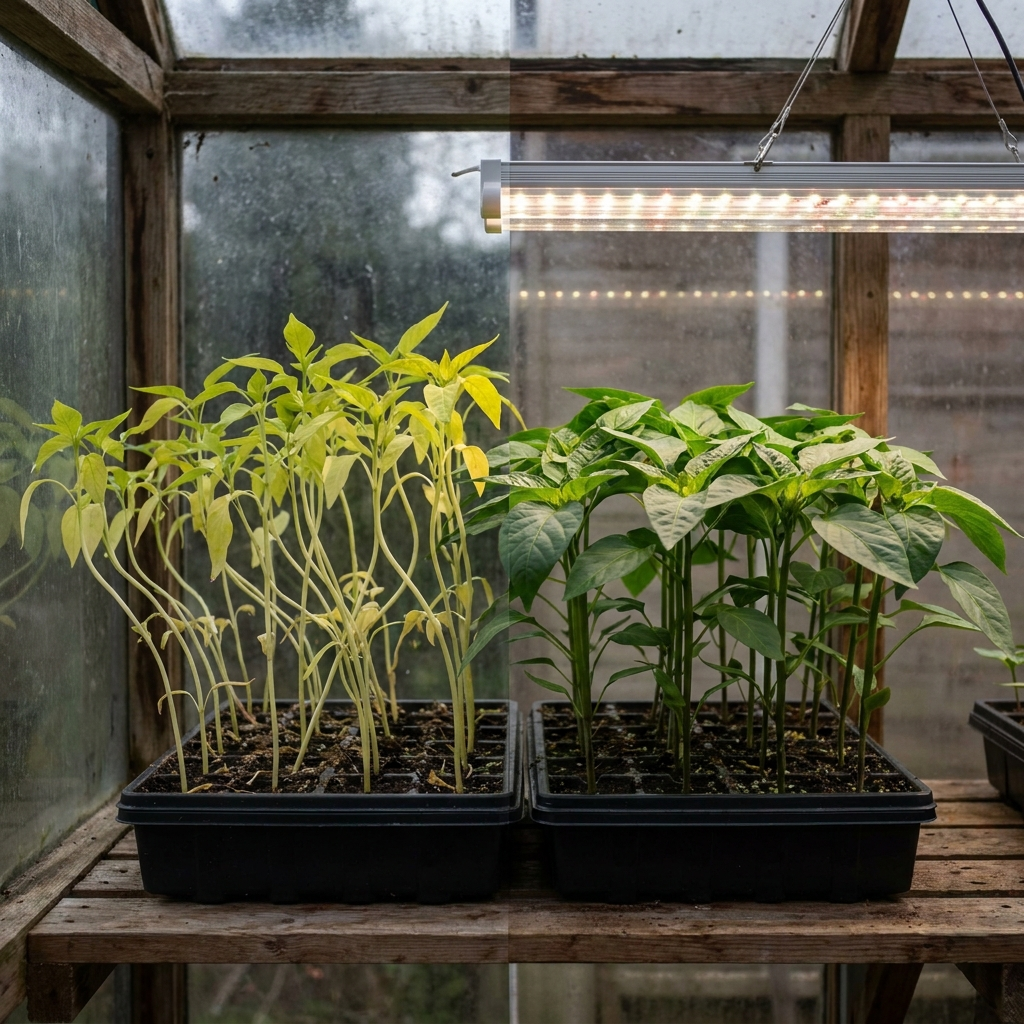
My 2021 peppers were eight inches tall and the width of a pencil lead. I'd been keeping the greenhouse at 60 overnight, on the theory that warm is good. Warm is good for germination. After that, warm nights plus February light equals a seedling stretching for a sun that isn't there.
The fix was counterintuitive and it's the same fix as everything else on this list: run cooler. Cool nights — 45 to 50 for the warm-season crops once they're off the mat — and lights two to three inches above the leaves for fourteen hours. Cool and bright makes a stocky, dark-green transplant with a stem you can pinch. Warm and dim makes the pencil lead.
This is the part the wattage ladder gets exactly backwards. I didn't need more heat. I needed the right amount, held there, and then left alone. The controller holds 48 for the tomatoes. The lights do the rest.
Harden Off on the Calendar. Not on the Forecast.
The calendar on my post has two dates that don't move: last frost, and last frost minus fourteen. Hardening off starts on the second one, ready or not, because a tomato that goes out a week late in Zone 5b fruits a week late, and a week in September is the difference between a crop and a frost.
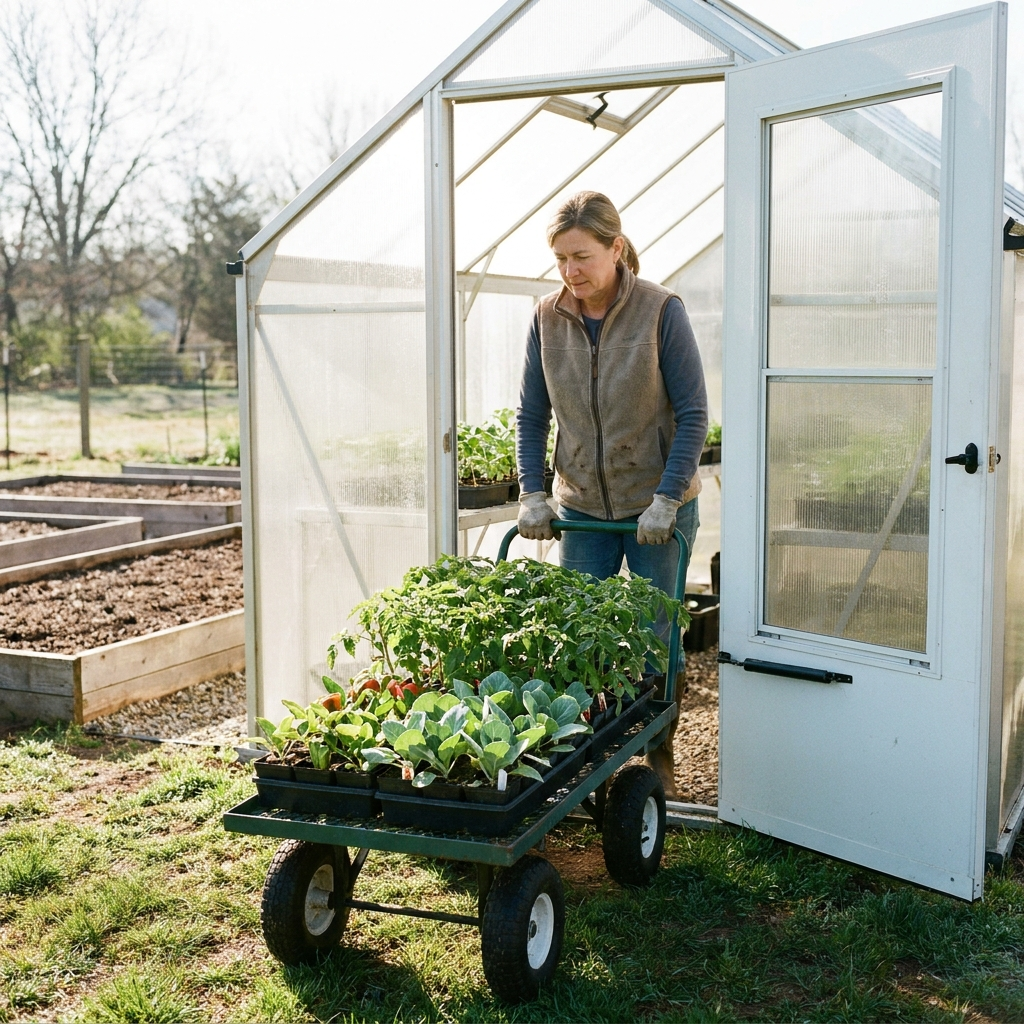
The problem was always the nights in that fortnight. Trays out in the sun all day, then the forecast says 36 and I'm hauling forty flats into the kitchen at nine o'clock. Half the hardening-off benefit undone, and my back, and a floor I couldn't walk across.
Now the greenhouse is the halfway house. Trays go out to the beds by day, back to the greenhouse at night, and the controller holds 45 so a surprise 34 never reaches them. No hauling, no kitchen floor, and the plants go out on the date I wrote down in January. That's the whole point of the calendar. The heater is what lets me keep it.
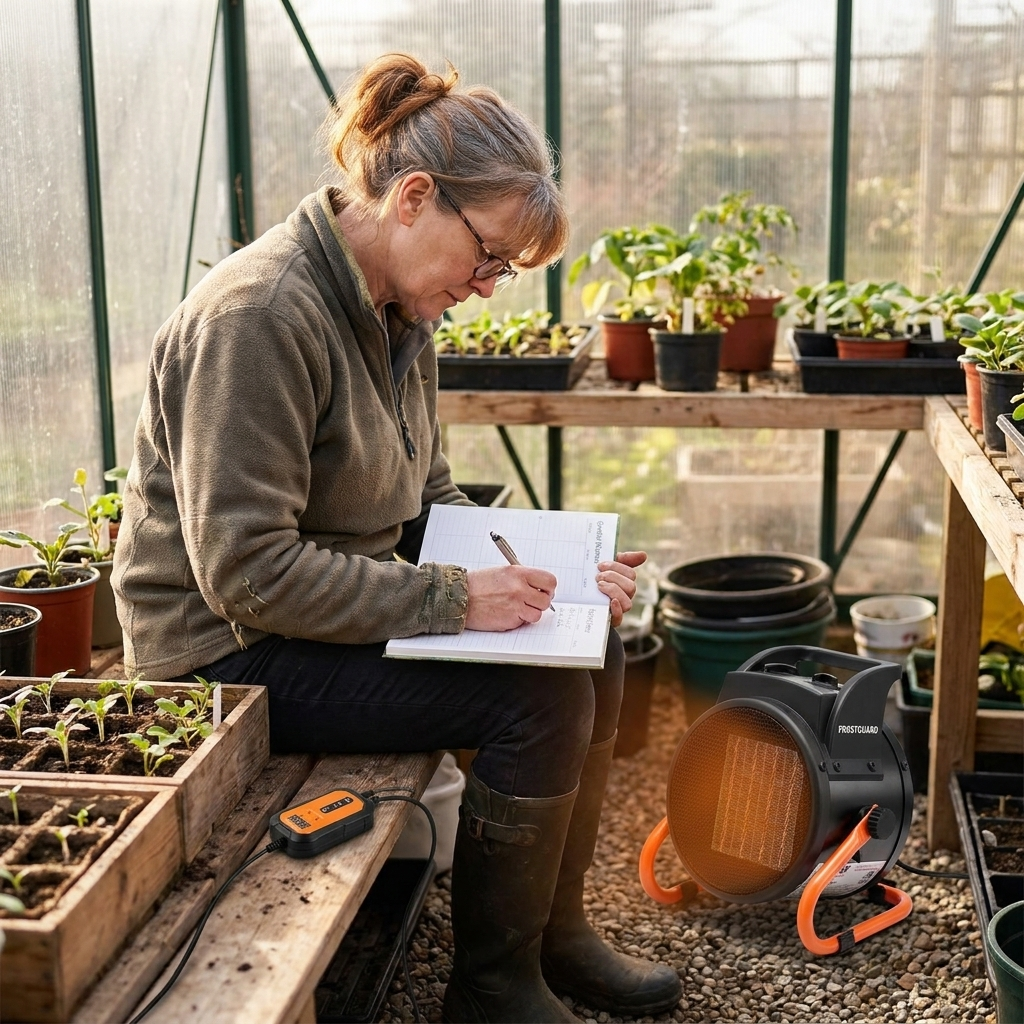
A 1500W PTC ceramic heater with the digital thermostat and soil probe in the same box. Push the probe into the coldest tray, set 45, and it switches itself on under it and off over it. No open coil. No separate thermostat socket. No hauling flats into the kitchen.
Why 50% off in September? Because the people who buy a greenhouse heater in September are the ones with a calendar, not the ones with a dead tray. Early growers get the price. When the first cold snap hits and everyone orders at once, it goes back up.
Same three things every time. A number instead of High/Low. A probe in the tray instead of a thermostat in the outlet. And a heater that stops when the number is met — so the tray never dips, and the bill never climbs.
$79.95 during the Fall Sale — half off, free shipping, and 30 nights to change your mind. A probe in the tray, a number you set once, and a heater that knows when to stop. Get off the wattage ladder. Get on the calendar.
Get FrostGuard — 50% Off →