6 Things I Got Wrong in My First Winter With a Lean-To — and the One That Nearly Cost Me My Father's Fig
I'm not growing tomatoes out there. I'm keeping eleven plants alive that I can't buy again. It took me three dead heaters and one very bad February morning to learn that what kills overwintered plants isn't the night you're watching.
I Watched the Wrong Night.
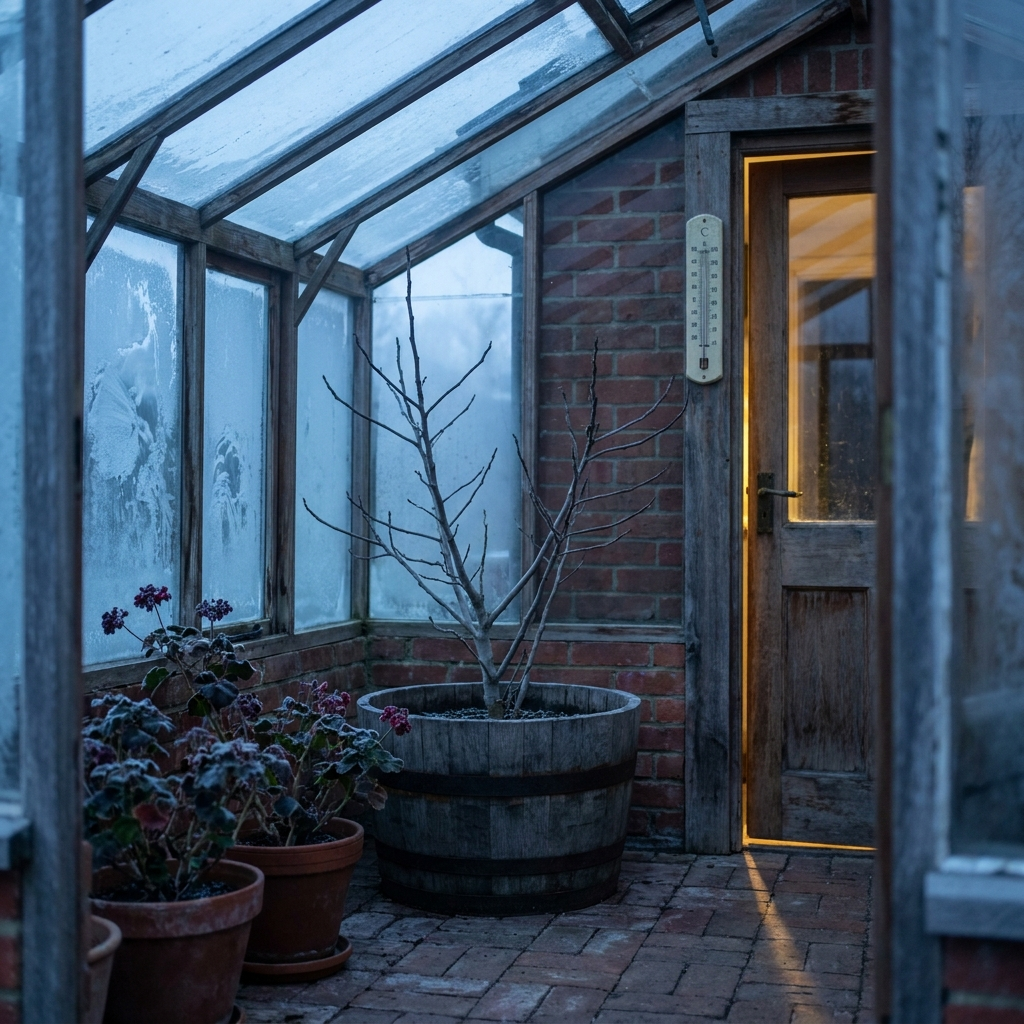
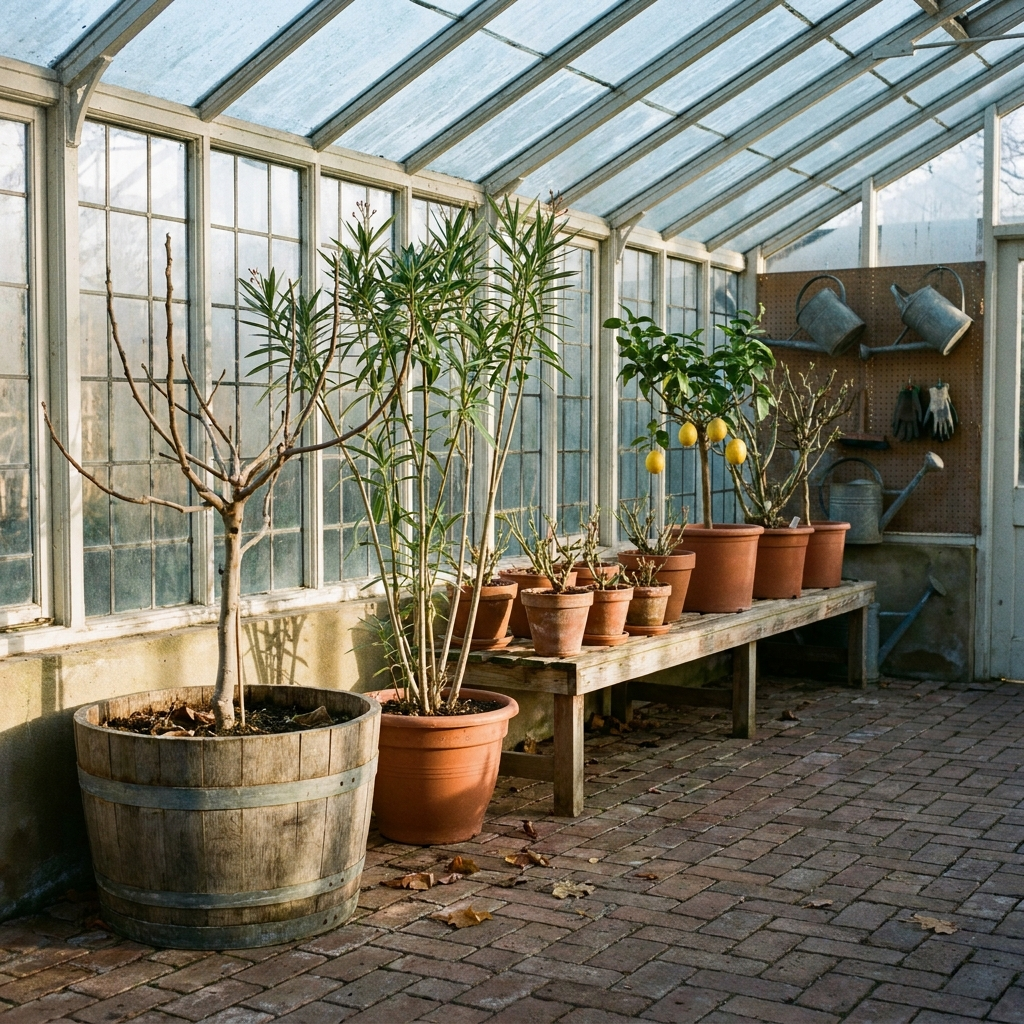
My father struck that fig from a cutting in 1974. He's been gone eleven years. It lives in a half-barrel in the lean-to off my kitchen, and every October I roll it in and start worrying until April.
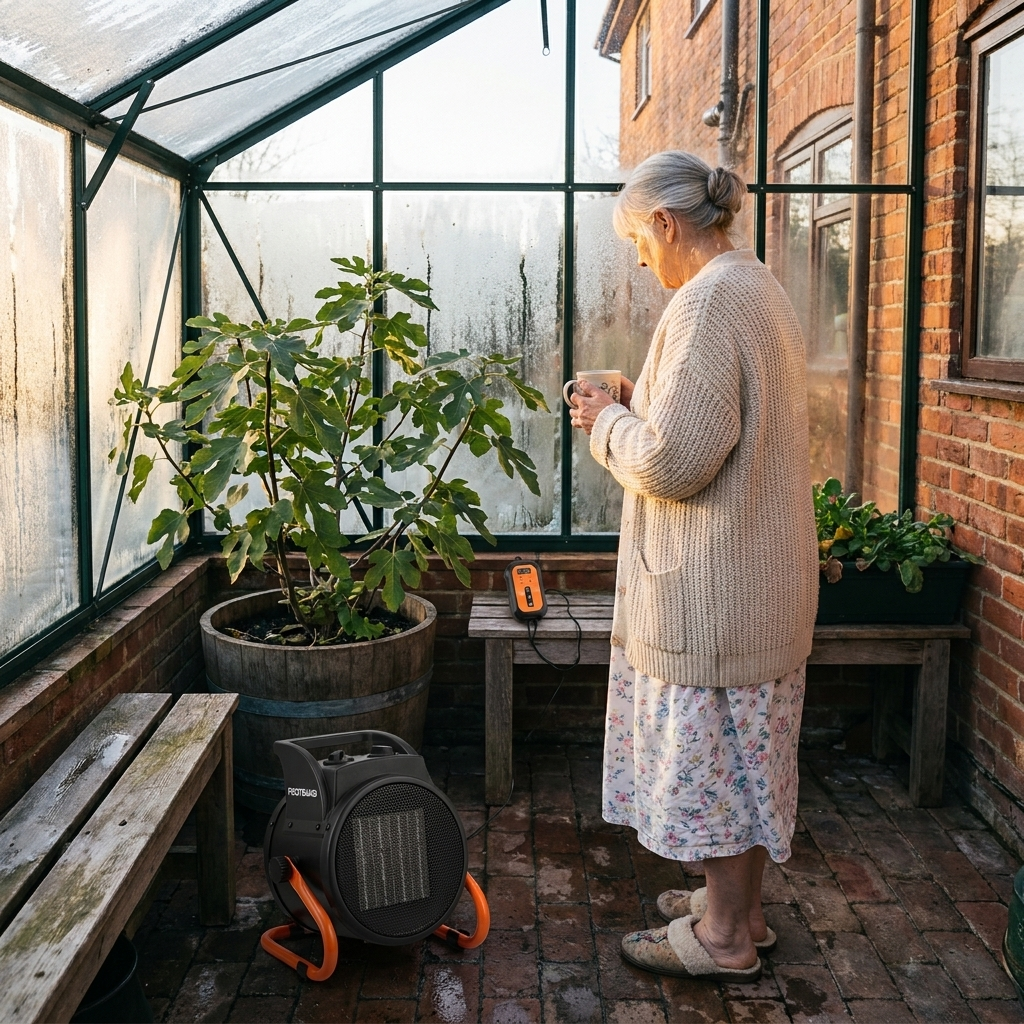
The first winter I did what everyone does. I watched the forecast for the big one — the polar-vortex night, the one the news talks about — and on that night I was out there at eleven, and again at two, with a flashlight and a cardigan over my nightgown. The fig was fine. The fig is always fine on that night, because I'm standing next to it.
What got the geraniums was a Tuesday in January that nobody warned me about. Forecast low of 34. Clear sky, no wind, and a lean-to loses heat through glass faster than a house loses it through walls. By 5am it was 27 on the floor. The coldest hour of the night is the one right before dawn, and it's the one nobody is awake for.
It isn't the night you're watching. It's the forty ordinary nights you aren't.
I Thought the Dial on My Heater Was a Thermostat.
It said High, Medium, Low. I thought Low meant "keep it a little warm." It doesn't. It means "run on low, forever, until Carol comes out and turns it off." So I'd turn it off at bedtime, because leaving it running all night frightened me — and then the Tuesday happened.
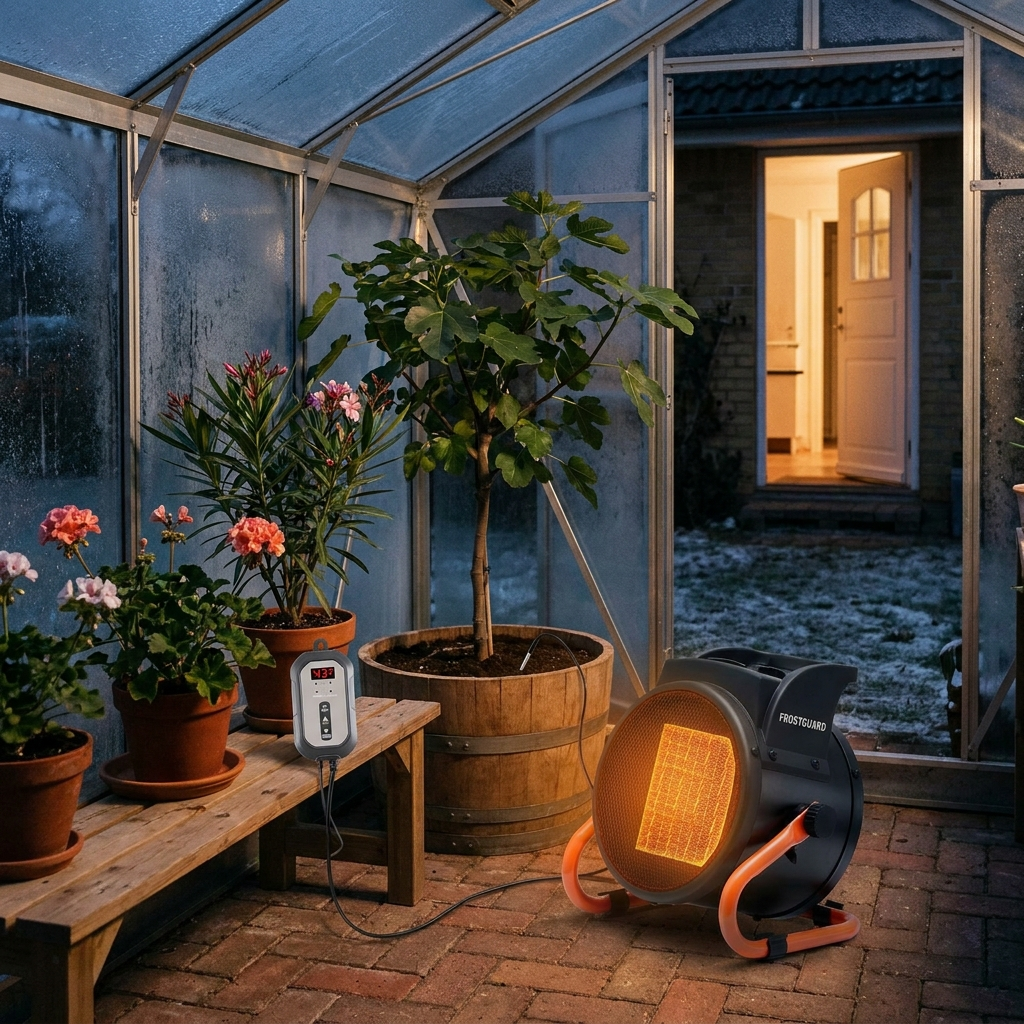
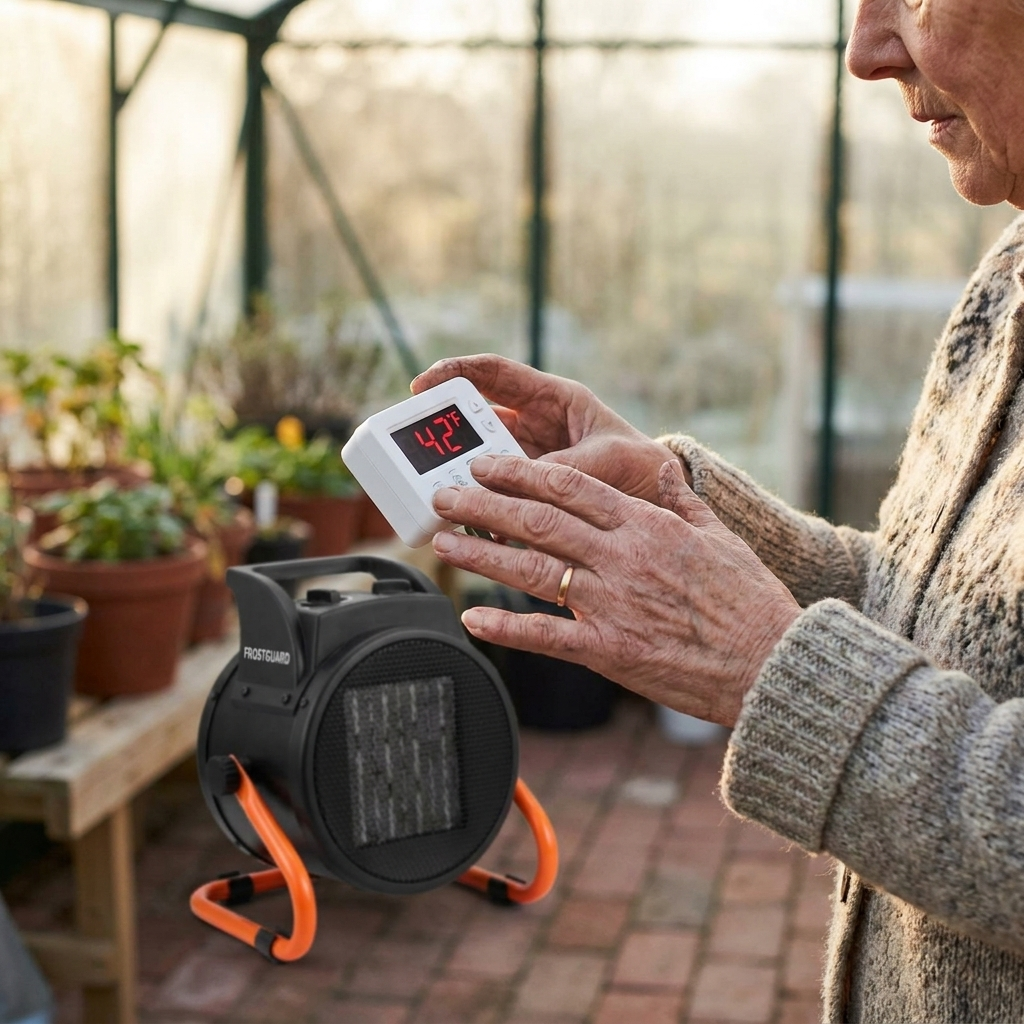
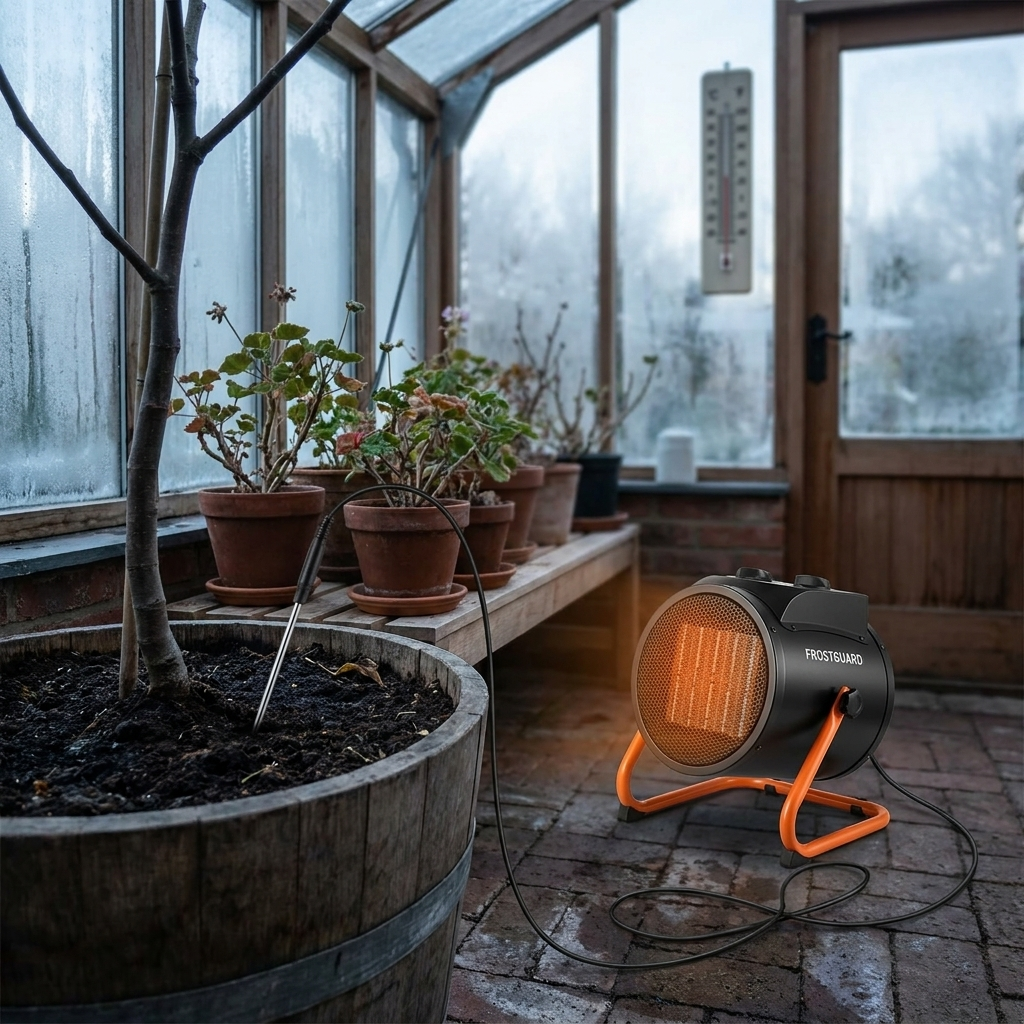
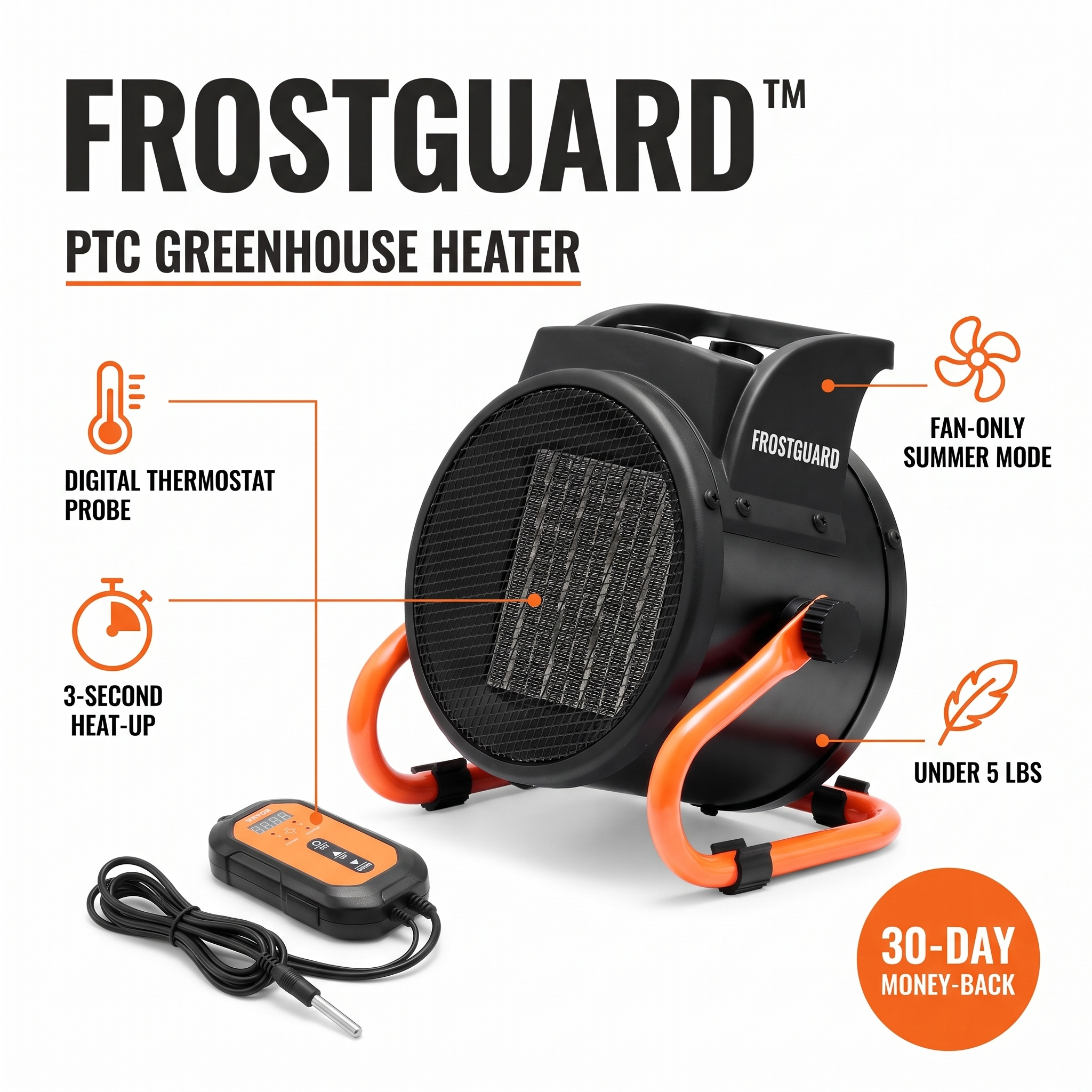
A thermostat is a number. You tell it 40 degrees, and it turns the heat on when the room drops under 40 and off when it climbs back over. That's the whole thing. The heater I have now came with a little digital box in the same carton — you plug the heater into it, set the number, and it does the checking. In the morning the display shows me the temperature at the fig. The first week it cycled itself on and off nine times one night. I slept through all nine.
A man on Amazon wrote the review that finally made this click for me: "I thought I would be able to set at a specific temperature. Not just high – medium – low." Same mistake. Everybody makes it once.
I Measured the Temperature Where I Stand. Not Where the Pots Are.
The second winter I bought a thermometer and hung it on a nail at eye level, right by the door. It read 41 the morning I lost the oleander's lower leaves. Cold air sinks. The floor by the glass, where every pot in the room actually sits, was somewhere around 33. I was reading the weather at my face and the plants were living at my feet.
This is the one rule I'd tattoo on every lean-to if I could: the probe goes at pot level. The thermostat that came with my heater has a probe on a cable — I push it into the soil of the fig's barrel, which is the lowest, coldest, most-loved pot in the room. If the fig's roots are at 40, everything else is warmer than that. The number on the display is the number that matters, not the one by the door.
And the heater sits on the floor too, tilted up toward the bench, so the warm air is pushed across the pots before it rises to the roof where nothing lives.
I Didn't Know Which Plant Needed What.
I was heating the lean-to like a living room, which is expensive and wrong. Most of what we overwinter wants to be cool and asleep, not warm and confused. A fig kept at 60 will try to leaf out in January and exhaust itself. A geranium kept at 60 gets leggy and rots. What they need is to stay above a floor, and the floors are lower than you'd think.
Here is what I run now, from the lowest pot up. One number for the whole room, set to the fussiest plant in it:
| Plant | Keep it above | Notes |
|---|---|---|
| Fig (in a pot, dormant) | 35°F | Dark and cool is fine. Roots in a pot are the weak point. |
| Oleander | 35–40°F | Bright and cool. Will drop leaves under 30. |
| Geraniums (pelargonium) | 40–45°F | The fussiest. Below 40 they go to mush. |
| Citrus | 45–50°F | Keep it bright. Fruit drops if it swings. |
| Brugmansia, fuchsia | 40°F | Cut back hard, keep barely moist. |
If you've got geraniums in the room, the room is set to 42. That's it. That's the whole plan. The heater only runs when the probe says the floor has slipped under 42, which on most nights is a couple of hours, not eight.
I Let It Get Stuffy.
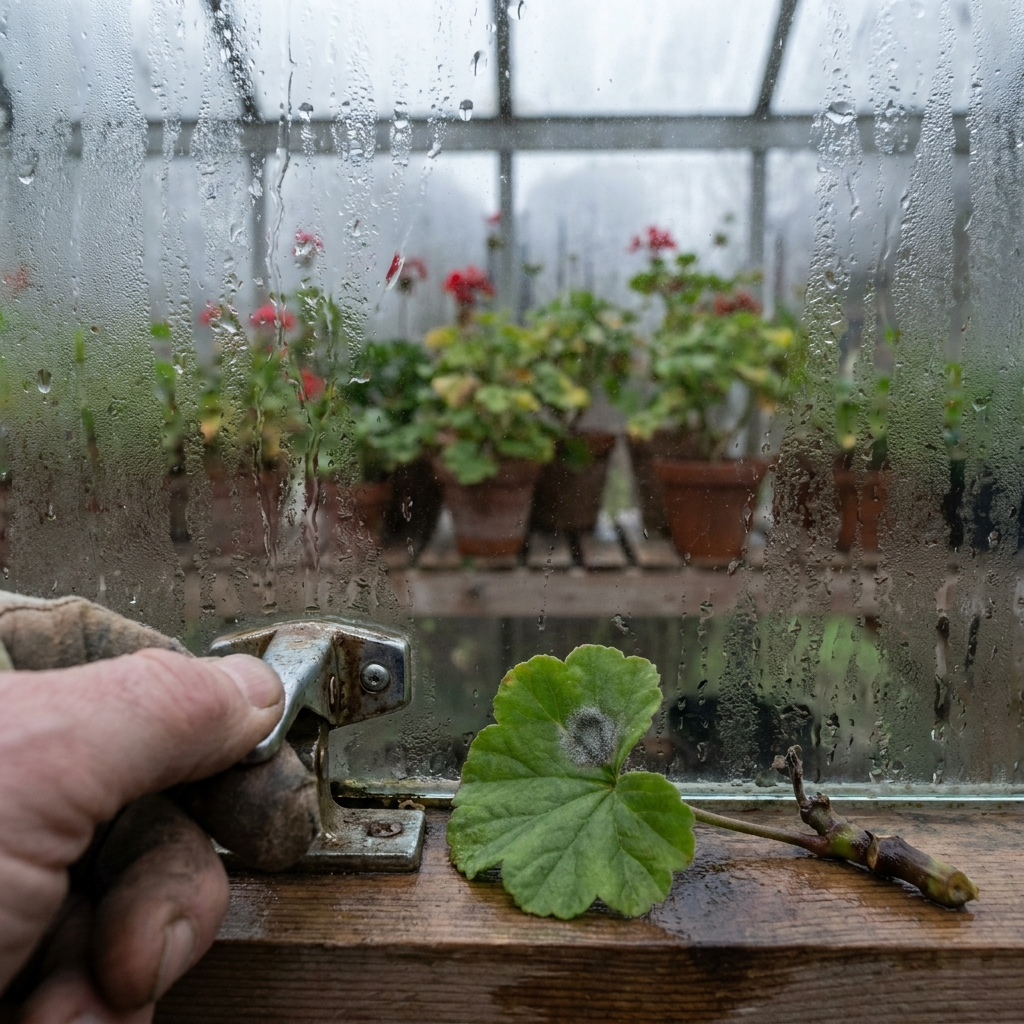
Nobody tells you this: grey mould kills more overwintered geraniums than frost does. A lean-to in January is a closed glass box full of damp soil. Every night the glass sweats, the water drips onto the leaves, and by February you've got fuzzy grey patches and stems that go soft from the bottom. I lost my neighbour Ruth's pink geranium to it the third winter, and it wasn't cold that did it. It was still air.
Three things fixed it. I water in the morning, sparingly, so nothing sits wet overnight. I crack the vent for an hour on any mild afternoon. And on the grey days when I can't open anything, I run the heater on fan-only — no heat, just air moving across the leaves. The one I have has a fan setting on the same knob as the heat, so it's the same box doing both jobs.
Moving air also stops the cold pooling on the floor, which is where — you'll remember from mistake #3 — everything I love is sitting.
I Trusted the Machine. Then I Didn't Trust It at All.
I've killed three heaters. One stopped after two months. One started smelling like hot wire in the second winter and I unplugged it and threw it in the bin the same afternoon. The third had a glowing red coil behind a thin grille, and one night a dead leaf drifted into it and I found the scorch mark in the morning. After that I stopped trusting any of them enough to sleep, and I went back to the flashlight and the cardigan. Which is how you end up 64 years old, checking a fig at 2am.
What I understand now that I didn't then: it's not that heaters are dangerous. It's that those heaters were. The one in my lean-to now has no coil at all — the heat comes off a ceramic block that gets less able to heat the hotter it gets, so it physically can't run away with itself. There's a fine mesh over the front, not a grille you can push a leaf through. Steel body, safety-listed, and the thermostat cuts the power the second the floor is back over 42. It's on for minutes, off for hours, and it's never once smelled of anything.
I still walk out most mornings, coffee in hand, to look at the display. It says 43, or 44. The fig doesn't know anything happened. Neither do I, and that is the entire point.
A PTC ceramic heater with a digital thermostat and a soil probe in the same box. Set one number to your fussiest plant, push the probe into your lowest pot, and go to bed. No open coil. No flame. No fuel. Nothing to check at 2am.
Why 50% off in September? Because the people who buy a greenhouse heater in September are the ones who move their plants in before the first frost, not after it. Early growers get the price. When the first cold snap hits and everyone orders at once, it goes back up.
Every one of them is describing the same three things. A number instead of a dial. A probe where the plants are instead of a thermometer by the door. And a heater that switches itself off — so nobody has to walk out in a cardigan at 2am to do it.
$79.95 during the Fall Sale — half off, free shipping, and 30 nights to change your mind. A thermostat with a number on it, a probe that reads at pot level, and a heater that can't glow, can't flame and can't run away. Set it to your fussiest plant. Go to bed.
Get FrostGuard — 50% Off →