
The Heater Ran All Night. I Still Lost the Lemon Tree. Here's What Was Actually Happening.
Eleven years old, out in April and back in October on the hand truck. I found it at seven on a Tuesday morning in November with the heater running four feet away and still blowing warm air. It took me a full year to work out what happened in there, and it was not the cold.

The Heater Was Running. That's the Part I Couldn't Get Past.
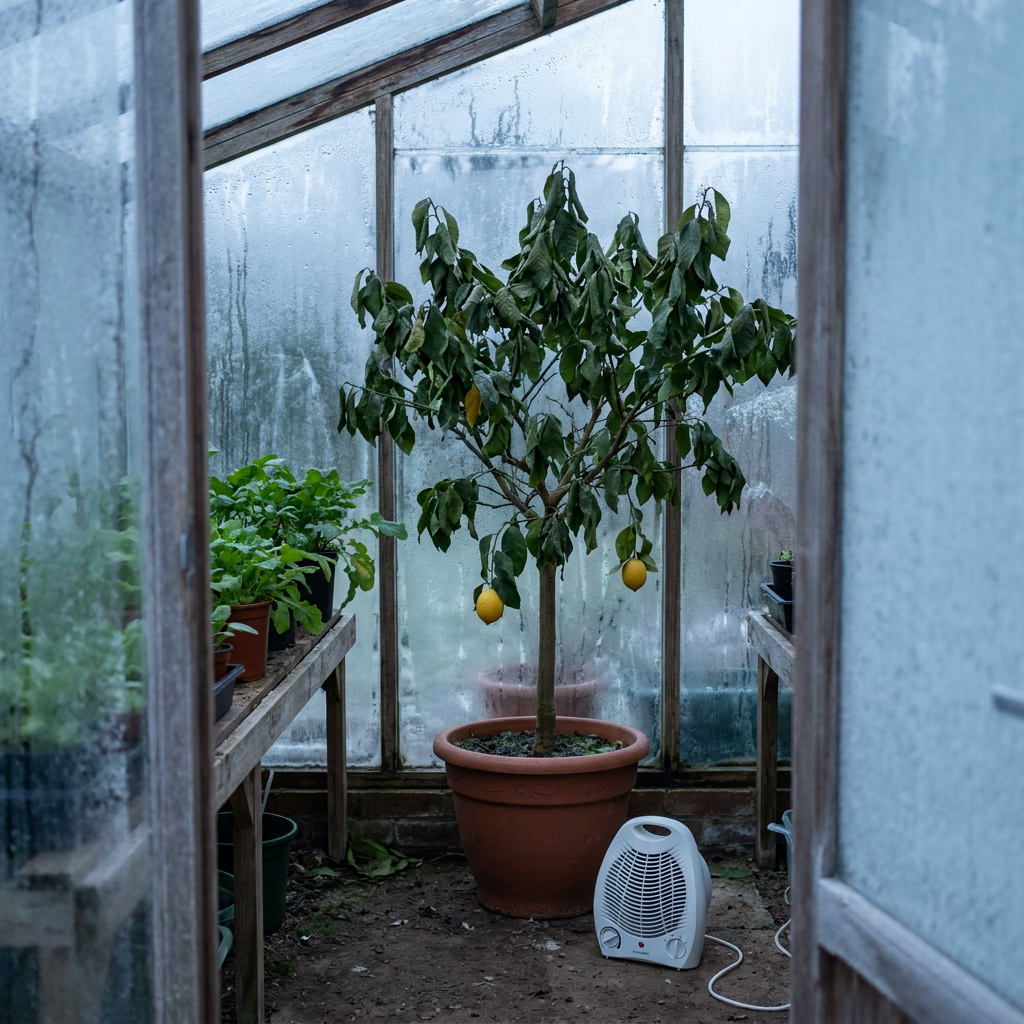
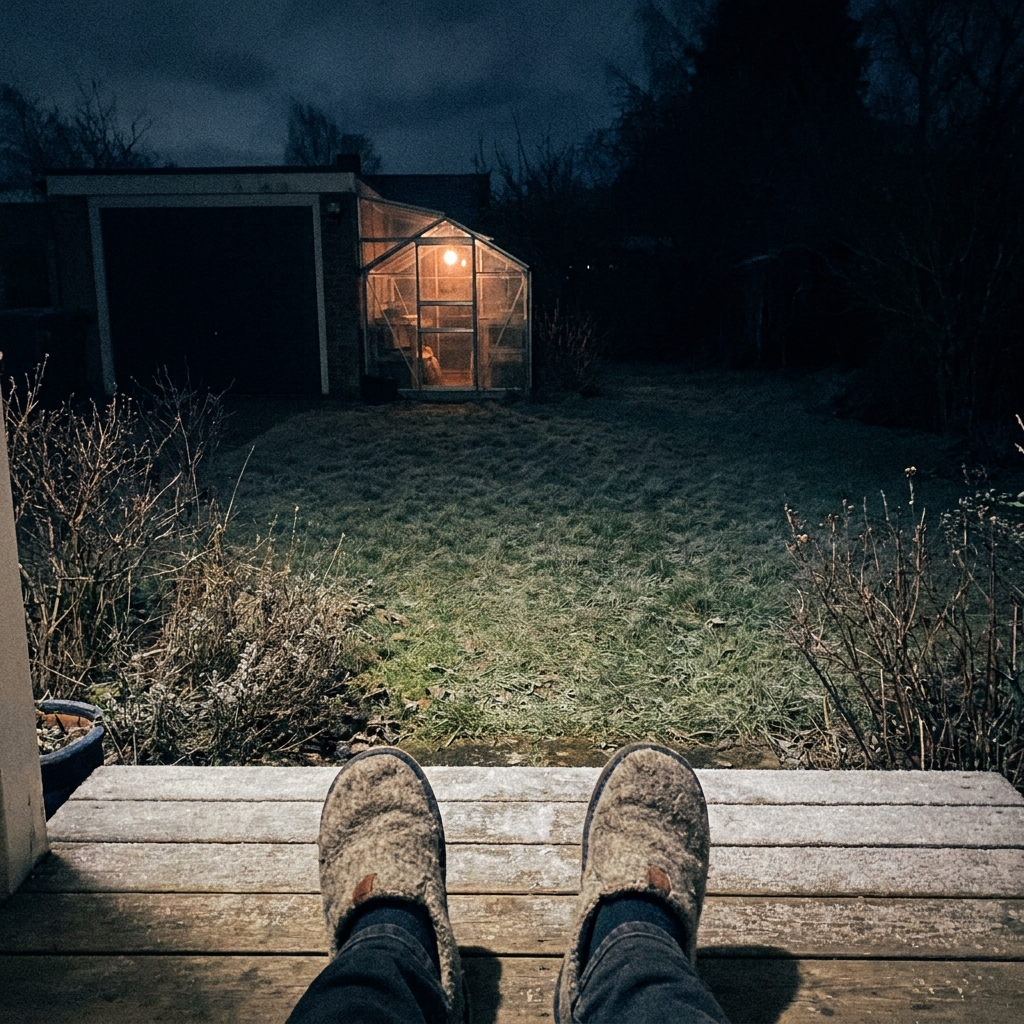
You know before you open the door. I could see it through the glass from halfway down the path. Frost bitten leaves don't look like frozen leaves — they go soft and dark and sort of wet, and they hang differently.
The Meyer was at the back wall. Eleven years old. It came from my mother's house and it went out in April and came back in October on the hand truck, every year, since she died.
I'd carried three tropicals into the kitchen on the Monday because I only have two hands. The rest I left, the way you do, because the heater was out there.
And it was. Not broken, not tripped, not unplugged. I stood there at seven in the morning with a dead lemon tree in front of me and put my hand out and felt warm air coming off the thing, four feet away from it.
I spent the next year certain I knew what had happened. I was wrong about nearly all of it.
The Building Is Half of It. I'm Going to Say That First.
It's a lean-to. Single glazing, an aluminium frame that whistles, and a north wall that leaks heat like an open window. I'm not going to pretend otherwise and I'd stop reading anything that did.
I bubble wrapped that north wall in November and it genuinely helped. You can feel the difference standing next to it. Foam tape round the door, a rolled towel along the bottom where the draught comes through. Anybody who tells you insulation isn't the first job has never run one of these.
So I did more of it, and then the rest of what I tried, which I'm a bit embarrassed about. Candles under upturned terra cotta pots, which is all over the internet and does approximately nothing on the night you actually need it. An indoor-outdoor thermometer with the sensor at the back, which faithfully reported thirty one degrees to a woman who was asleep.
Here's the trap. Because the building really is part of the problem, it's a very comfortable place for the blame to sit. If it's the glazing, there's nothing to be done short of money I don't have, and a closed door lets you stop asking.
There's a Thermometer Inside Your Heater.
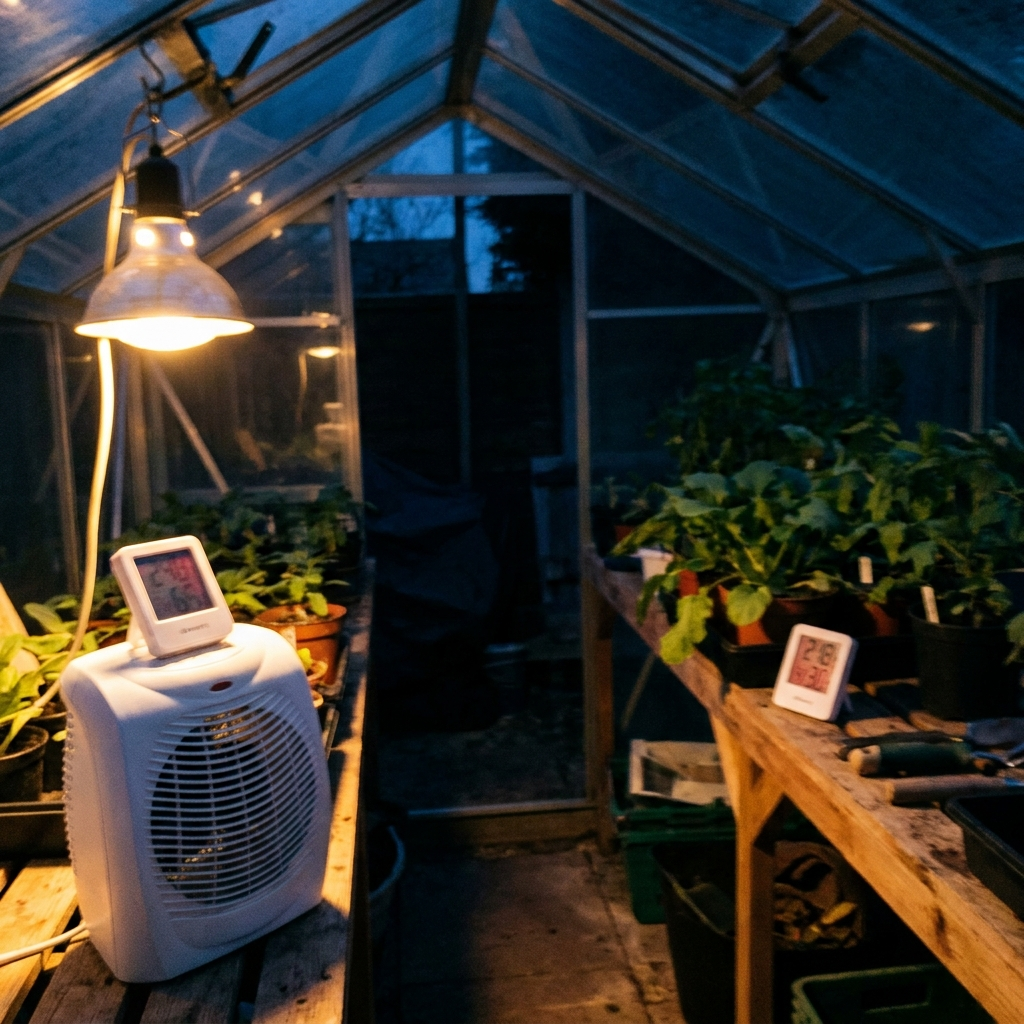
You already know the reading isn't one number. If it says thirty five at the door I can promise you it's below freezing at the back wall, and every one of us works that out in the first winter. So I never trusted the door reading. I kept the good thermometer at the back where the tender things were.
What nobody told me is that the heater was using exactly that kind of reading to make every decision it made all night.
The dial is wired to a sensor, and that sensor lives inside the casing, a couple of inches from the element. It has to — that's where the wire goes. Which makes it the warmest object in the entire building.
It comes up in about four minutes. Not the greenhouse. Itself. Then it does exactly what it was built to do and switches the heater off, because as far as that little sensor is concerned the work is finished. Meanwhile the back wall is at twenty nine.
Somebody in my overwintering group did it as a demonstration and I copied her that night. A spare thermometer on the heater casing, the good one left at the far end, both photographed at the same moment. Forty eight, and thirty one. And while I was standing there in my coat, the heater clicked off.
I've heard that click a thousand times. I'd always assumed it meant the greenhouse was warm.
A Snowflake at One End, a Flame at the Other, Nothing in Between.
My heater was my husband's Lasko out of the garage. The dial has no numbers on it. It has a little picture of a snowflake and a little picture of a flame and about four inches of nothing between them, and for nine winters I turned it to roughly the same place with my thumb and hoped.
When the back wall started dropping I'd go out and turn it up. That's what you do. Turning it up means moving my thumb about a centimetre. Some nights I'd turn it as far as it went and stand there a minute to feel it blowing harder, then go back in feeling like I'd done something.
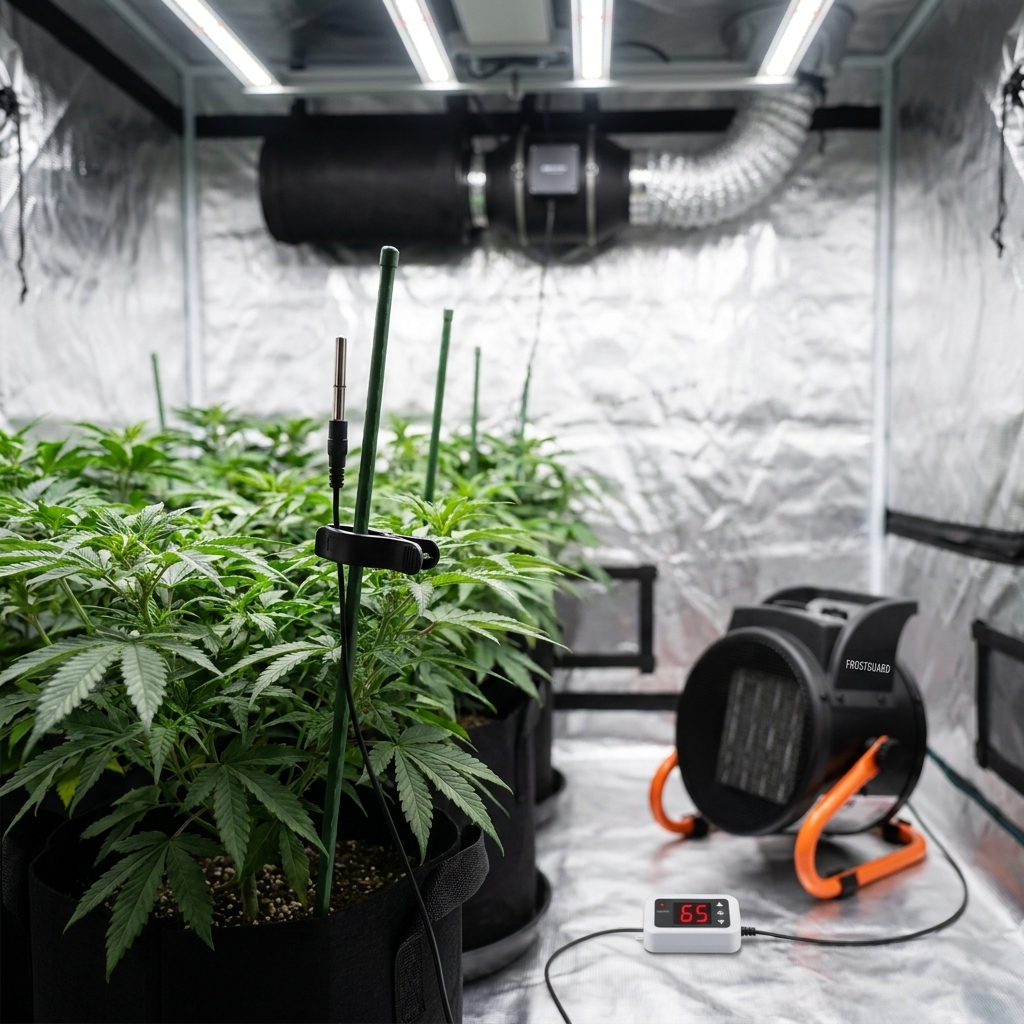
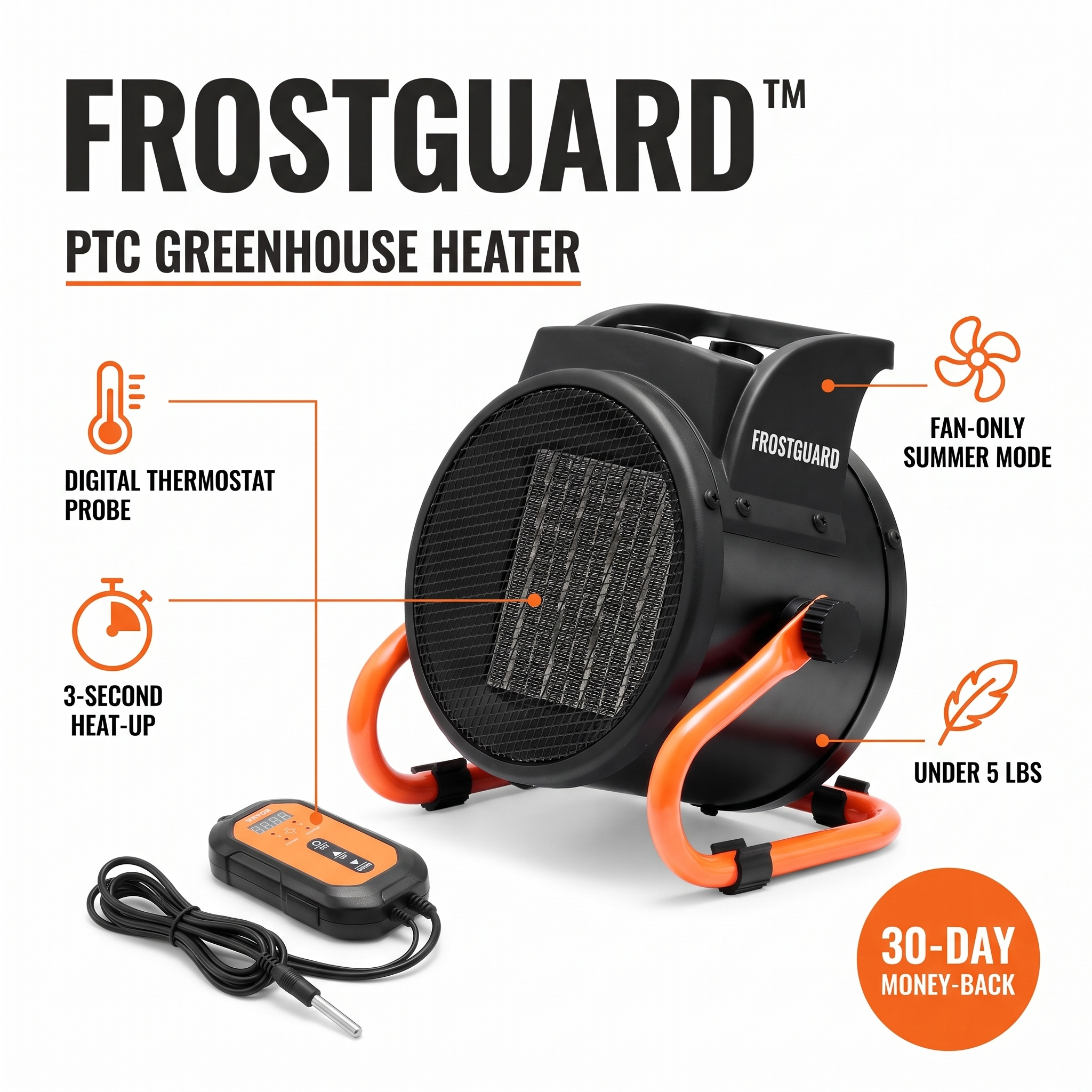
What I have out there now doesn't have an opinion about anything. The deciding is done by a separate controller with a sensor on a lead, and that sensor is not on the heater and it's not by the door. It's clipped at the back wall, where the Meyer used to sit, which is the coldest square foot in that building and always has been.
I set a number. Forty. Not a thumb position. The heater runs when the back wall says it's cold and stops when the back wall says it isn't, which is the exact opposite of what it did for nine winters.
The click sounds the same. It just means something true now.
$180 Bought Me the Identical February.
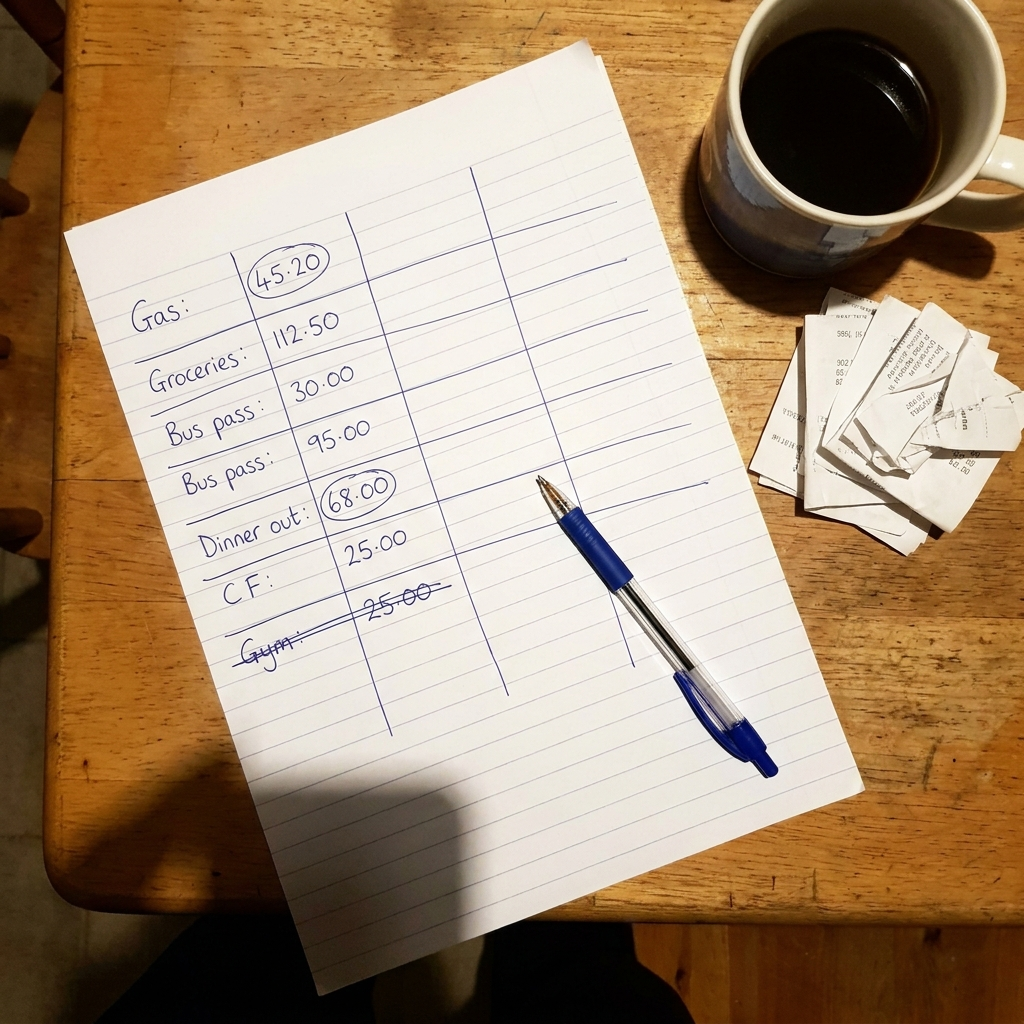
Before I bought the bigger one I made a grid. Four heaters across the top. Down the side, everything the listings gave me — wattage, BTU, coverage, whether it had a thermostat, fan speeds, weight, warranty, price. Two evenings at the kitchen table with a biro.
I bought the most expensive one on the sheet, because the cheap one had let me down so the expensive one wouldn't. Same spot, same socket. February came. Same corner, same plants.
I went back to that grid in the spring and looked at it properly for the first time.
| What I compared | What it actually varied by |
|---|---|
| Wattage | 1500 / 1500 / 1500 / 1350 |
| BTU | The wattage again, in other units |
| "Has a thermostat" | Ticked on all four |
| Coverage claim | A number somebody chose |
Almost every row was the same number written four different ways. The heat was never the variable. There's no clever way to turn fifteen hundred watts of electricity into more than fifteen hundred watts of heat, and there is no premium kilowatt.
And the thermostat row was the most useless of the lot, because the question isn't whether it has one. It's where it is. Both of my heaters put that sensor two inches from the element, so both made the same decision at the same speed. Same heat. Same decision. Same February.
I Spent My Money in the Wrong Order. Twice.
Nobody laid this out for me, so here it is.
First, insulate. Hasn't changed, would say it again. The bubble wrap on the north wall did more than anything I bought before it. If you've got a gap under the door, go and deal with that before you read another word from me.
Second, where the number is taken from. That's the one that took me a year and the one nobody mentions.
Third — and probably not at all — a bigger heater. I bought the bigger heater. It made almost no difference, because it was making the same decision as the old one, just faster.
I don't want a warmer greenhouse. I want a number that holds while I'm asleep.
And the honest ceiling on it: 5,100 BTU suits a small, reasonably sealed structure. It will not rescue a lean-to that's genuinely leaking, and nothing at this wattage will. If your heater can't keep up, that's an envelope problem and no controller in the world fixes it. Do the sums on your own glass before you spend anything.
The first properly cold snap this winter I was sitting on the sofa at about eleven and realised I hadn't been out. Not once. For nine years it was twice before bed with the flashlight, and that night I simply hadn't done it and hadn't noticed I hadn't done it.
A ceramic heater that doesn't get a vote. The deciding is done by a separate controller with a probe on a lead, clipped at the back wall where the tender things are. You set a number instead of a thumb position. It runs when that corner is cold and stops when it isn't.
Why half off in September? Because the people buying a heater in September are the ones who lost something last February and have been turning it over since. Early orders get the price. When the first hard freeze lands and everyone buys at once, it goes back up.
The same thing every time. A reading taken where the plants are. A number instead of a thumb between a snowflake and a flame. An element with nothing in it that glows. And a heater that's off more than it's on, because something out there is finally deciding.
$79.95 during the Fall Sale — half off, free shipping, thirty days to send it back. Insulate first, then move the reading, and you very probably never need the bigger heater at all. Keep your thermometers. They were never wrong. They were only ever out there alone.
Get FrostGuard — 50% Off →