
I Set an Alarm for 2 AM for Three Winters. Here's What I Finally Worked Out.
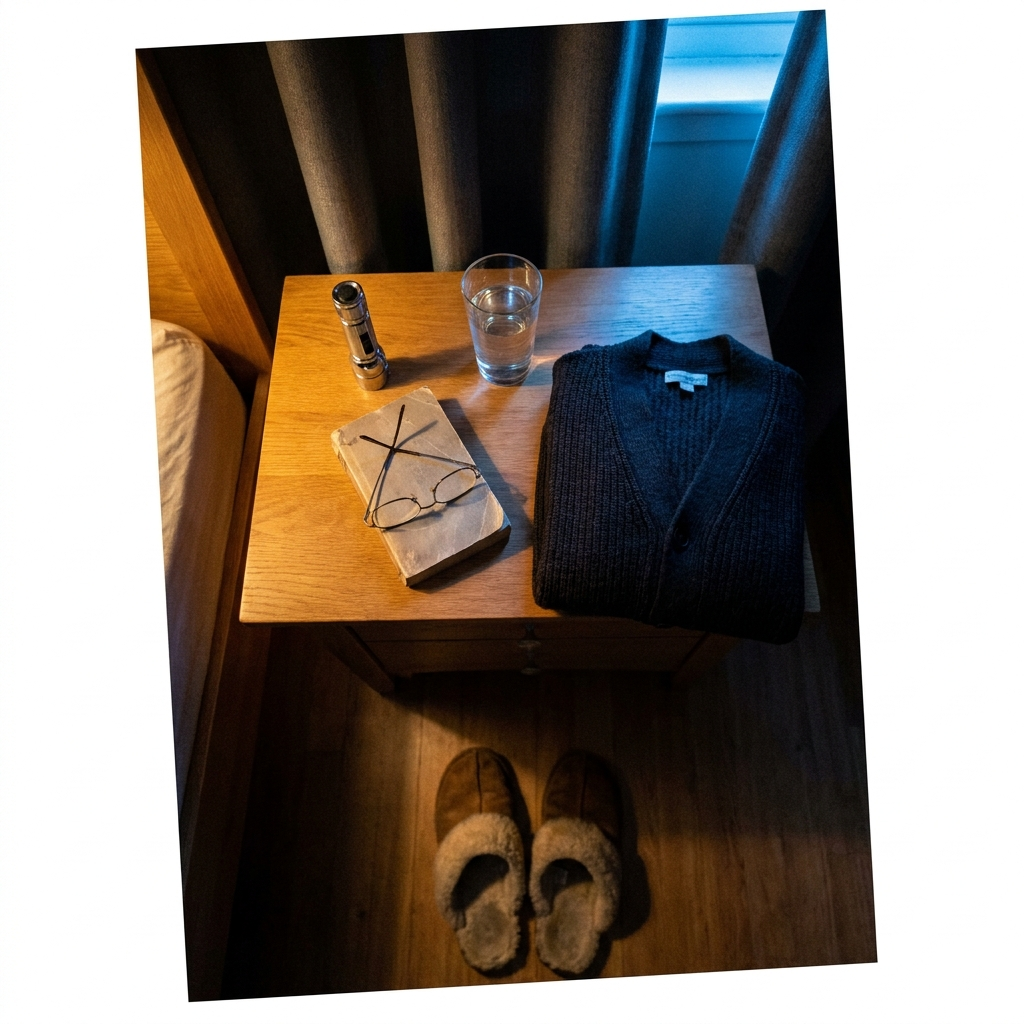
Robe, flashlight, out across the wet grass, read the thermometer, back to bed. I did that a hundred times and I never once touched anything while I was out there. Last October I sat down and worked out what those trips were actually doing, and the answer was not what I expected.

The Checking Was Never Protecting Anything.
I want to say first that the checking was not the failure. I spent three years thinking it was, and it isn't, and if you are getting up at two in the morning you are not doing anything foolish.
But here is what one of those trips actually consisted of. Out the back door. Across the grass, which is wet. Flashlight on the thermometer. Wait for my eyes to settle on the number. Back inside and upstairs, lying in the dark doing arithmetic with a figure that starts going out of date the moment I turn around. Ninety seconds. That is the whole thing.
Then I sat down last October with a pencil. The dark in January is about fourteen hours. I was making three trips a night by then. Ninety seconds each. Four and a half minutes out of fourteen hours, and I had built my entire winter around those four and a half minutes as though they were what was holding it together.
The freeze doesn't wait for me. It doesn't arrive at two because that's when the alarm is set. It arrives when the temperature crosses the line, which on most nights is a quarter past midnight or half three. So the trips were never protection. They were a sample, taken at hours I picked by guessing.
My Heater Was Reading Its Own Warm Air.
You already know the temperature in there isn't one number. If it says thirty eight by the door it is below freezing at the back wall, and every one of us works that out in the first winter. I never trusted the door reading. I kept the good thermometer at the back where the tender things are.
What nobody told me is that there is a thermometer inside the heater, and that is the one making every decision all night.
It has to be in there — that's where the dial is wired to. Which means it sits a couple of inches from the element, so it is the warmest object in the entire building. It comes up in about four minutes. Not the greenhouse. Itself. And then it does exactly the job it was built to do, which is decide the target has been reached and switch the heater off. My thermometer at the back wall reading twenty nine the whole time.
Neither instrument was broken. They were just standing in two different rooms, and only one of them had a vote. So the fix was never a bigger heater. It was moving the reading to where the plants actually are.
The Thing I Never Said Out Loud Was About the Element.
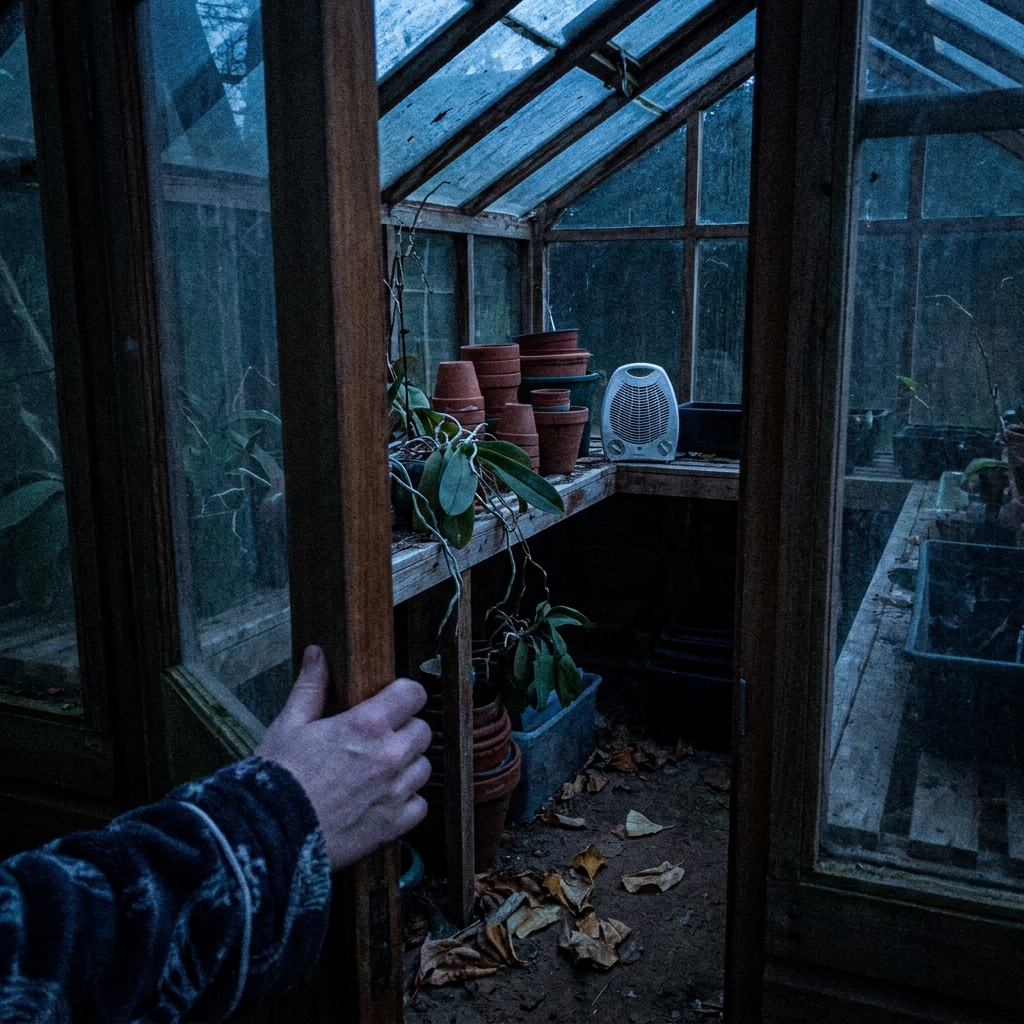
There are dry leaves on the floor under my bench. There always are. You sweep and there are more by Thursday. And for years I stood in that doorway at eleven with my hand on the switch, deciding whether to leave a heater running all night in a glass box full of dry foliage and old wooden shelving with nobody awake in there.
I never told anybody that was what I was doing. It sounds like a silly thing for a woman of sixty six to be frightened of. It isn't silly and it never was — it's a reasonable thing to be careful about.
But every workaround I tried was aimed at the heater as an object. Smaller unit. Further from the shelves. Swept floor. Switched off altogether on the coldest nights, which cost me plants.
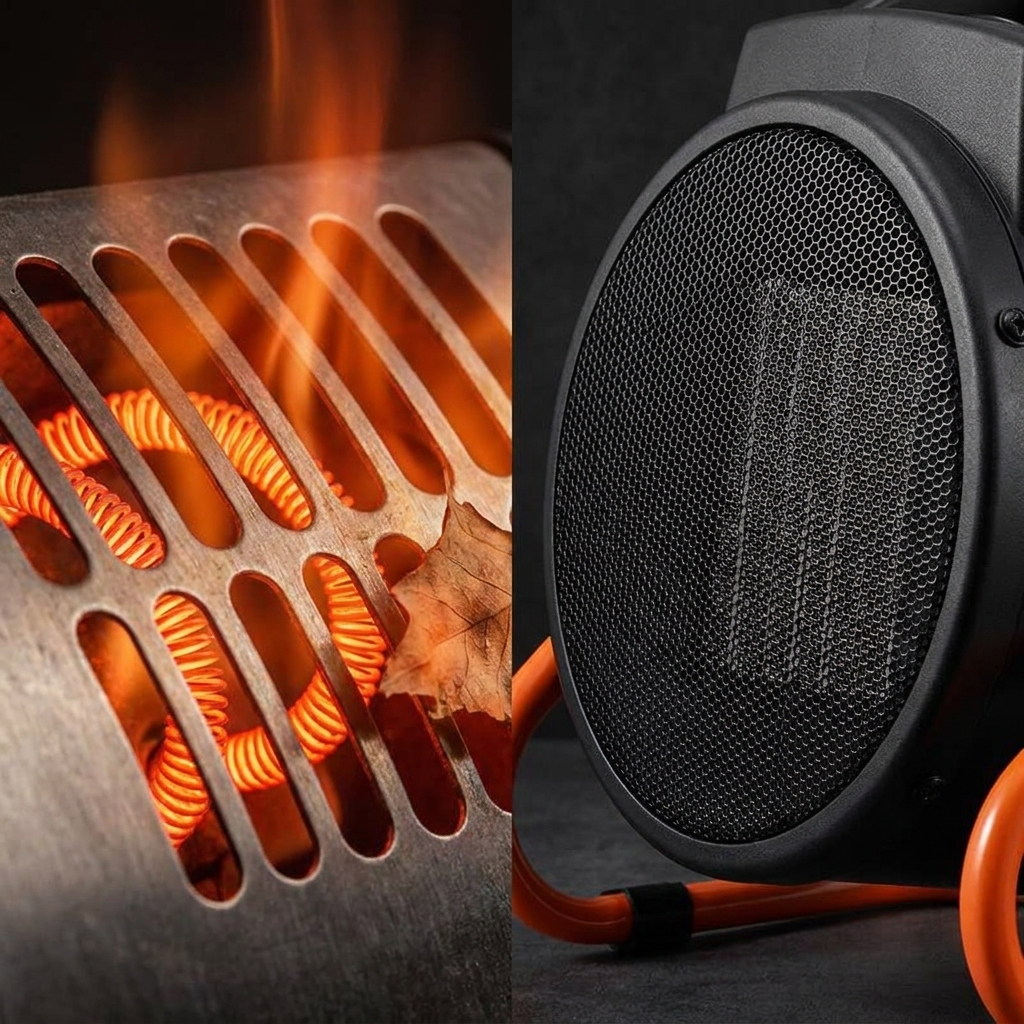
What I was actually picturing all those years was the orange. The wire glowing in there like a toaster. And it turns out not every heater has that inside it. One kind is nichrome wire, which will climb as long as you keep feeding it. The other is a ceramic whose resistance rises as it heats, which chokes off its own current — so it walks up to a point and stops, because it physically cannot take the power it would need to go further. It never reaches the temperature where metal goes orange. Not blocked, not dusty. It's what the material does, not a feature somebody added.
It Was Never Underpowered. It Was Underfed.
This one costs about twenty five dollars to fix and I am going to tell you the whole thing whether or not you buy anything from anybody.
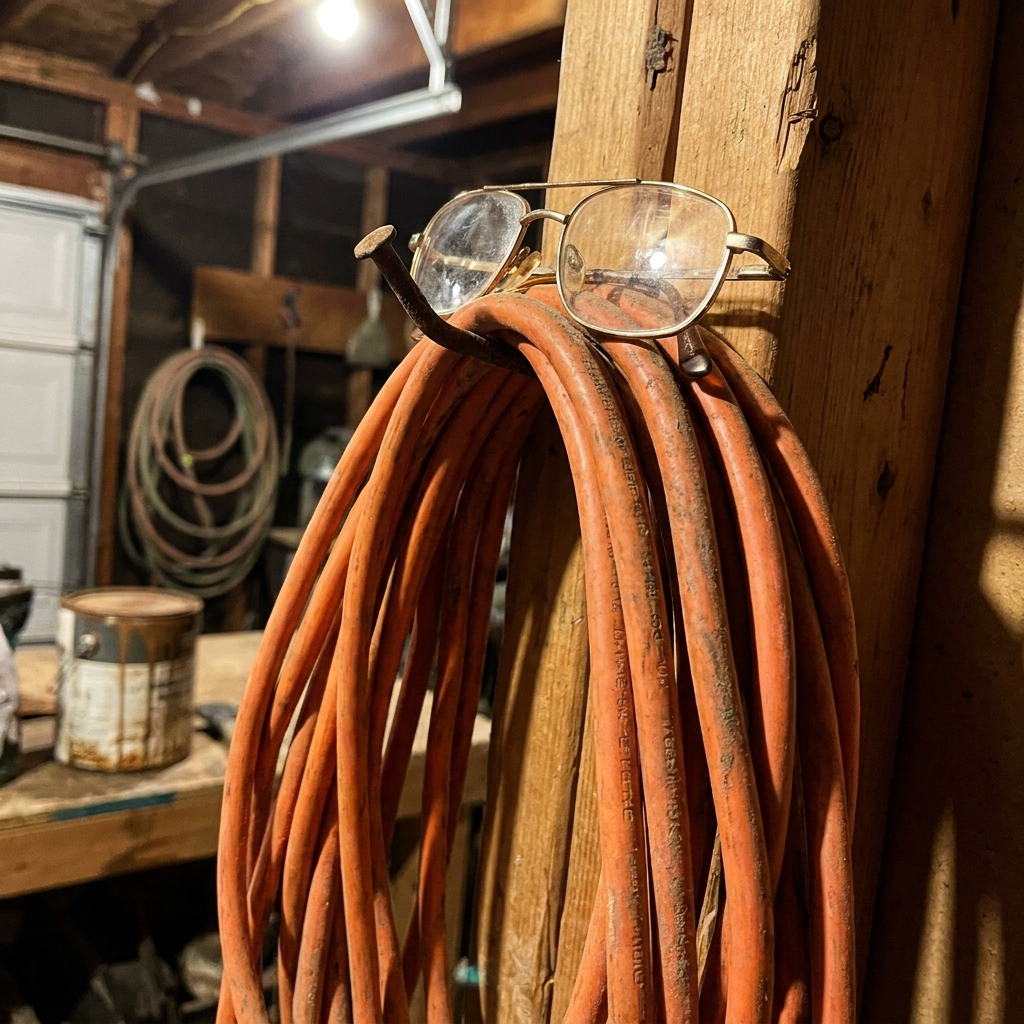
My cord is orange, fifty feet, and it has been on a nail in the garage since 2016. In nine years it never once occurred to me to read what was printed on the side of it.
A 1500W heater draws twelve and a half amps, continuously, for as long as it runs — which on a January night is most of the night. That is not like a drill pulling hard for thirty seconds. And a thin wire takes a share of it on the way past. Fifty feet of thin cord at that draw and you are delivering something nearer 105 volts to a heater built for 120.
Two things happen. It makes less heat, which is obvious. And the fan turns slower, which is the part nobody mentions and the part that cost me the orchids. A slow fan doesn't push the warm air anywhere, so it pools around the unit — which is exactly why I could stand in front of the thing feeling warm air on my hands while the far corner sat at thirty two.
| Cord | At 12.5 amps | What it does |
|---|---|---|
| 16 gauge, 50 ft | Heavy drop | Slow fan, heat pools at the unit |
| 14 gauge, 25–50 ft | Acceptable | Minimum for this draw |
| 12 gauge, short run | Best | What I'd buy if the shop has one |
I Had Two Appliances for One Problem.
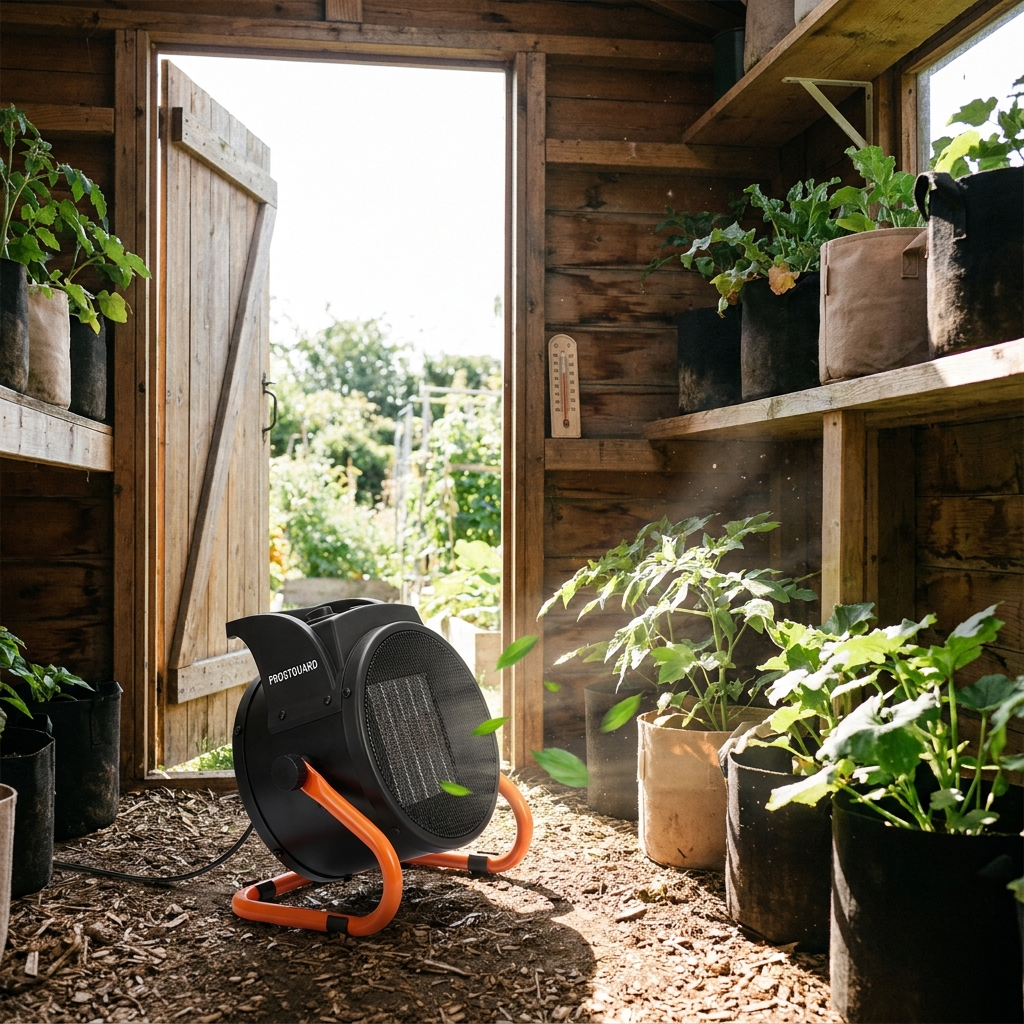
A heater from November to March. A little clip fan from May to September, because a glasshouse in July will cook the same plants the frost nearly took in February. Two things to store, two things to fail, each of them sitting on a shelf half the year.
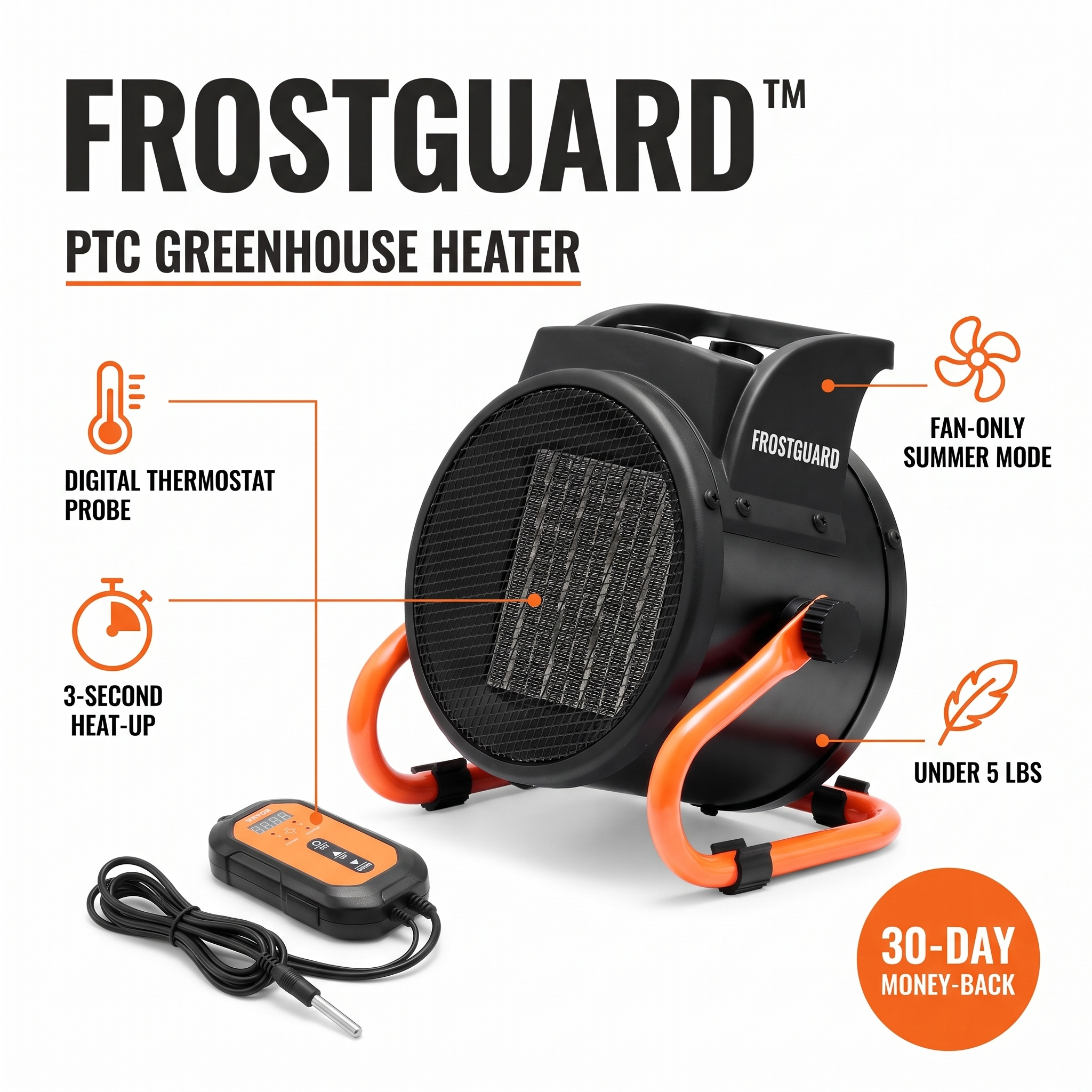
The one I have now is the same knob, three positions: fan only, 800 watts, 1500 watts. Fan only is just the blower with no element at all — 22 watts, moving air across the bench, which is what a stifling greenhouse needs on an August afternoon.
In winter it sits on the 800 watt setting with the controller holding the number. In summer the controller isn't plugged in at all and it's a tilting floor fan. One appliance, twelve months, and the little clip fan went in a box in the shed.
A Bigger Heater Was Always the Wrong Third Thing.
I want to give you the order, because I spent my money in the wrong order twice and nobody laid it out for me.
First, insulate. That hasn't changed and I'd say it again. The bubble wrap on the north panels did more for me than anything I bought before it, and if there's a gap under your door, deal with that before you read another word from me. Anyone who tells you insulation isn't the first job has never run one of these.
Second, where the number is taken from. That's the one that took me three years and it's the one nobody mentions.
Third — and probably not at all — a bigger heater. I bought the bigger heater. A hundred and eighty dollars I didn't really have, plugged into the same cord, making the same decision as the old one, just faster. It made almost no difference.
I don't want a warmer greenhouse. I want a number that holds while I'm asleep.
And the honest ceiling on it: 5,100 BTU suits a small, reasonably sealed house — mine is eight by six. It will not rescue a structure that is genuinely leaking, and nothing at this wattage will. Do the sums on your own glass before you spend anything.
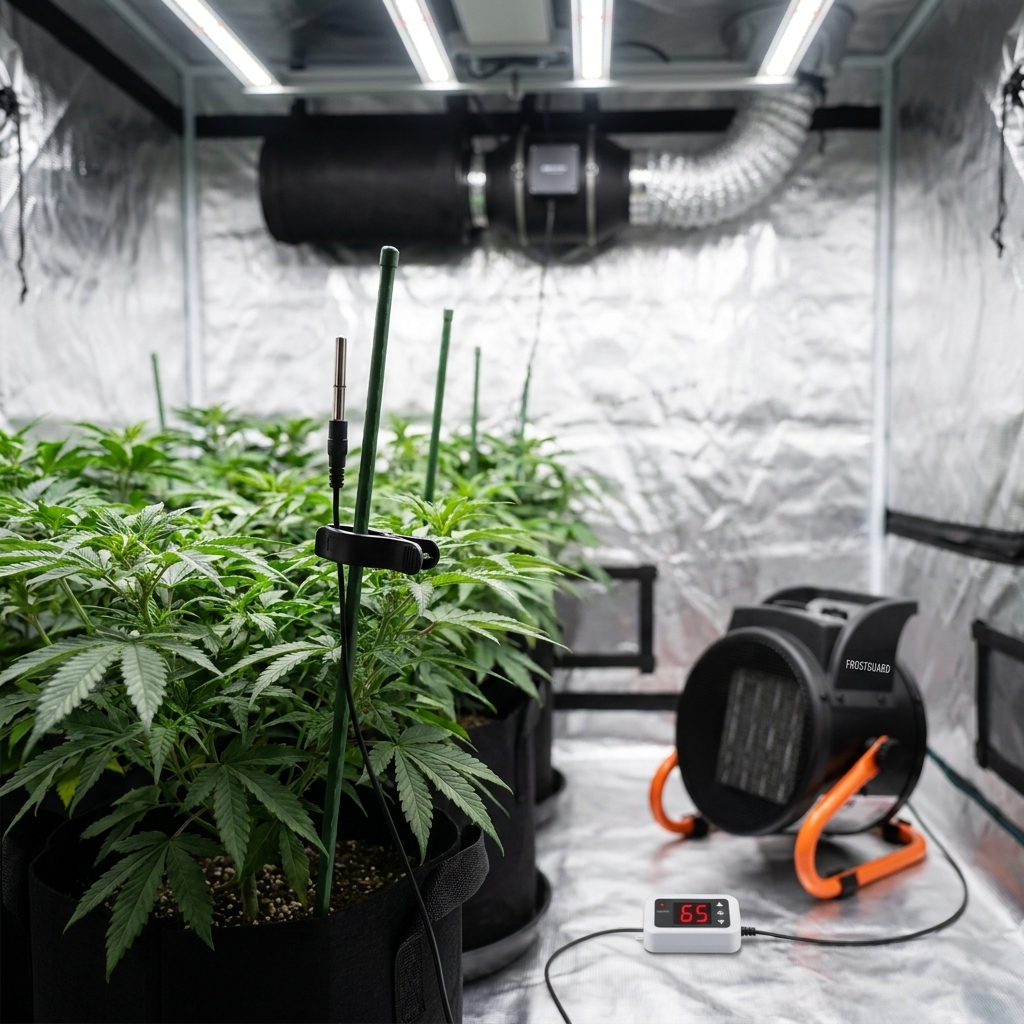
A ceramic heater that doesn't get to decide anything. The deciding is done by a separate controller with a probe on a lead, clipped down among the leaves at the cold end. You set the number. It does the checking, at ten past three, while you are asleep.
Why half off in September? Because the people buying a heater in September are the ones who lost something last February and have been thinking about it since. Early orders get the price. When the first hard freeze lands and everyone buys at once, it goes back up.
The same thing every time. A reading taken where the plants are. A number instead of a thumb on a dial. An element with nothing in it that glows. And a heater that is off more than it is on, because something out there is finally deciding.
$79.95 during the Fall Sale — half off, free shipping, thirty days to send it back. Probe down among the leaves, your number on the controller, a ceramic element with nothing in it that can glow, and a fan for July. Keep your thermometers. They were never wrong. They were only ever out there alone.
Get FrostGuard — 50% Off →