
You Don't Need a Bigger Heater. You Need One That Knows the Temperature.
A greenhouse doesn't fail slowly. It fails on one night — and the heater that was running the whole time never knew the difference. Here are five reasons the growers, chicken keepers and garage tinkerers who've already burned through a propane tank and two hardware-store heaters are switching to the one that switches itself off.
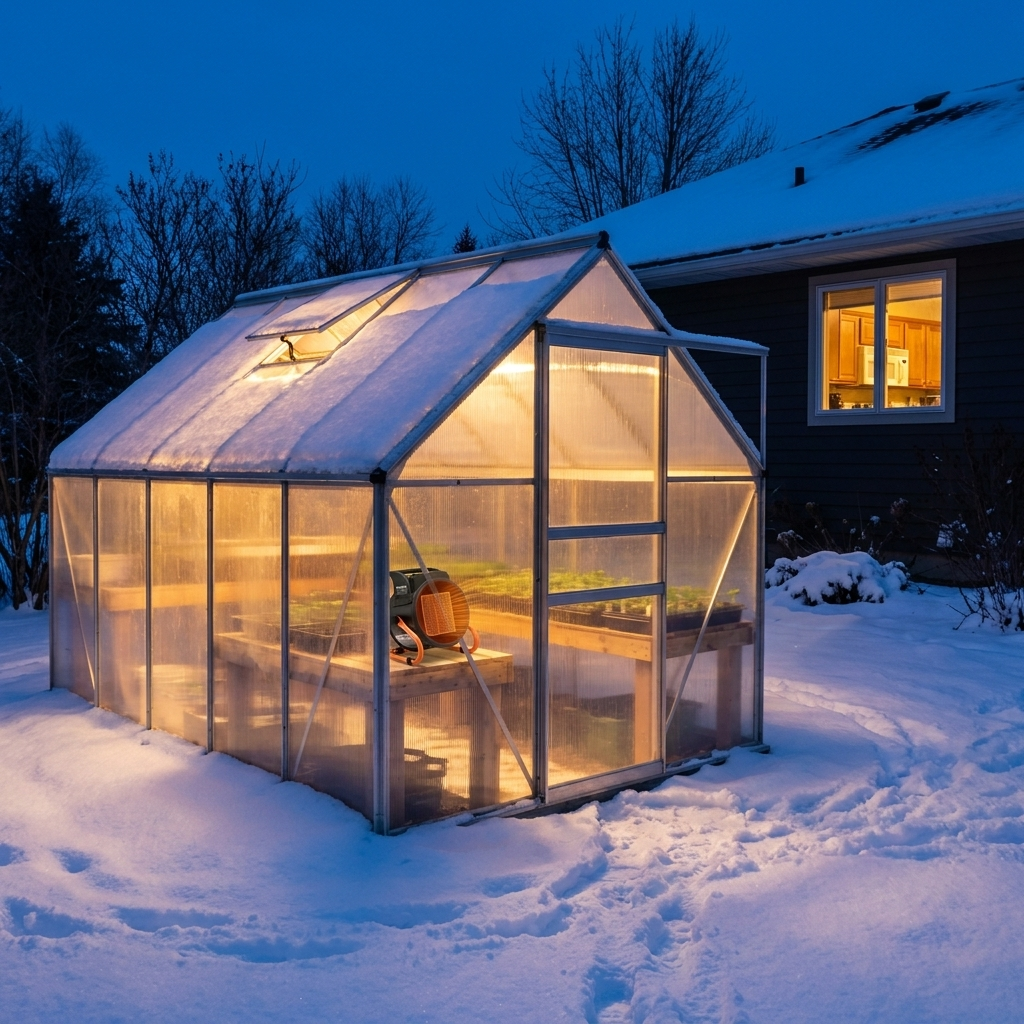
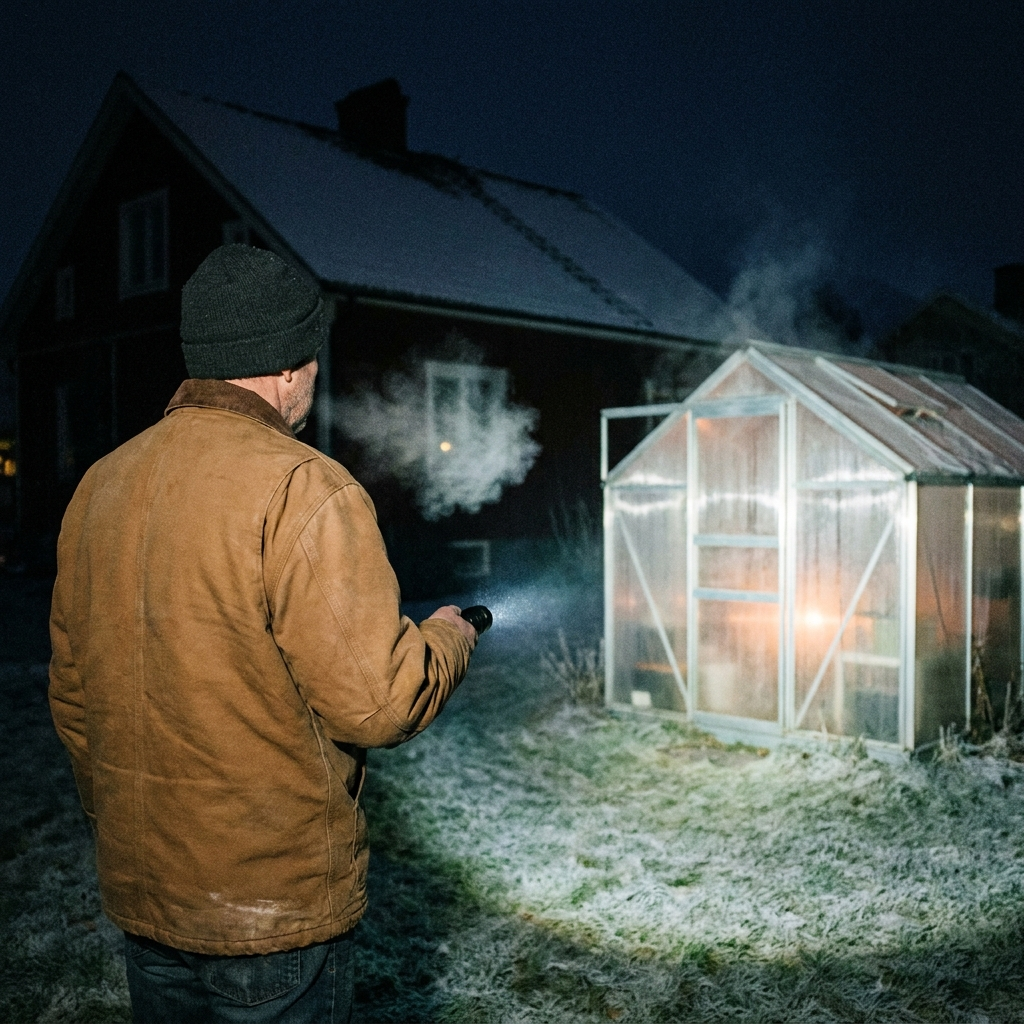
Add up what's sitting in there right now.
Then compare it to the one thing keeping it above freezing.
The heater is $79.95. It's the cheapest thing in the greenhouse, and it's the only thing that decides whether the rest of it is still there in the morning.
Every Heater You've Owned Ran Blind. This One Runs on a Number.
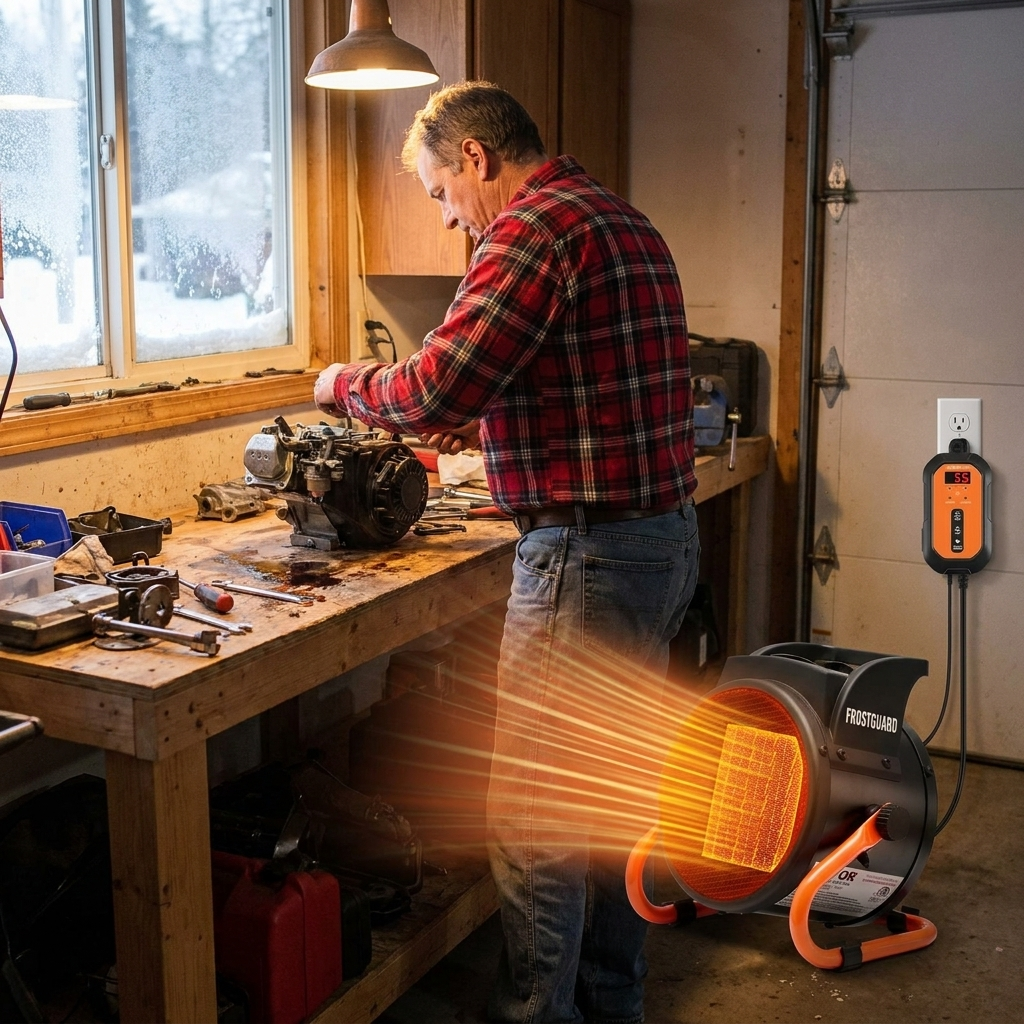
Here's the thing nobody in the hardware aisle will tell you: a propane tank, a space heater, a fan heater with a dial — none of them know what the temperature is. They run until you turn them off. So you set the knob at 9pm, guess, and at 3am the greenhouse is either eighty degrees with the meter spinning, or the heater's been blowing "medium" into a room the frost already took. The heater was on the whole time. It just wasn't on when it mattered.
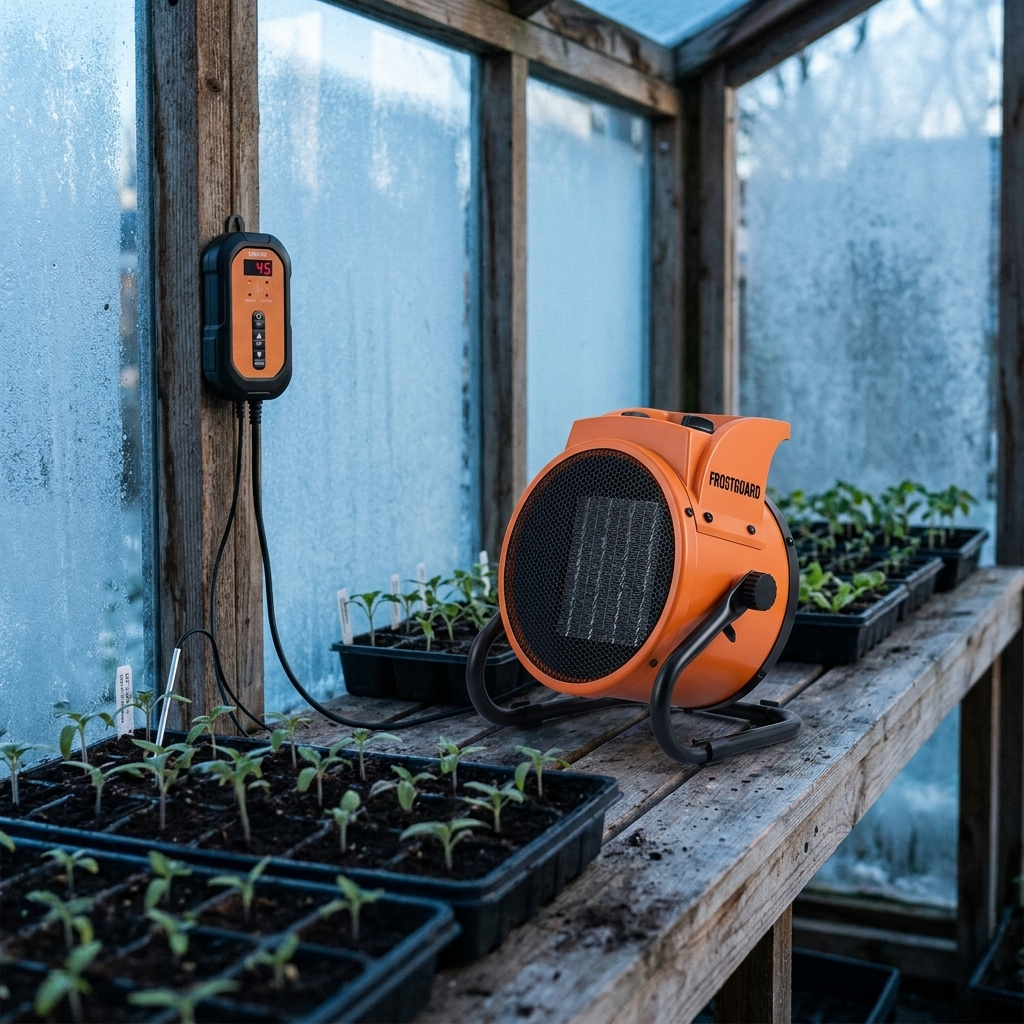
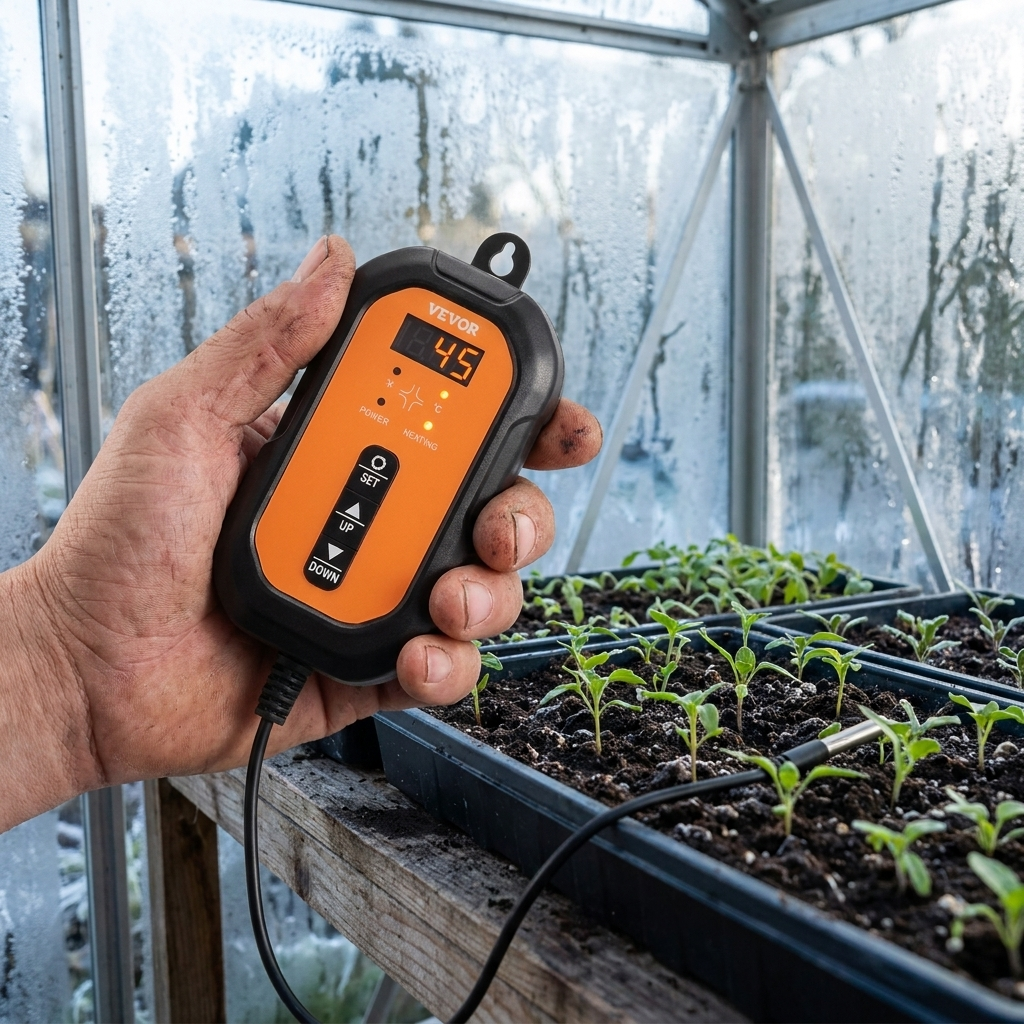
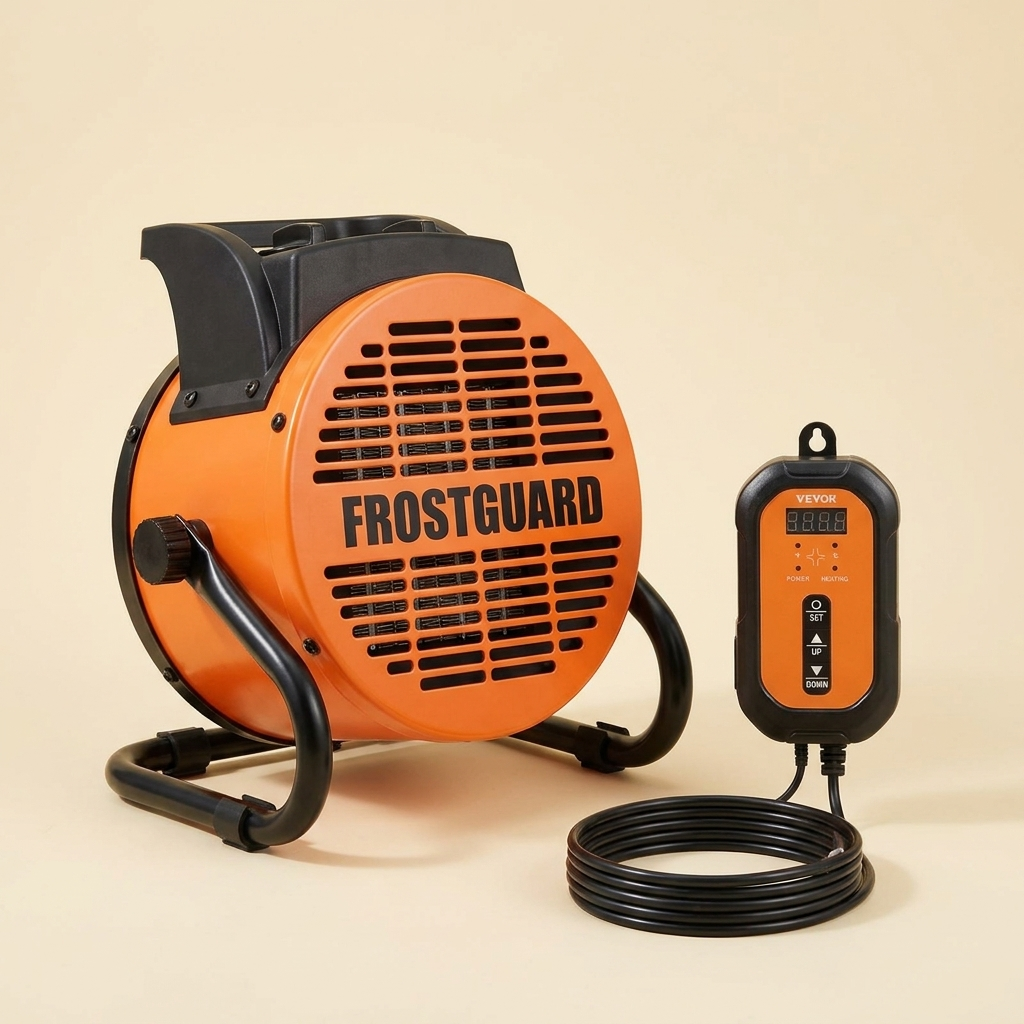
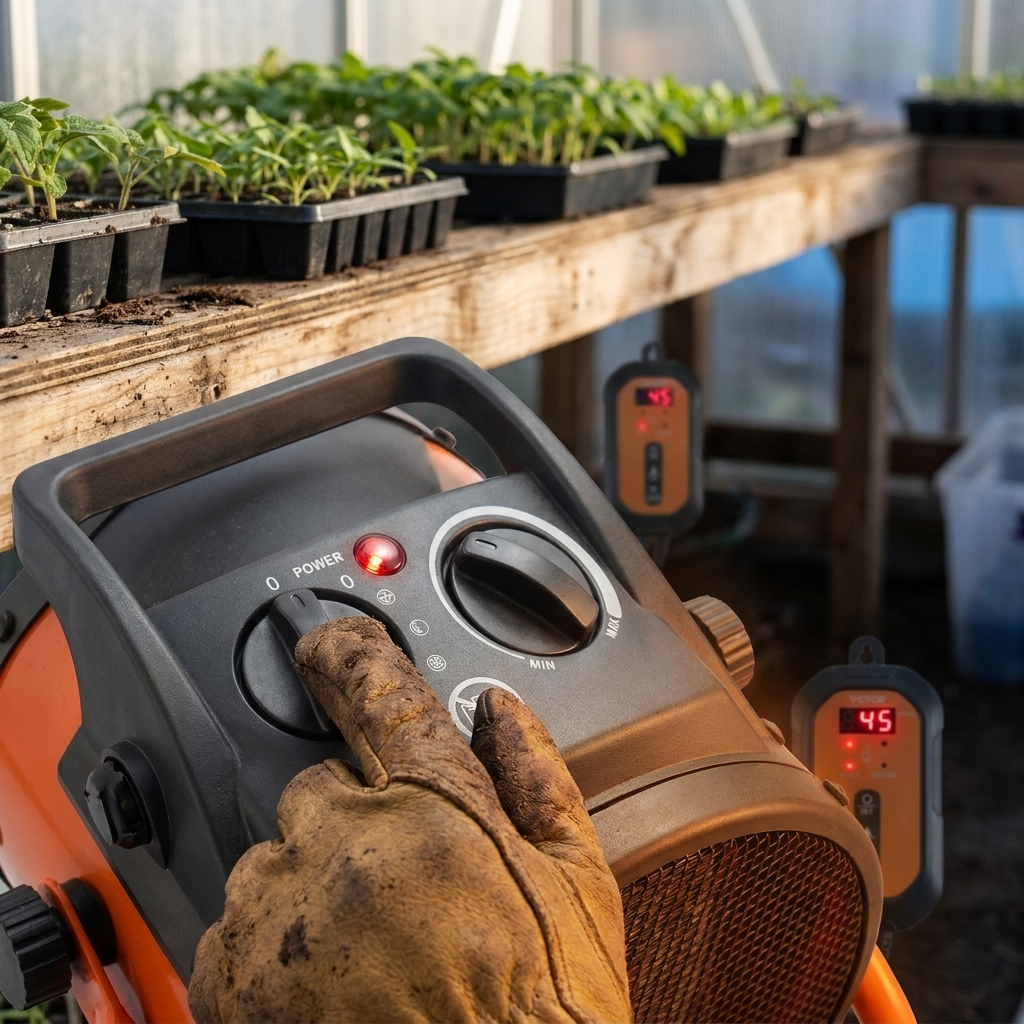
FrostGuard ships with the part the others leave out. Plug the heater into the digital thermostat controller that comes in the box. Push the probe into the soil beside the seedlings. Press SET and pick a number — 45°F is where most growers land. When the reading at the probe drops below it, the heater fires: 1500 watts, full heat in about three seconds. When it climbs back over, it shuts off and waits.
The probe is the part that matters. It reads at bench height, beside your plants — not up at the roof, where it's always five degrees warmer than the tray. The heater isn't the product. The number is.
You Stopped Sleeping. Not Because It's Cold — Because You Have to Check.
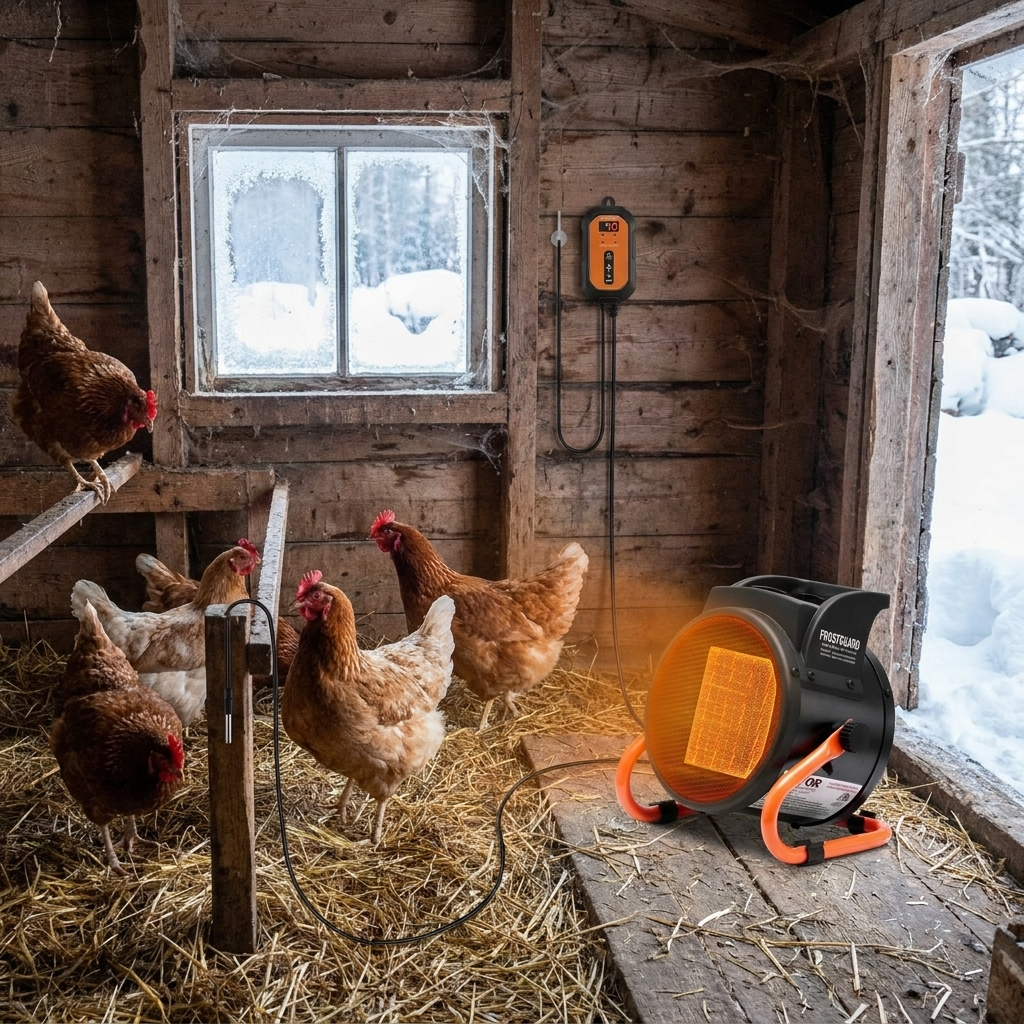
A chicken keeper in Pennsylvania put it best: raising birds through winter turned him into "a night-shift security guard." Every time the forecast drops, out he goes — boots, flashlight, breath in the air — to see if the coop is still warm. Greenhouse owners know the walk. So does anyone with a tray they started in February. That's the real cost of a knob heater. Not the kilowatts. The 3am walk.
FrostGuard is that walk, done for you, as many times a night as it takes. You set 45 tonight. It holds 45 all night. It might switch on eleven times between midnight and dawn — you'll never know, because you'll be asleep. You find out in the morning, from the display, that it cycled and nothing froze.
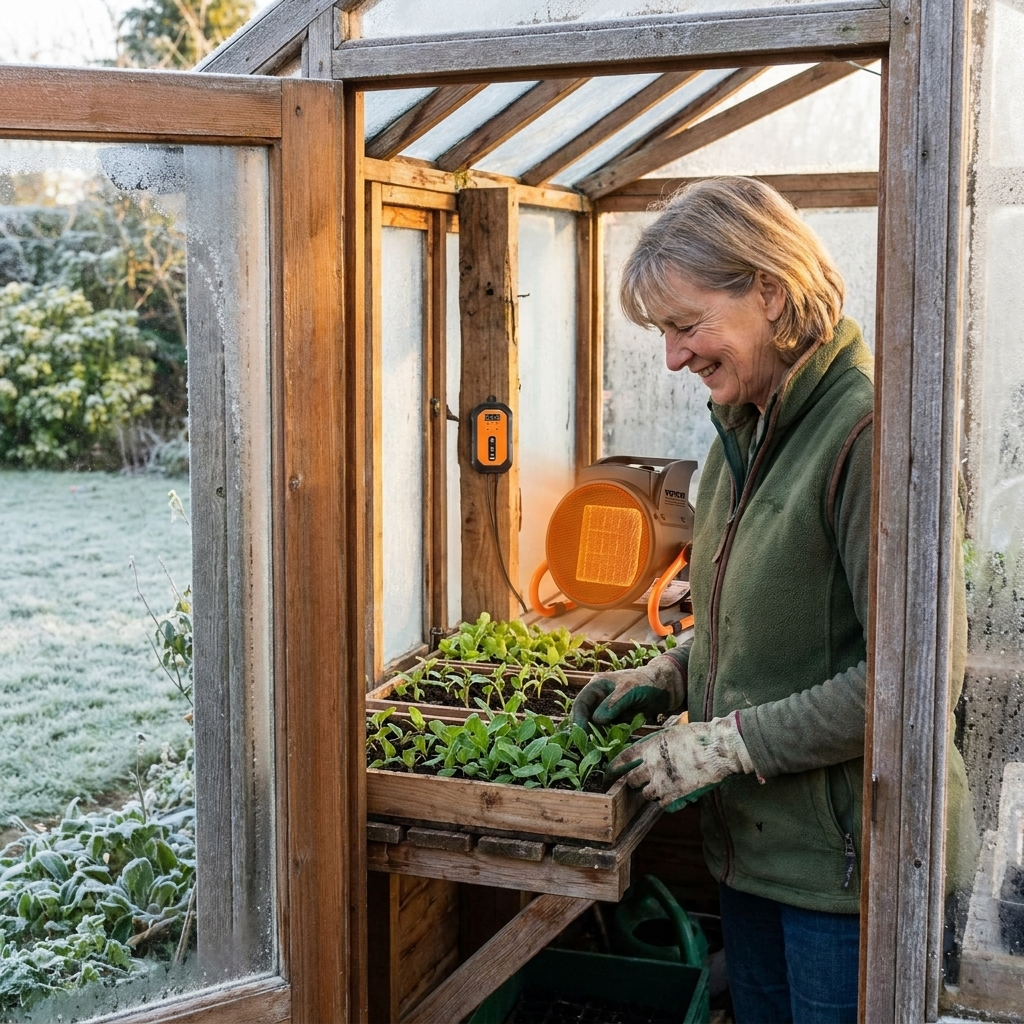
The morning after is the whole point. Snow banked against the glass, the yard grey and dead, and inside it's tomatoes on the vine and lemons on the tree like nothing happened. One grower's line for it: "It's like summer in my greenhouse during November." That's not the heater being impressive. That's the heater having done its job eleven times while you slept.
One cold night is all it takes to lose a tray you've been babying since February. The fix isn't checking more often. It's a heater that checks so you don't have to. Set it tonight. Sleep through the frost.
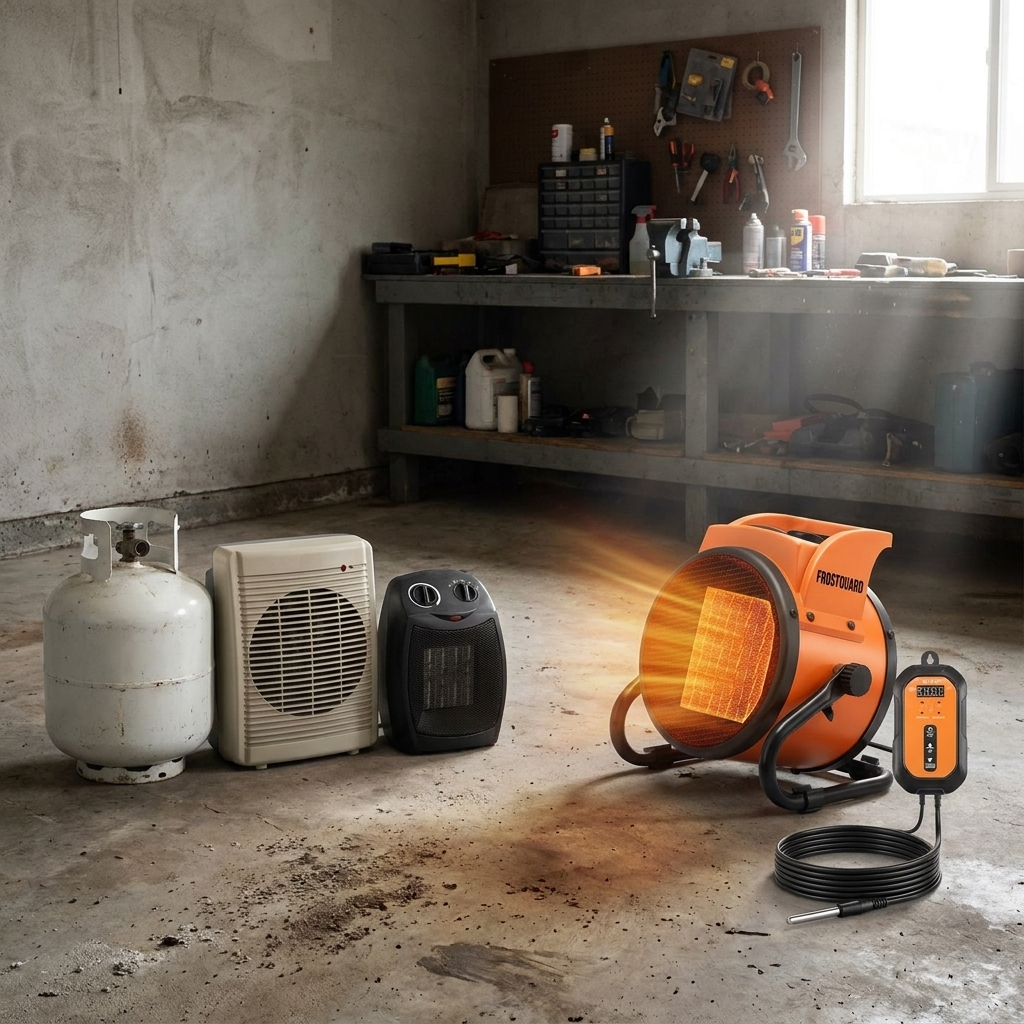
Count the Heaters Already in Your Greenhouse. That's the Problem.
Most people don't buy one heater. They buy three. There's the little white ceramic one on the bench from two winters ago, the tall radiant tower that was supposed to fix it, and somewhere a propane tank. They're all still in there. Three heaters, and you're still walking out at 3am.
The propane tank makes real heat and puts an open flame in a room full of dry leaves. It runs out on the coldest night of the year, every year, and the refill run is Sunday morning. The hardware-store space heater was built for a bedroom — it runs flat out from dusk to dawn, which is why one grower's bill went "up about $100 a month" and his plants still froze. The cheap fan heater with a dial is the one that hurts, because the dial looks like a thermostat. It isn't. "On or off, no in between" — that's a verified buyer, and he's right.
The spec gap is not subtle:
Same outlet. Same plug. Double the output, and it's the only one of the four that knows what the temperature is. That's the whole switch.
3 Seconds. 1500 Watts. About 14¢ an Hour — and Only While It's Actually Running.
Hold your palm eight inches off the grille and turn it on. Three seconds, and you feel it. No warm-up, no waiting on a coil to glow — that's the PTC ceramic element, and it's the difference between a heater and a fan with a warm setting.
The rest is numbers, not adjectives. On high it's 1500W / 5100 BTU, and a 22W fan pushes that air across the bench at 198 m³ an hour instead of letting it pool at the roof, so the far corner warms up too. One buyer's report: "It's 43° outside and greenhouse is at 90°."
Then the number propane owners care about. One knob, three settings: fan only, 800W for a normal frost night, 1500W for the ones that mean it. On the 800W setting at the US average of about 17¢ per kWh, that's roughly 14¢ an hour — and because the thermostat cuts power the moment your number is met, a typical frost night is a few hours of run time, not eight. Nobody's driving to refill a tank.
Straight answer on size: it's a frost-protection heater, not a barn furnace. It holds a 6×8 to 8×12 ft greenhouse, a coop, a small garage, a sunroom or a grow tent. Bigger, draftier or single-wall poly? Two units, two probes, two zones. We'd rather tell you that now.
Chicken Coop. Greenhouse. Garage. $79.95 — and the Thermostat's Already in the Box.
The people buying this aren't one kind of person. It's the chicken keeper in Pennsylvania who's done being a night-shift security guard. The grower whose greenhouse "was an absolute ice box." The guy with a garage where the yard tools won't start and the sunroom where the houseplants go to die every January. Same problem, one heater — it weighs 4.5 pounds, so it goes wherever the cold is winning.
Price it against the rest of the bench and it stops being a purchase. A decent watering can is $34. A flat of trays is $46. A grow light bar is $120. FrostGuard is $79.95 — and it's the only one that decides whether any of the others mattered.
$79.95 during the Fall Sale, half off with free shipping. In the box: the 1500W PTC heater with its 3-speed knob and tilt stand, the digital thermostat controller with LED display, the temperature probe with cable, and the manual. The only thing you add is an outlet. The garden-center brands run $150 and up and sell the thermostat separately. The $40 knob heaters don't have one at all.
Get two. One for the greenhouse, one for the coop — or one as the backup for the night the forecast is off by ten degrees — and you're still under what a single name-brand unit costs before its thermostat.
A 1500W PTC ceramic greenhouse heater that ships with the digital thermostat and probe — so it switches itself on and off at the number you set. No tank. No refills. No 3am checks. The heater that knows when to stop.
Why 50% off in September? The average first hard freeze lands in early-to-mid November across most of the country. Every heater that ships now is one we're not racing to deliver the week it hits. Early growers get the price. When the cold snap comes and everyone orders at once, it goes back up — that's the whole story.
$79.95 during the Fall Sale — half off, free shipping, and 30 nights to change your mind. A probe that reads beside the plants, a heater that fires in three seconds and knows when to stop, and a number you set once in October that holds until March.
Get FrostGuard — 50% Off →