
10 Reasons Gardeners Slept Through the 27° Night That Used to Cost Them Their Plants
One frost night takes out a spring of seedlings or a citrus tree that took years to fruit. These growers plugged in a small 1500W heater with a probe thermostat instead of trusting a $15 space heater or a jug of hot water. Here's what made them switch, ranked by how often buyers mentioned it.


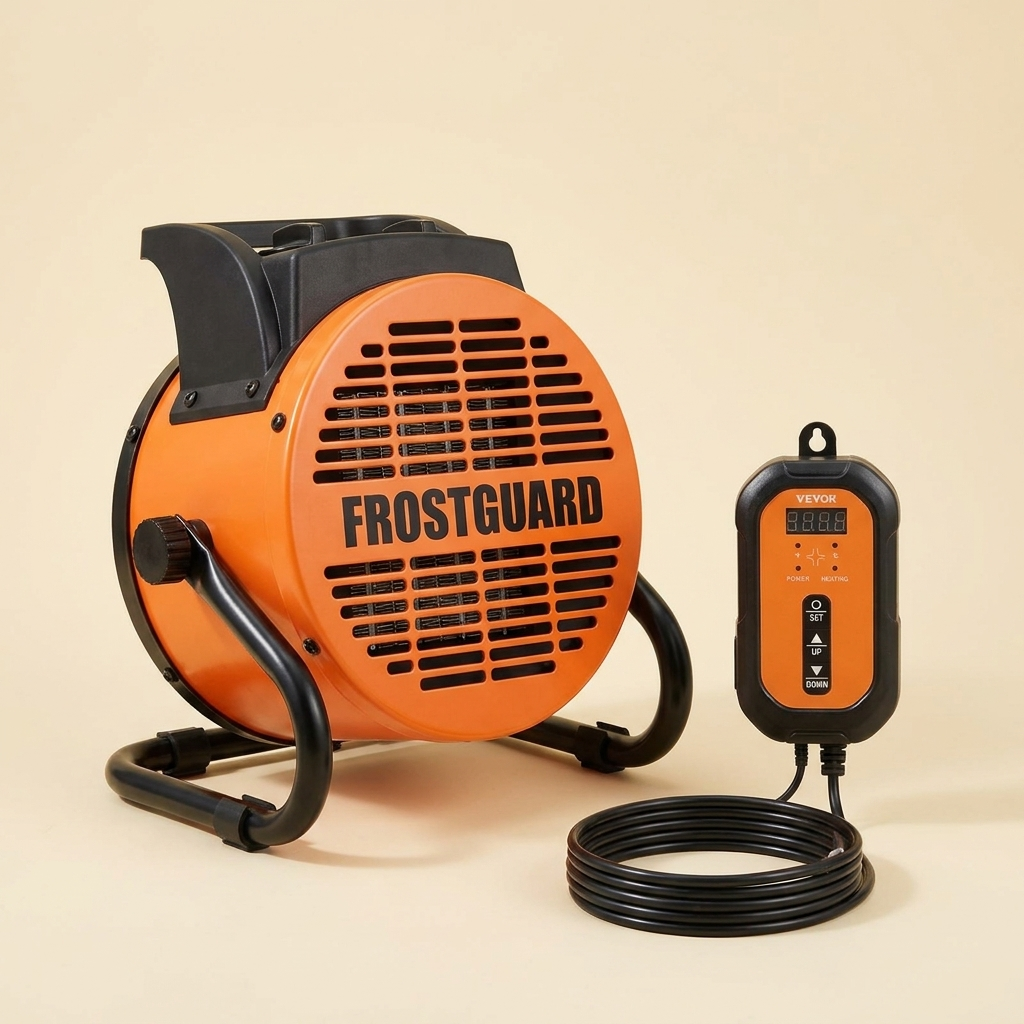
It Keeps the Plants You Can't Replace Alive Through the Coldest Night.
The scariest night in the greenhouse isn't Halloween. It's the first hard frost.
A greenhouse holds almost no heat after dark. On clear, still nights it can get as cold inside as it is outside, which is why so many first-timers lose a tray they thought was safe under the panels.
The seedlings you started in March. The geranium that came off your grandmother's porch. The lemon tree that took three years to set fruit.
That's why more than four in ten buyers said the same thing in one form or another: they bought it so the plants would still be alive in the morning.
FrostGuard sits on a dry bench or paver and runs off a probe thermostat, so it adds heat when the greenhouse drops below your number and keeps doing it until sunrise.
It's the worry that comes up more than any other when people shop for a greenhouse heater, and it deserves a straight answer. In the stories people tell about greenhouse and coop fires, the trouble usually starts in the power going to the heater: a thin indoor extension cord, a power strip, a shared outlet, a cheap smart plug.
A 1500W heater draws about 12.5 amps. That's close to the limit of a standard 15-amp household circuit, so the setup matters as much as the heater.
Set it up like this:
- Plug straight into the wall, or use a 14-gauge or heavier outdoor cord rated for 15A. Our 12 AWG HeavyCord is made for this.
- Nothing else running on that circuit. No power strips.
- Flat, dry surface off wet floors, a foot of clearance in front, away from misters. Never cover it.
The heater does its part: a ceramic element behind the grille with no glowing coil, a built-in overheat cutoff, and a thermostat that cuts the power every time your number is reached.
1500 Watts Out of a Box That Weighs Under 5 Pounds.
The second-biggest surprise in the reviews: how much heat comes out of something this small. 1500W and 5100 BTU, pushed across the benches by a built-in fan so the warm air reaches the back wall instead of pooling by the floor.
Plug it in and the ceramic element reaches full heat in about 3 seconds. Hold your hand at the grille, or aim an infrared thermometer at it and watch the number climb. Then tilt the stand to aim the heat at the bench that worries you most.
800W for mild nights. 1500W when it freezes. On a real frost night, run it on full power and let the thermostat decide how long it needs to run.
Small Enough for a 6x8. Light Enough to Carry in One Hand.
Small greenhouses lose heat fastest and have the least room for equipment. Buyers kept pointing out how well it fits: on the floor, on a shelf, in the corner under a bench, inside a zip-up balcony greenhouse, inside a grow tent.
At about 4.5 lbs with a carry handle, it moves wherever the cold spot is. No tank, no venting, no install. It plugs into a standard outlet.
Sized honestly. Every heater has a limit, including this one. Here's what one unit handles, based on the standard greenhouse heat-loss formula from Purdue University:
| Your space | Moderate cold | Below about 20°F |
|---|---|---|
| Grow tent, mini or balcony greenhouse | 1 heater | 1 heater |
| 6x8 hobby greenhouse | 1 heater | 1 heater (double-wall) |
| 8x10 to 8x12 | 1 heater | 2 heaters |
| 10x12 and up, or single-layer film | 2 heaters | 2 heaters |
That's why the 2-heater pack is $169.95. Running two? Plug each one into its own circuit, never both into one outlet or power strip.
It Doesn't Stay in the Greenhouse. Buyers Use It in Every Cold Room.
Reviewers bought it for plants, then found more jobs for it: a 1970s sunroom they finally use in winter, a gazebo closed in with tarps, a garden shed, a small workshop, a cabin, even the house on the coldest nights.
Because the probe thermostat goes wherever the heater goes, the space holds whatever number you set, 45°F for seedlings or 65°F for an afternoon at the workbench.
Set It Once. Stop Walking Out at 2am to Check.
Every FrostGuard ships with a free digital thermostat and a temperature probe on a cable. The dial on the heater itself is only a coarse backup; the controller is what you actually use. Push the probe into the soil beside the plant you're most worried about. Set your number. That's the whole setup. Here's the night now:
| Time | Greenhouse | You |
|---|---|---|
| 9 pm | Probe reads 50. Heater waiting. | On the couch. |
| 2 am | Drops below 45. Heater turns on. | Asleep. |
| 2:20 am | Back to 45. Shuts off. | Asleep. |
| 5 am | Coldest hour. Turns on again, as often as it takes. | Asleep. |
| 7 am | Sun's up. Heater rests. | Coffee by the lemon tree. |
No more flashlight walks. The display shows the live reading at the roots and lights up whenever it's calling for heat, so one glance from the door tells you where things stand.
Steel Body, Built to Run From the First Frost to the Last.
Winter in a greenhouse is a long run, and the heater works every cold night of it. Buyers who liked it best called out the build: an alloy steel housing, a ceramic PTC element, built-in overheat protection and the ETL mark.
The thermostat helps here too. It runs the heater only when the probe drops below your setting and lets it rest when it doesn't, so it isn't blasting at full power all night.
Free Thermostat. No Fuel Bill. About 14¢ an Hour.
Buyers kept using the same words: great price, worth the money, economical. One said it beat a greenhouse heater they'd paid far more for.
The digital thermostat and probe come free in every box, so there's nothing extra to buy. There's no propane tank to haul or refill either. On the 800W setting it costs about 14¢ an hour at the US average electric rate, and only while the thermostat is calling for heat. Most frost nights need a few hours of run time, not eight.
What does a winter actually cost? Online estimates usually assume the heater runs around the clock, about $5.40 a day. One greenhouse owner who tracked real use reported about 4 hours a night and roughly $45 over a three-month season. A bigger or single-wall house in a hard winter runs longer. The thermostat is what keeps it from running all night.
| What you get | Cost |
|---|---|
| 1500W PTC ceramic heater | $119.95 in the Fall Sale |
| Digital thermostat + probe | Free |
| Shipping | Free |
| Running cost | About 14¢/hr on 800W, 26¢/hr on 1500W, only while heating |
| Fuel refills | None, ever |
| A second heater | 2-pack for $169.95 |
In January It's a Heater. In July It's a Fan.
Turn the knob past the heat settings and FrostGuard runs as a fan with the heat off, moving 198 m³ of air an hour and clearing the hot, still air that builds up under the panels on summer afternoons.
A few buyers said this is why they picked it over a heat-only unit. One appliance on the bench, twelve months a year.

Why Not Just Use a $15 Space Heater? Because It Can't Tell Where Your Plants Are.
Plenty of buyers came here after another heater let them down, or after one too many propane refills. You carry the spare heater out from the den, run the cord, turn it up and go to bed. In the morning the leaves are dark and glassy, and the heater is still sitting there, still plugged in.
Every 1500W heater makes about the same heat. The difference is what controls it and where that heat goes. A $15 space heater's dial reads the air right at the heater, the warmest spot in the greenhouse, while the pot by the glass sits several degrees colder. Without a strong fan, the heat stays beside the heater. And many shut off on a bedroom timer right before the coldest hour of the night.
| FrostGuard | Propane heater | $15 space heater | |
|---|---|---|---|
| Holds a set temperature on its own | Yes, probe thermostat | Rarely | MIN–MAX dial, no number |
| Reads the temperature at the plants | Probe beside the roots | No | At the heater, if anywhere |
| No fuel to buy or refill | Yes | No | Yes |
| No flame or glowing coil | PTC ceramic | Open flame | Often a glowing coil |
| Fan-only mode for summer | Yes | No | Varies |
No Red-Hot Coil Glowing Next to Dry Leaves and Plastic Pots.
The most-upvoted review on the list was about this. Lots of cheap heaters put an exposed, glowing coil a few inches from potting mix and dry leaves. FrostGuard heats with a PTC ceramic element tucked behind a steel grille. No glowing coil, no flame, no fuel, overheat protection built in.
The ceramic block self-limits, so the element itself can't run away, and the thermostat cuts power every time your target is met.
Treat it like any 1500W appliance and it'll treat you right: set it on a dry bench or a paver, not a wet floor, give the intake a foot of clearance, keep it away from misters (it's dust-rated IP20, not splash-rated), and never cover it.
See the heater in action before you order. Then set your number, place the probe, and let it handle the night.
A 1500W PTC ceramic greenhouse heater that ships with a digital thermostat and probe. It reads the temperature beside your plants all night and holds the number you set. In summer, it's a fan.

Why the sale? It's our limited Halloween / Fall Sale, for growers who want the probe in the pot and the number set before the first frost warning, not the morning after it. Allow about a week for processing, or choose Expedited Shipping at checkout if a cold snap is coming.
$119.95 in the limited Halloween / Fall Sale, or two for $169.95, with a free digital thermostat, free shipping and the 30-Day Frost Guarantee. A probe at the roots, a number you set once, and a heater built for a greenhouse, not a living room.
Get FrostGuard + Free Thermostat →