
Nothing in My Stack Failed. I Still Found Out at 6AM, From a Graph.
Inkbird ITC-308, surplus contactor, two heaters, full logging to a Pi on a separate circuit. Four seasons, no component failure, and every one of those components performed exactly to spec on the night I lost the whole zone. Six things I got wrong, each with the number that would have told me.
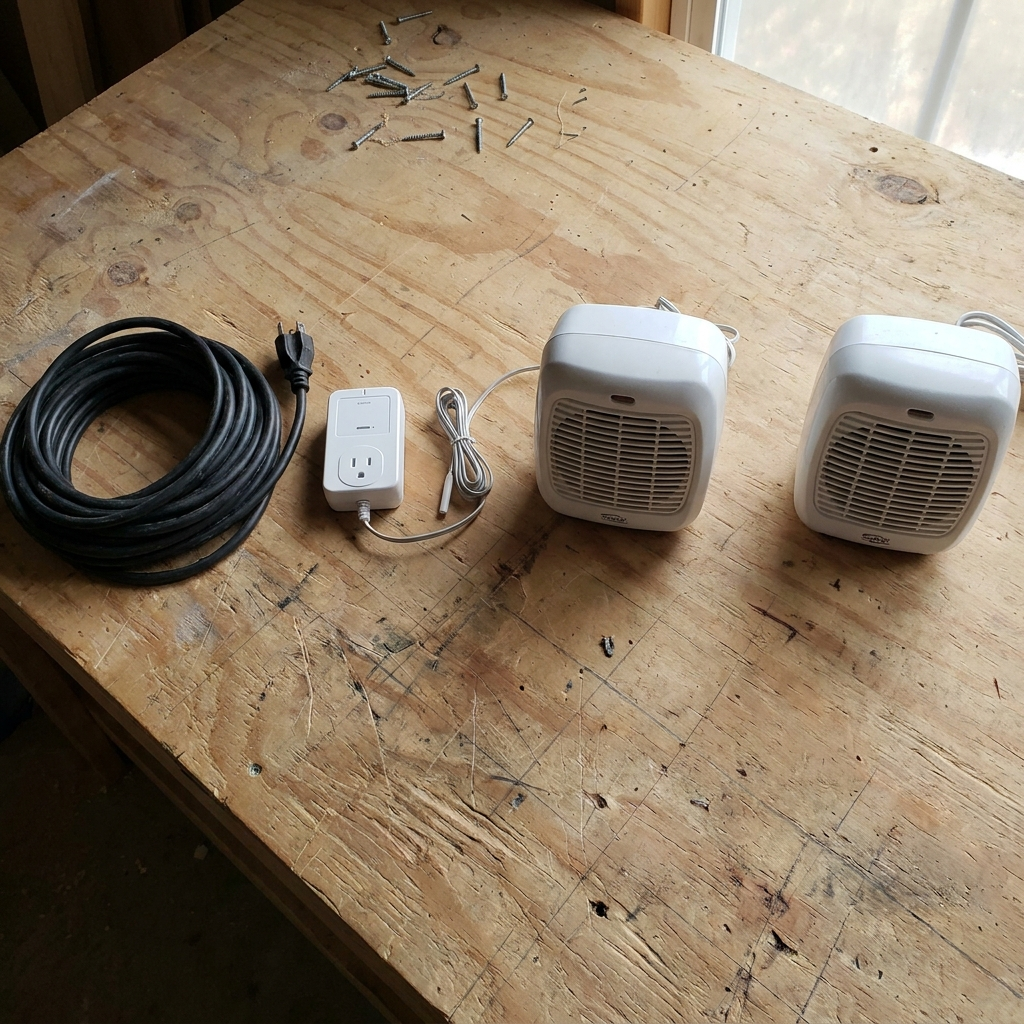

Every Component Performed to Spec. The Failure Was Architectural.
Inkbird ITC-308, surplus contactor, two heaters, circulation fan, a handful of sensors on USB. Four seasons, no component failure, full logging to a Pi.
Here is the arithmetic I never did.
| On the branch | Continuous draw |
|---|---|
| Heater 1 — 1500W | 12.5A |
| Heater 2 — 1500W (added the season before) | 12.5A |
| Circulation fan | ~0.6A |
| Controller + sensor supplies | trivial |
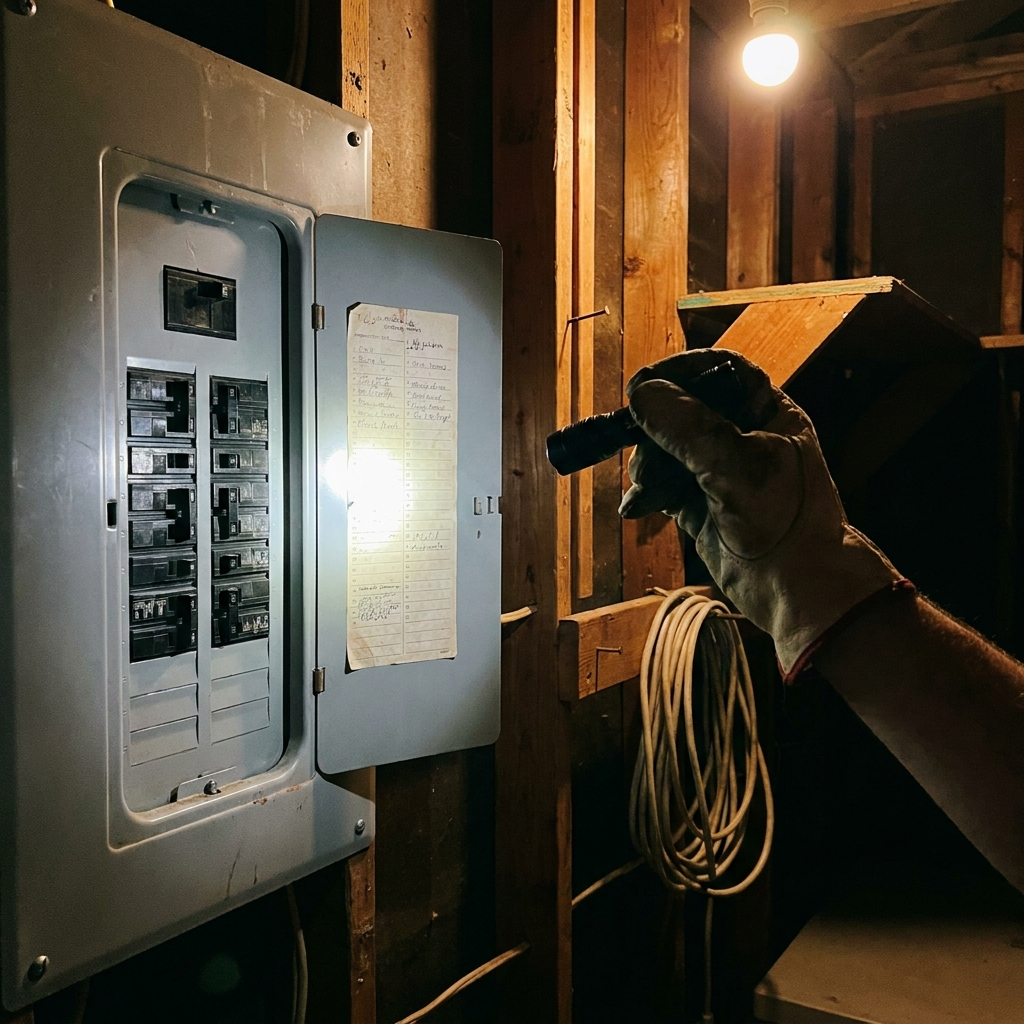
| Total, both calling | ~25.6A on a 15A breaker |
It didn't trip for three seasons because the two heaters were rarely calling simultaneously. That is not redundancy. That is luck with a duty cycle.
The night they both called, around 2am in January, the breaker did its job correctly and took down both heaters, the controller, the fan and the sensors at once.
My charts are excellent. Full trace of the event, logged to a Pi on a different circuit. I found out at 6am from a graph.
Two heaters on one breaker is one failure point with two enclosures. I specced that. Four seasons of believing I had redundancy because I had two of something.
It Isn't a Fault. It's a Floor Somebody Wrote on Purpose.
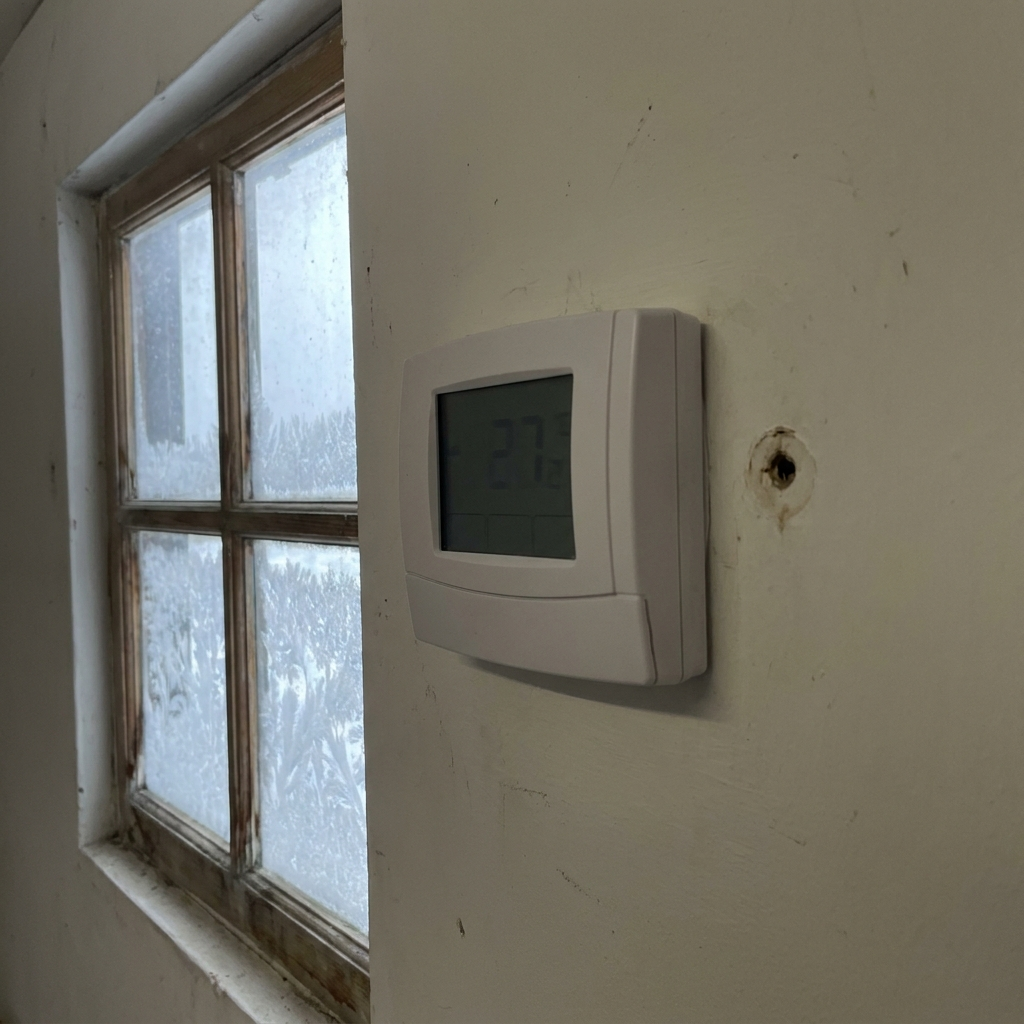
If you have ever had a thermostat read LO and refuse to call for heat on the coldest night of the year, it is working. It's reporting that the measured temperature is below its specified operating range and declining to act.
| Class of device | Typical published range | Design assumption |
|---|---|---|
| Residential thermostat | 32–99°F | A conditioned space that stays habitable |
| Horticultural / cold-chain controller | 40–108°F set range | A space that is routinely below freezing |
No firmware update is coming, because from the manufacturer's position nothing is wrong. A house at 30°F indoors is a burst-pipe emergency, not a set point to satisfy.
It's usually in the manual — operating range, sensing range, or ambient limits depending on whose document you're reading. Page nine, in a table nobody opens.
The workaround people land on is warming the sensor. Hairdryer, hand, lamp nearby. It brings the unit out of lockout, and it also means the control loop is now running on a temperature that exists nowhere in the structure.
The fix isn't a better thermostat in the same class. It's a controller specced for the range you're actually operating in. That's not cleverness — it's a different design brief.
Max Rating Is Not Continuous Rating.
A 1500W heater pulls 12.5A continuous. Not a startup spike. Not a duty cycle. Steady, for as many hours as the thing is calling.
| Printed | What it describes | Where you find it |
|---|---|---|
| 15A / 1800W | Resistive max, tested short | Moulded into the housing |
| 10A / 1100W | Continuous rating | A datasheet, if one is published at all |
Both numbers are true. Only one of them describes what you are doing to the contact at 4am in February.
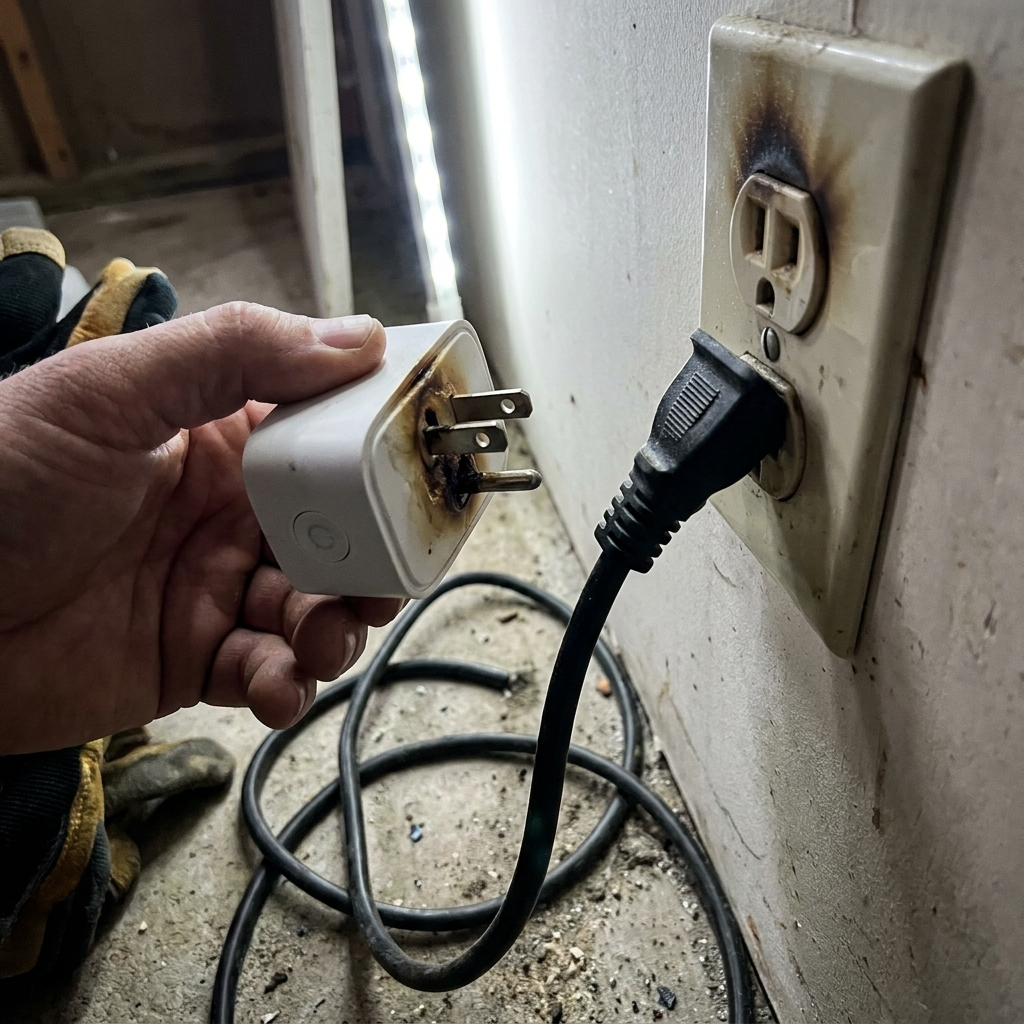
Run 12.5 continuous through a contact designed to sit at 10 and it works — for weeks. Then the contacts pit, contact resistance climbs, it runs hotter, the pitting accelerates, and it either stops switching or welds closed.
Welded closed is the failure mode that matters, because it presents as the heater working. Nothing alarms. Nothing logs. The relay has stopped being a switch and become a wire.
The obvious rebuttal, and I'd make it myself: the controller I run now is also a relay. Everything switching mains power is. The distinction isn't relay versus no relay. It's a relay sized for the load it carries versus one sized for a table lamp, and this category is full of the second sold as the first.
Reliability Doesn't Track Price. Undocumented Error States Do.
I want to be precise, because the loose version of this claim is nonsense.
I am not saying cheap hardware is more reliable than expensive hardware. It isn't. Contact materials, enclosure tolerances, conductor gauge, thermal design — those track price and they track it fairly.
What does not track price is the number of places where software makes a decision you didn't specify and can't inspect.
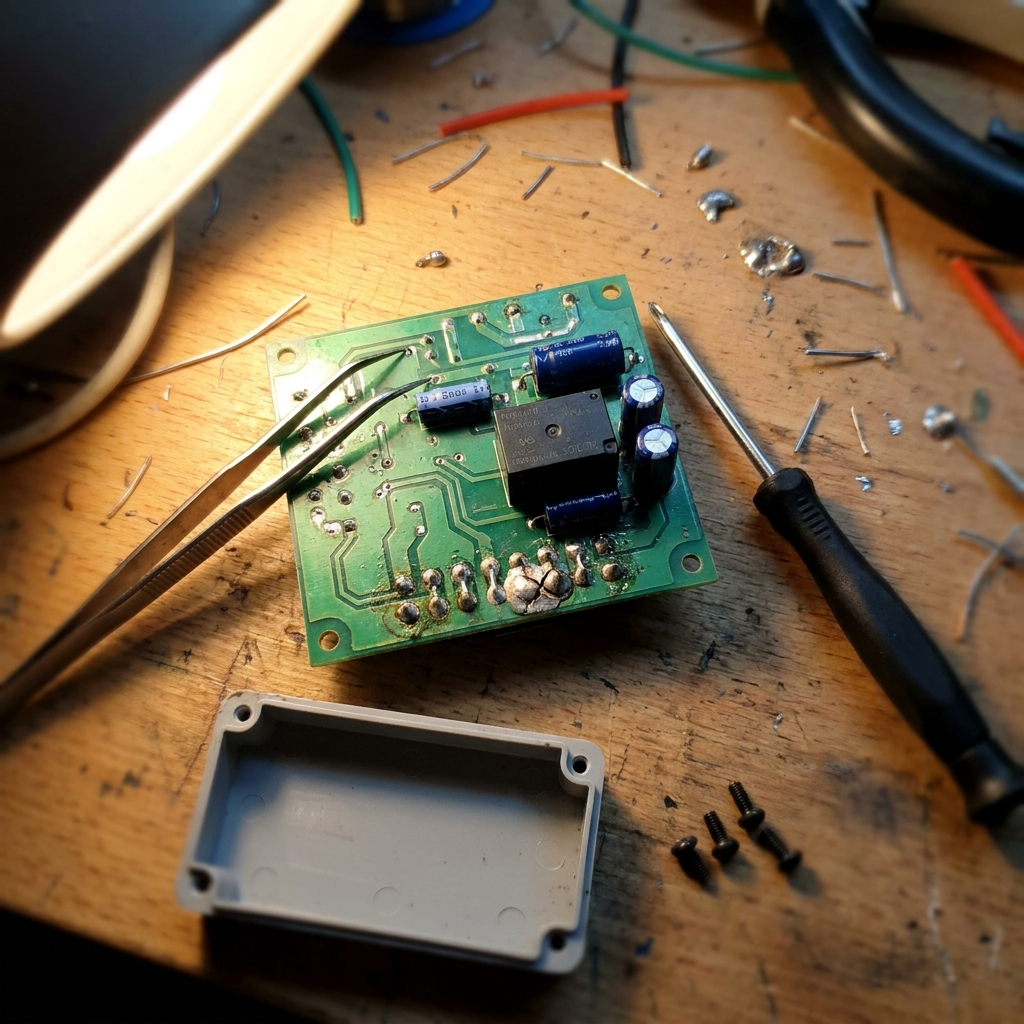
The unit at the top of this category throws a three-letter code family. I've hit two of them. There's no published table, so what you do is search the code and read what other owners concluded — folklore rather than documentation. The most commonly reported hardware failure on that tier is a solder joint in the control box, which is a failure of the part that does the deciding, not the part that does the heating.
So for four times the money: a control board with undocumented error states, a proprietary sensor arrangement, and the same fundamental architecture where the thing that measures lives inside the thing that heats.
The element in it is a resistive element. The element in the cheap one is a resistive element. There is no premium kilowatt. 1500W is 5,100 BTU/hr in every box in this category and the difference between them is never the heat.
Forty Threads, Four Components, Nobody Coordinating.
Recommendations are cheap. Somebody liked a thing and said so, and you have no way to weight it.
Convergence is different evidence. A large number of people solve the same problem independently, without coordinating, and arrive at the same configuration. No canonical post. Threads four years apart on different forums, people who mostly don't know each other.
| Component | Why it keeps appearing |
|---|---|
| Probe out of the heater | A sensor two inches from the element measures the element |
| Controller separate from the heater | Integrated logic you didn't write, on a range somebody else chose |
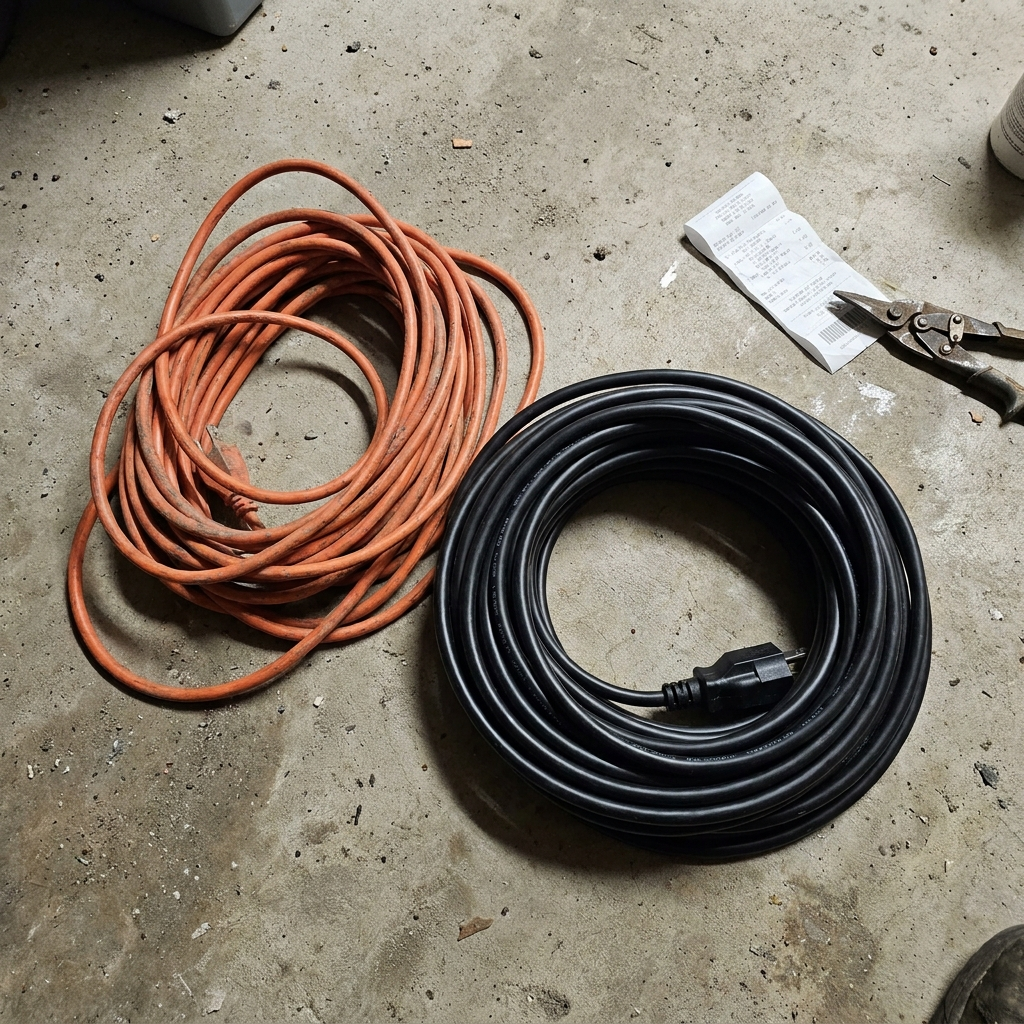
| 14 gauge cord or heavier | 12.5A past 25ft drops ~15V; the fan slows before the element does |
| Second unit, own breaker | 25A continuous on one 15A branch is post-mortem #1 |
If you've been at this a while you already run some version of that, and you built it out of parts because nobody sells it assembled.
That isn't a recommendation. It's convergence, which is a much more interesting kind of evidence.
What It Doesn't Do, Before What It Does.
You're going to go looking for the spec that disqualifies it. That's the correct thing to do. So here they are first.
| Disqualifier | Detail |
|---|---|
| Single set point | No adjustable differential band. Cycles on one threshold, overshoots around it. If you want a defined swing you are still building that yourself |
| No connectivity | No WiFi, no app, no API, nothing to integrate |
| No logging | Live probe reading on the display. No history, no export, no charting |
| IP20 | Dust-rated, not splash-rated. Dry locations only |
For a primary in a stack like yours, the first three are disqualifying and I'd expect them to be. My Inkbird is more capable than this in every dimension that shows up in software, and it's still my primary.
Now the published side, so you can check it rather than take it:
| Spec | Value |
|---|---|
| Element | PTC ceramic, self-limiting by resistance curve |
| Output | 1500W / 5,100 BTU/hr · 800W half-power · fan-only 22W |
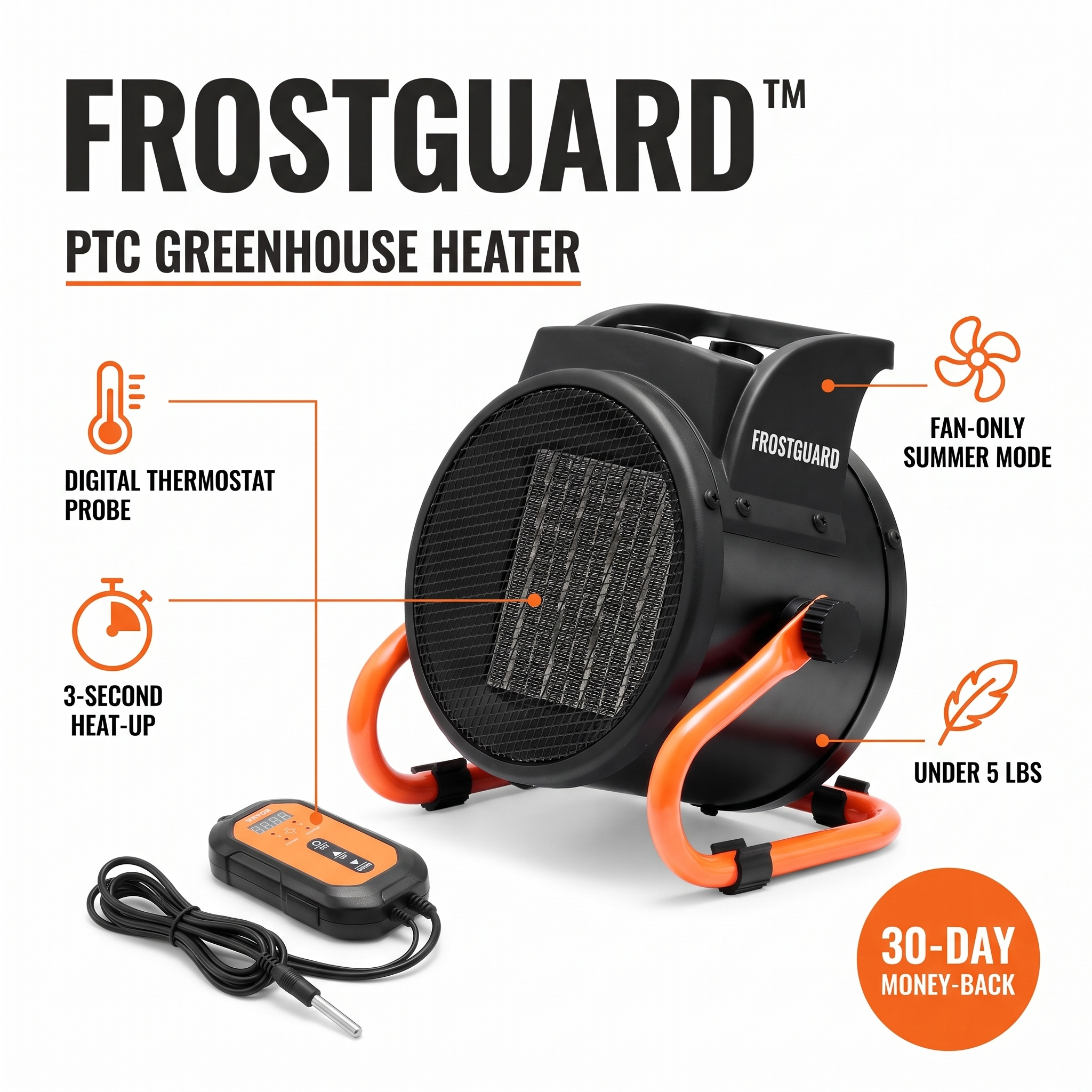
| Controller | Discrete plug-in, probe on a lead, 40–108°F set range |
| Listing / ingress / mass | ETL · IP20 · 4.54 lbs |
| Supply | 12.5A continuous — 14 gauge cord minimum |
What it is, for me, is a second leg on a different breaker running its own set point, with no shared component between it and my primary except the building. For that job, the absence of software is the feature. There is nothing in it that can decide something and not tell me, because there is nothing in it that decides anything except one number I entered with a button.
Three of the four converged components in one box. PTC element, discrete external controller, probe on a lead with a 40–108°F range and no firmware floor. The fourth is your panel and nothing ships that.
On the discount, plainly: it's seasonal and it's a real price, not a permanent strikethrough dressed as a sale. Early orders get it. It goes back up when demand spikes on the first hard freeze. If that framing annoys you, ignore it and judge the spec table.
The pattern in the reviews is the same as the pattern in the threads. Long continuous runs, no drama, and nothing to decode. That is what a surface with no states looks like from the outside.
$79.95, free shipping, thirty days. Single set point, no differential band, no connectivity, no logging — disqualifying for a primary and I'd expect you to agree. For a second leg on a different breaker, running its own number, with no shared component except the building, the absence of software is the entire argument.
Get FrostGuard — 50% Off →